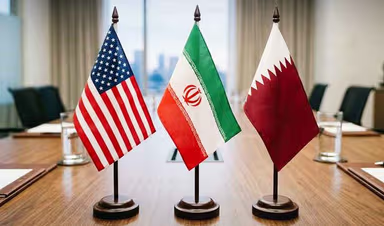
A new round of indirect US-Iran talks could take place as early as Monday, as Qatar and other regional mediators step up efforts to revive diplomacy between Washington and Tehran.The discussions come after US President Donald Trump rejected Iran’s latest proposal but indicated that negotiations could continue.Qatari officials are expected to hold separate meetings with Iranian Foreign Minister Abbas Araghchi and US envoy Steve Witkoff as mediators work on changes to a proposed agreement.Qatar has emerged as the principal intermediary in the latest diplomatic push. According to Axios, Qatar’s prime minister met Iranian President Masoud Pezeshkian in New York last Thursday and discussed the potential agreement with the Trump administration.Senior Qatari officials later met Witkoff and briefed him on the discussions. Qatari mediators subsequently presented Iran’s original proposal to both sides and developed a compromise proposal for Washington and Tehran to review.Over the weekend, Qatari officials continued shuttle diplomacy, holding separate discussions with US and Iranian representatives over possible changes to the proposed text. The mediators are expected to continue those efforts in meetings with Araghchi and Witkoff.
Trump expects more talks
Trump initially rejected Iran’s proposal outright, saying Tehran had made an offer that he did not accept. However, his subsequent comments indicated that he still expects negotiations to resume this week.“I expect more talks with Iran this week,” Trump told Axios, adding that Tehran wanted a deal but not the agreement Washington was prepared to accept. He also said Iran had “overplayed its hand.”Two regional sources cited by Axios said another round of indirect dialogue could take place as early as Monday, although it remains unclear whether the differences between the two sides can be bridged.Iran keeps diplomatic channel open
Iranian Foreign Minister Abbas Araghchi has also indicated that Tehran remains committed to diplomacy despite Trump’s rejection of the proposal.Araghchi said Iran was still waiting for an official US response through mediators and would decide its next step after receiving Washington’s position. He also said Iran was ready for negotiations and that Tehran’s calculations were based on its national interests.The Iranian foreign minister has remained optimistic about a diplomatic solution even as the two sides continue to disagree over the terms of any agreement.Strait of Hormuz remains central
The latest dispute has increasingly centred on what Washington and Tehran are prepared to give up in return for reopening the Strait of Hormuz and restarting nuclear negotiations.During indirect talks in New York last Tuesday, Witkoff and Jared Kushner met with Araghchi on the sidelines of the United Nations General Assembly. Qatari officials participated by passing messages between the US and Iranian sides.Araghchi presented Iran’s conditions for reopening the Strait of Hormuz and resuming nuclear discussions. Tehran proposed reopening the strategic waterway and restarting nuclear talks within a week if Washington lifted its naval blockade, removed sanctions affecting Iranian oil sales and restored a regional ceasefire.Trump subsequently rejected that proposal, while US negotiators maintained that Iran could not make demands concerning the Strait of Hormuz.Washington seeks nuclear concessions
While Iran has sought to make the Strait of Hormuz and the US naval blockade central to negotiations, the Trump administration is demanding commitments from Tehran on its nuclear programme.A US official cited by Axios said discussions through mediators remained “positive and constructive”, including on nuclear issues, despite Trump’s rejection of Iran’s proposal.The two sides therefore remain divided over the scope and sequencing of any agreement, with regional mediators attempting to narrow the differences through indirect diplomacy.The latest mediation effort follows a new round of indirect negotiations held in New York during the UN General Assembly.Witkoff and Kushner met Araghchi last Tuesday, with Qatari officials helping relay messages between the two sides. The discussions focused on Iran’s conditions for reopening the Strait of Hormuz and restarting nuclear negotiations.Qatar’s prime minister subsequently met Pezeshkian in New York on Thursday before senior Qatari officials met Witkoff. Mediators then continued discussions with both sides and put forward a compromise text for consideration.Talks remain uncertain despite mediation
The latest developments suggest that Trump’s rejection of Iran’s proposal has not closed the diplomatic channel. Instead, Qatar and other regional mediators are continuing efforts to find language that could satisfy both Washington and Tehran.However, the core disagreements remain unresolved. Iran is seeking relief from the naval blockade and sanctions, along with the reopening of the Strait of Hormuz, while Washington is pressing for nuclear concessions and other commitments from Tehran.For now, the focus is on whether separate meetings between Qatari mediators, Araghchi and Witkoff can produce enough movement for another round of indirect US-Iran negotiations.