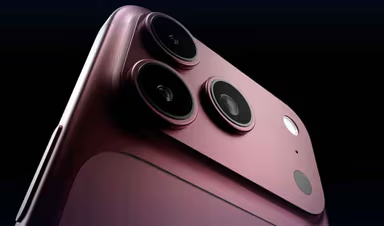
Apple is replacing some iPhone 18 Pro Max units affected by a cellular service problem on AT&T’s network after the company said software updates could help prevent the issue but would not restore service to devices that had already been affected.
The problem was first reported by users in late September, with some iPhone 18 Pro Max owners on AT&T saying their devices had entered SOS mode and lost the ability to make calls, send texts or access mobile data.
AT&T acknowledged the issue before Apple confirmed it on October 2.
Apple issues software and carrier updates
Apple said the problem affected a small number of iPhone 18 Pro Max users on the AT&T network.
The company released iOS 27.0.1 on September 28 and issued a carrier settings update for AT&T on October 2.
Apple said the updates were intended to help prevent the problem from occurring on additional devices.
The company has encouraged all iPhone 18 Pro Max users to install the latest software and carrier settings updates.
Affected devices may need replacement
While the updates are designed to prevent new cases, devices that have already lost cellular service may require replacement, according to reports surrounding Apple’s response.
The distinction means that updating the software may reduce the likelihood of the problem occurring but does not necessarily restore connectivity to an affected phone.
Apple has not publicly disclosed the exact cause of the issue or specified how many devices have been affected.
AT&T users reported SOS mode
The issue emerged through reports from iPhone 18 Pro Max owners who said their phones suddenly switched to SOS mode while connected to AT&T.
In SOS mode, an iPhone may be unable to connect to the carrier’s regular cellular network, preventing normal calls, messages and mobile data use.
The reports prompted AT&T and Apple to investigate the problem before the companies issued updates intended to address it.
Apple has not detailed the root cause
Apple’s October 2 statement confirmed the existence of the issue but did not provide technical details about what caused affected devices to lose cellular service.
The company also did not disclose whether the problem was related to the iPhone’s hardware, carrier configuration, modem system or another component.