Every crisis is also a test. And the global petroleum shock triggered by the Middle East conflict has, in its own way, served as a stress test for Pakistan’s institutional capacity to respond to external shocks. The results, while not without caveats, have been more encouraging than many observers expected.
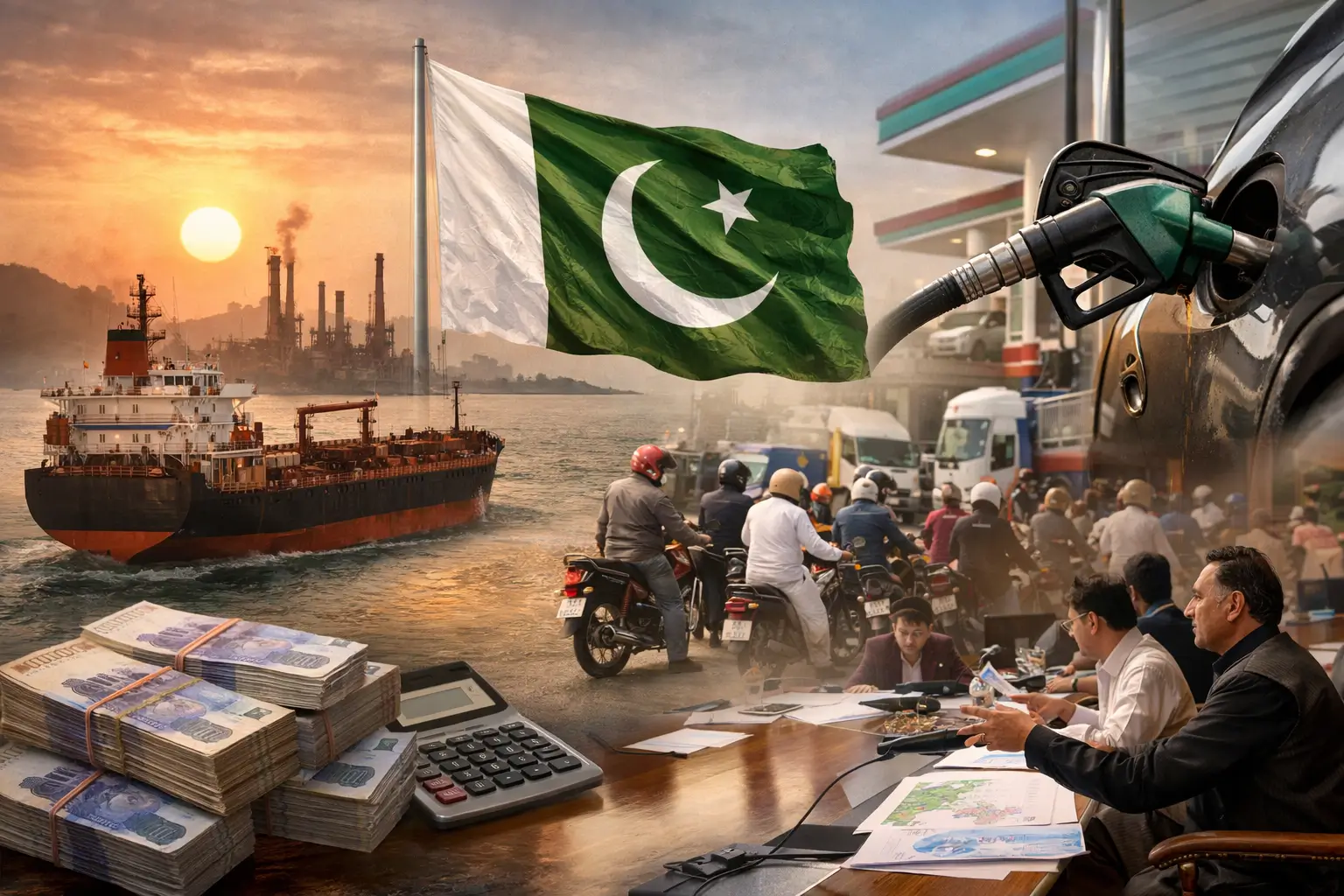
The most immediate and perhaps most underappreciated outcome of the past three weeks is that Pakistan avoided a fuel shortage. This is not a trivial point. The country imports the vast majority of its petroleum products and is deeply exposed to disruptions in Gulf shipping corridors. When the US-Israel conflict with Iran sent international oil prices past every historical benchmark, the conditions were ripe for exactly the kind of supply panic that several other importing nations experienced. Long queues at petrol stations, rationing, and hoarding became realities in countries with stronger currencies and deeper strategic reserves. In Pakistan, none of that materialized.
The credit for this belongs in significant part to the pre-emptive coordination driven by Prime Minister Shehbaz Sharif’s office. Daily reporting from the Petroleum Ministry, proactive engagement with refineries and importers, and close monitoring of distribution networks ensured that supply continuity was maintained even as international markets descended into volatility. It is worth acknowledging that this kind of behind-the-scenes logistics management rarely makes headlines, but it is precisely the kind of governance that prevents a difficult situation from becoming a catastrophic one.
On the fiscal side, the government’s decision to absorb Rs 129 billion over three weeks to keep prices stable was a significant commitment of limited national resources. It shielded households during Eid and prevented the kind of immediate inflationary cascade that a sudden pass-through would have caused. Whether this level of absorption was fiscally sustainable for a longer period is a fair question, and it is one the government itself acknowledged when it eventually moved to adjust prices. But the intent behind the decision, protecting the most vulnerable during a period of acute uncertainty, was clear and consistent.
The national consultation that followed was, by most accounts, a genuine exercise in federal-provincial coordination. Bringing together the Chief Ministers of all four provinces, along with the leadership of Gilgit-Baltistan and Azad Jammu and Kashmir, to jointly design a targeted relief programme is not something that happens easily in Pakistan’s often fractious political environment. The fact that Sindh announced a Rs 55 billion relief package, Punjab declared free public transport, and Islamabad followed with its own measures within hours of the consultation speaks to a degree of alignment that the situation demanded and, to the PM’s credit, received.
The targeted subsidy programme itself represents a more mature approach to crisis relief than blanket interventions. Directing Rs 100 per litre to motorbike owners, providing monthly support to transporters, offering per-acre assistance to small farmers, and freezing economy-class railway fares are measures that attempt to reach the people most affected rather than distributing resources indiscriminately. This approach is consistent with the broader shift toward targeted social protection that has characterized recent government policy, from the Rs 38 billion Ramadan Relief Package with its digital cash transfers to 12.1 million families, to the expanded BISP Kafalat programme now reaching 10 million households at Rs 14,500 per quarter.
The Rs 80 per litre levy reduction announced by the PM on Friday night added a further layer of direct relief. Bringing petrol from Rs 458 to Rs 378 is not a complete reversal of the price increase, but it represents a substantial fiscal concession at a time when government revenues are already under pressure. The extension of cabinet salary sacrifices to six months, while largely symbolic in fiscal terms, does signal a seriousness of intent.
None of this means the challenges ahead are small. International oil prices remain volatile. The fiscal space for continued subsidies is limited. Inflation is at a 17-month high. And the question of how long targeted relief can be sustained without broader structural adjustments remains open. But what the past three weeks have demonstrated is that Pakistan’s crisis management apparatus, when driven by sustained attention from the highest level of government, is capable of delivering results that protect ordinary citizens from the worst effects of external shocks. That is a capacity worth recognizing and, more importantly, worth building upon.