By : Aamir Abdullah
I have heard the words “Deeper than the ocean, higher than the Himalayas, sweeter than honey, and stronger than steel” from General Sahir Shamshad Mirza, Chairman of Pakistan’s Joint Chiefs of Staff Committee, at an event in Islamabad in connection with the 98th anniversary of PLA ,perfectly capture the essence of the China-Pakistan relationship. Far from being mere diplomatic rhetoric, these words reflect the profound truth about one of the most resilient partnerships in modern geopolitics. This is not just an alliance of convenience but a brotherhood forged through decades of mutual trust, shared sacrifices, and common aspirations.
While many nations form temporary alliances based on shifting interests, China and Pakistan have built something far more enduring. This relationship transcends typical state-to-state interactions, having evolved into what experts call an “all-weather strategic cooperative partnership.” This means that in both good times and bad, China and Pakistan stand together. The depth of this partnership becomes especially evident during times of crisis. Take the recent military engagement between India and Pakistan – Operation Banyan-ul-Marsoos — Markah-e-Haq. During this conflict, Pakistan Air Force pilots flying advanced Chinese-made J-10C fighter jets demonstrated remarkable precision in neutralizing threats. These jets, equipped with cutting-edge PL-15 air-to-air missiles and guided munitions from China’s Chengdu Aerospace Corporation, did not just perform exceptionally – they became symbols of the technological and strategic synergy between the two nations. Global defense analysts took note not only of Pakistan’s operational excellence but also of China’s emergence as a reliable defense partner willing to stand by its allies when it matters most.
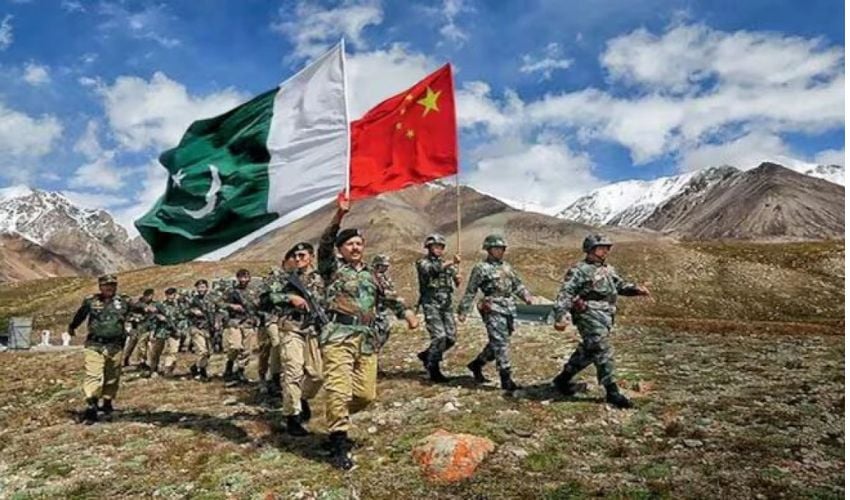
The military collaboration extends beyond times of conflict. Over the past two decades, China and Pakistan have conducted numerous joint exercises that go beyond routine training, including the Shaheen series of air force exercises, the Warrior series of special forces training, and the Sea Guardians naval drills. These are not mere photo opportunities or symbolic gestures but represent a deep commitment to sharing military doctrine, improving interoperability, and preparing for the complex challenges of modern warfare. When Pakistani and Chinese forces train together, they are building the kind of默契 (mòqì, or tacit understanding) that only comes from genuine trust.
The economic dimension of China-pak relationship is equally robust. The China-Pakistan Economic Corridor (CPEC), the flagship project of China’s Belt and Road Initiative, has become the backbone of china-pak economic partnership. The numbers speak for themselves: $25.4 billion in direct Chinese investment in Pakistan, over 236,000 jobs created for Pakistani citizens, and $27.8 billion in bilateral trade in 2023-24. But CPEC is not just about statistics. It is about tangible improvements in Pakistani lives. The Karot Hydropower Project now provides clean energy to millions, the Multan-Sukkur Motorway has dramatically reduced travel times, and Gwadar Port is transforming into a regional trade hub. These projects demonstrate how economic cooperation can create win-win outcomes, with China gaining a reliable partner in regional connectivity while Pakistan receives critical infrastructure development that boosts its economy and creates opportunities for its people.
Beyond government agreements and economic projects, the growing people-to-people connections form the most beautiful aspect of both countries relationship. Today, over 30,000 Pakistani students are pursuing higher education in China, the highest number from any South Asian country. Chinese cultural centers in Islamabad and Lahore, along with Confucius Institutes and youth exchange programs, are helping bridge cultural gaps. The 2024 launch of the Sino-Pak Friendship Youth Initiative aims to further strengthen these educational and cultural exchanges, nurturing the next generation of diplomats, scientists, and innovators on both sides.
In times of crisis, China has consistently stood shoulder to shoulder with Pakistan. During the COVID-19 pandemic, Beijing was the first to send vaccine shipments, PPE kits, and mobile testing labs. In return, Pakistan has been one of China’s most steadfast supporters on issues like Taiwan, Hong Kong, and Xinjiang, reaffirming the spirit of mutual non-interference and strategic solidarity.
Some critics attempt to reduce this relationship to mere clichés or dependency, but they fundamentally misunderstand its nature. This alliance is not based on convenience but on consistent reliability. While others seek transactional benefits, China and Pakistan have built a model of trust-based diplomacy rooted in shared interests and strategic patience.
As the global order becomes increasingly uncertain and new power alignments emerge, it is partnerships like this – firm, time-tested, and visionary – that offer hope for regional stability. The Pakistan-China friendship is not just about defense or economics; it is a partnership of futures – mutually built, mutually respected, and mutually protected. Indeed, it is higher than the Himalayas, deeper than sea , sweeter than honey and stronger than steel, a bond that will only grow deeper with time.