

Iran has ruled out negotiations with the United States until Washington fulfils Tehran’s conditions and takes measures to restore trust, with senior officials also firmly rejecting any proposal to remove enriched nuclear material from Iranian territory.
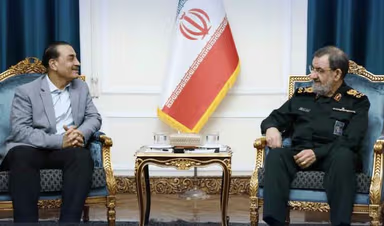
Secretary of Iran’s Supreme National Security Council (SNSC), Major General Mohsen Rezaei, reiterated Tehran’s position on Tuesday during his meeting with Chief of Army Staff Field Marshal Asim Munir and a statement on X later. Iranian Parliament Speaker Bagher Ghalibaf also told Munir that Tehran had nothing new to offer Washington beyond its previously announced seven conditions for negotiations.
Rezaei rules out negotiations without trust-building measures
In a message posted on his official X account on Tuesday, Rezaei said Iran would not enter negotiations with the United States until Washington took concrete steps to rebuild trust.
“There will be no negotiations until America takes steps to build trust,” Rezaei stated, adding that the process must begin with the fulfilment of Iran’s conditions.
During his meeting with Field Marshal Asim Munir in Tehran later that day, Rezaei said the Iranian people and officials were united in their position that talks with Washington could not proceed without trust-building measures.
The Iranian security chief maintained that Tehran’s position remained unchanged and that the United States must demonstrate its willingness to address Iranian concerns before negotiations could resume.
Iran rejects removal of enriched uranium
Rezaei also categorically rejected any proposal to remove enriched uranium or other enriched nuclear material from Iran, directly addressing a demand repeatedly raised by American officials.
“Not a single gram of enriched uranium will be removed from Iran,” he said, reiterating that all enriched nuclear material would remain within the country.
According to Rezaei, the material represents a major national asset and a source of wealth for the Iranian people, intended for domestic use.
“All enriched nuclear material will remain in Iran, and not a single particle will leave the country,” he stated, firmly ruling out the transfer of Iran’s enriched nuclear stockpile abroad.
Ghalibaf says Iran’s seven conditions remain unchanged
Iranian Parliament Speaker Mohammad Bagher Ghalibaf conveyed a similar message during his meeting with Field Marshal Asim Munir in Tehran on Tuesday, saying Iran had nothing new to tell the United States beyond its previously announced seven conditions for negotiations.
According to Iranian media, Ghalibaf said the conditions presented in New York were essential for Washington to regain Tehran’s trust. He added that he had clearly communicated Iran’s position to the US vice president during the talks that led to the Islamabad memorandum of understanding.
Ghalibaf argued that Washington’s long history of actions against Iran had pushed mutual distrust to its highest level. He said the US government’s alleged violation of the Islamabad MoU, alongside repeated threats by President Donald Trump, had further deepened Tehran’s suspicions.
Iran accuses Washington of violating Islamabad MoU
Ghalibaf accused the Trump administration of violating the Islamabad memorandum and said US military threats and movements would not alter Iran’s strategic decisions.
Criticising Washington’s calculations in going to war with Iran, the parliament speaker said the United States had found itself in a quagmire because of its miscalculations. He argued that Washington was now responsible for taking the necessary steps to extricate itself from the situation.
Ghalibaf maintained that Iran was not seeking war but remained fully prepared to defend its territory and national dignity.
Pakistan’s mediation role discussed during Munir’s visit
Pakistan’s role in facilitating dialogue between Tehran and Washington was also discussed during Ghalibaf’s meeting with Field Marshal Asim Munir.
The Iranian parliament speaker expressed appreciation for the support extended by the Pakistani government and people to Iran during the war and diplomatic negotiations. He described relations between Iran and Pakistan as brotherly.
Munir also informed his Iranian interlocutors that the Iran-Pakistan border had reopened on Tuesday after temporary technical problems disrupted crossings.