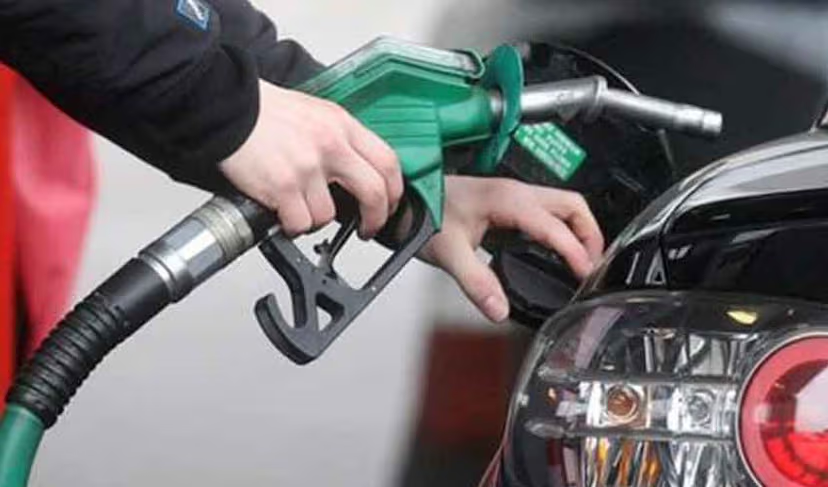
Oil prices continue to decline as expectations grow that the Strait of Hormuz, a vital route for global oil shipments, will reopen under a potential agreement between the United States and Iran.
As a result, there is a strong possibility of a reduction in petroleum product prices in countries affected by global market fluctuations, including Pakistan.
Following progress in Iran-US negotiations, global energy markets have shown significant improvement. International crude oil prices fell by another 5%, with US crude oil trading at around $76 per barrel and Brent crude at approximately $79 per barrel.
According to a report by The Wall Street Journal, Iran may be permitted to resume oil sales immediately under the proposed agreement with the United States, further strengthening the downward trend in oil prices.
Before the Iran-Israel conflict, crude oil prices in the global market were around $73 per barrel. During the conflict, prices surged to as high as $126 per barrel.
At the time of rising oil prices, Prime Minister Shehbaz Sharif assured the public that relief would be provided once the situation stabilized.
Speaking in the National Assembly two days ago, the prime minister said the conflict had placed immense pressure on Pakistan’s economy. He noted that the people had fully supported the government and that every effort was made to protect the country from a potential inflationary crisis. He added that the benefits of improving global economic conditions would be passed on to the public.
Minister of State for Law and Justice Barrister Aqeel Malik also expressed optimism during an interview on the ‘G for Gharidah’ show on GNN, saying that an agreement between Iran and the United States is expected to be signed on Friday, which could lead to a substantial reduction in fuel prices in Pakistan.
Barrister Aqeel stated that, given the sharp decline in global oil prices, there is a strong possibility that petrol prices in Pakistan could decrease by more than Rs100, and potentially even by over Rs150 per litre.
Since the conflict began with attacks on Iran by Israel and the United States, petroleum prices in Pakistan have experienced several significant increases and decreases.
The first major increase came on March 6, when the government raised petrol and diesel prices by approximately Rs55 per litre due to soaring global oil prices. Following the increase, petrol reached around Rs321 per litre — its highest level in recent years — while diesel rose to Rs335 per litre.
Before tensions escalated in the Middle East, petrol was priced at Rs266 per litre and diesel at Rs280 per litre. Currently, petrol is selling at Rs373.78 per litre, while diesel is priced at Rs378.78 per litre.