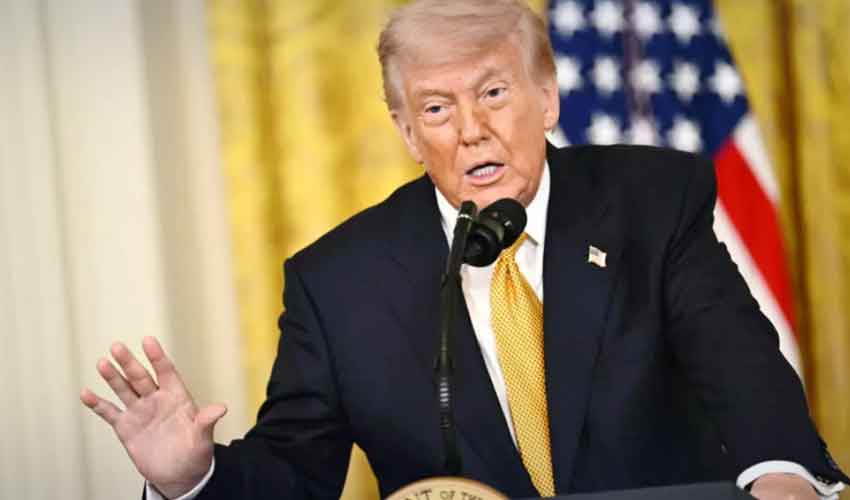
U.S. President Donald Trump has said his patience with Iran is “running out” following discussions with Chinese President Xi Jinping, as tensions in the Gulf region continue to intensify.
The remarks come amid escalating maritime incidents, disrupted shipping routes, and stalled negotiations over Iran’s nuclear program.
In comments aired during an interview on Fox News’ Hannity, Trump said Iran must “make a deal” as diplomatic efforts remain frozen.
He warned that he was “not going to be much more patient,” signaling growing frustration over the ongoing conflict and lack of progress in negotiations.
Trump also suggested that discussions around Iran’s stockpile of enriched uranium were driven partly by public perception concerns, saying he would prefer U.S. control over it for “public relations” reasons.
Talks with Xi Jinping focus on Strait of Hormuz
According to the White House, Trump and Chinese President Xi Jinping discussed the importance of keeping the Strait of Hormuz open during their talks in Beijing.
The Strait is a critical global shipping route, with a significant portion of the world’s oil and liquefied natural gas passing through it.
The White House said both leaders agreed that the waterway should remain open and opposed any militarization or attempts to impose tolls on its use.
China, a major buyer of Iranian oil, reportedly expressed opposition to escalating tensions in the region.
The developments come alongside a series of maritime incidents in the region.
An Indian cargo vessel carrying livestock from Africa to the United Arab Emirates was reportedly sunk off the coast of Oman. Indian authorities condemned the attack, confirming all 14 crew members were rescued.
Separately, British maritime security officials reported that an unidentified vessel anchored near the UAE port of Fujairah was boarded by unauthorized personnel and steered toward Iran.
Security firm Vanguard suggested Iranian personnel were involved in taking control of the vessel.
The Strait of Hormuz remains a critical chokepoint for global energy supplies.
Before the conflict, nearly one-fifth of global oil and LNG shipments passed through the waterway, making it one of the most sensitive maritime routes in the world.
Recent disruptions have raised concerns about global energy security and supply stability.
Iran-US diplomacy remains frozen
Diplomatic efforts between Washington and Tehran have stalled after both sides rejected recent proposals.
Iran has continued to insist on maintaining its nuclear program, while the U.S. has demanded limits on enrichment and control over uranium stockpiles.
Despite pressure from Washington, Tehran has also sought sanctions relief and acknowledgment of its regional influence.
U.S. officials claim Iran’s military capabilities have been significantly weakened following earlier strikes, though analysts say Tehran still retains missile and drone capacity.
Meanwhile, tensions have spilled over into broader regional conflicts, including clashes involving Iran-backed groups and neighboring states.
A senior U.S. military official told lawmakers that Iran’s ability to threaten regional targets has been “significantly degraded,” though concerns remain about its remaining capabilities.