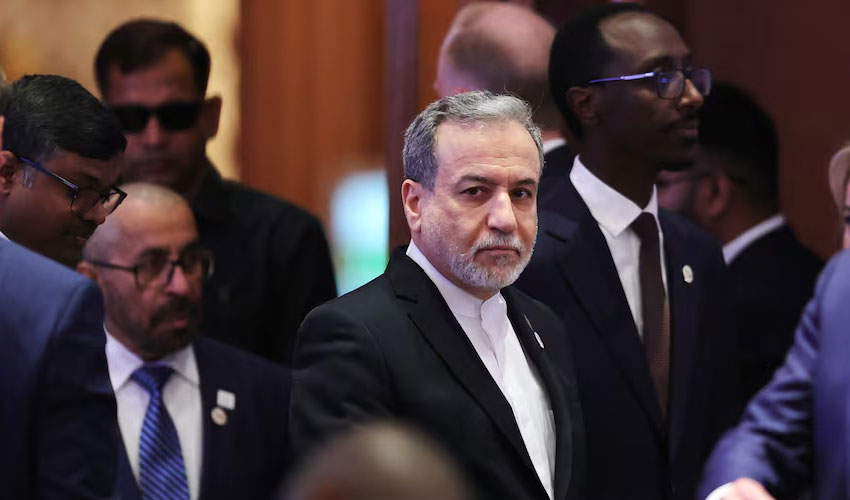
A diplomatic confrontation broke out between Iran and the United Arab Emirates during a BRICS foreign ministers’ meeting in New Delhi, as accusations over military involvement in the Iran conflict escalated tensions between the two countries.
The dispute highlights growing regional friction amid the ongoing Middle East war and shifting alliances.
Iran’s Foreign Minister Abbas Araghchi accused the UAE of being directly involved in military operations against Iran during the BRICS meeting, according to Iranian state media.
Araghchi claimed that while he avoided naming the UAE in his official statement “for the sake of unity,” he believed the country had participated in actions against Iran and failed to condemn the initial attacks.
He further warned that “those colluding with Israel to sow division will be held to account,” intensifying the diplomatic tone of his remarks.
The exchange reportedly followed comments made by an Emirati representative, although the exact statement was not disclosed in Iranian media reports.
The UAE has already denied related allegations in recent days, including claims regarding Israeli Prime Minister Benjamin Netanyahu’s alleged visit during the conflict.
Iranian officials responded strongly to those denials, further straining relations between the two regional powers.
Iranian state media referenced wider allegations suggesting the UAE and other regional actors may have been involved in military operations linked to the ongoing conflict.
Reports cited Western and Iranian officials claiming that covert strikes and regional operations have taken place since the escalation of the war.
However, these claims remain unverified by independent international confirmation.
Despite the sharp accusations, Iran’s foreign minister also emphasized the need for long-term regional stability.
Araghchi stated that Iran and the UAE must “live side by side in peace,” calling for better understanding and improved diplomatic relations between the two countries.
He also argued that reliance on foreign military alliances or external bases does not guarantee security in the region.
Impact on BRICS diplomatic efforts
The confrontation has raised concerns over unity within the BRICS diplomatic platform, as officials struggled with internal disagreements during the meeting.
Iranian media suggested that tensions between participating countries could make it difficult to issue a joint final communiqué.
Deputy Foreign Minister Kazem Gharibabadi was quoted as saying there were “problems and communications” issues due to the UAE’s participation in the talks.
The dispute comes amid an ongoing regional war that began with U.S. and Israeli strikes against Iran, followed by Iranian missile and drone responses targeting U.S. bases and regional sites.
Since then, the Gulf region has seen heightened security concerns, disrupted diplomacy, and increasing geopolitical polarization.