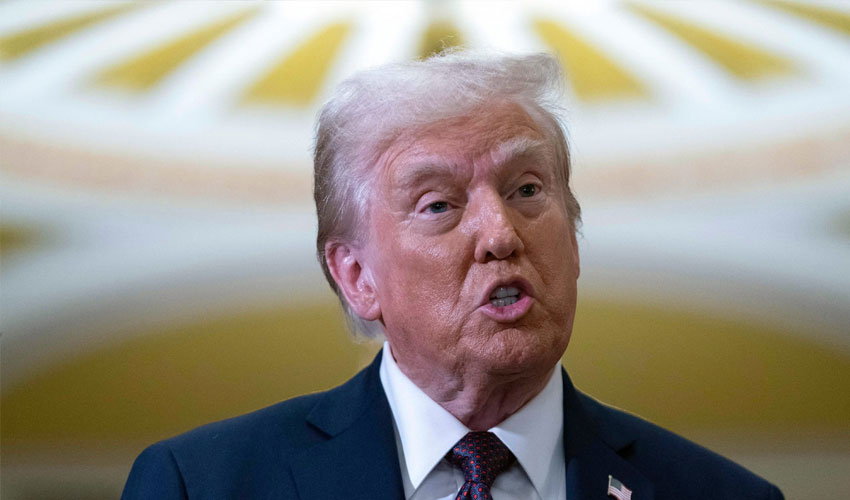
US President Donald Trump has suggested that a second round of talks between Washington and Tehran could happen as early as Friday.
The remarks come amid ongoing diplomatic efforts led by Pakistan to ease rising tensions and restart negotiations.
In an interview with the New York Post, Donald Trump said “good news” regarding renewed US-Iran negotiations could emerge within days.
Responding to a text query, he added, “It’s possible!” when asked about the timing of a second round of talks.
Pakistan intensifies mediation efforts
Sources in Islamabad say diplomatic engagement between the US and Iran has increased significantly.
According to Pakistani officials, discussions could take place within the next 36 to 72 hours, as mediation efforts continue to gather pace.
Pakistan has been playing a central role in bringing both sides back to the negotiating table.
The development follows Trump’s decision to extend the current ceasefire with Iran, giving Tehran more time to present a unified proposal.
In a post on Truth Social, he said the US military has been directed to continue the blockade and remain ready for action, while the ceasefire stays in effect until talks conclude.
Ceasefire holds despite tensions
Officials in Islamabad say the truce has largely held despite strong rhetoric from both sides.
One source described the situation as “stable,” noting that there has been no recent escalation in military activity.
This, they added, signals cautious restraint and possible willingness to engage in dialogue.
Iran’s position on talks
Iran has linked its participation in negotiations to key conditions, particularly the lifting of the naval blockade of the Strait of Hormuz.
Iranian officials have indicated openness to talks in Islamabad if restrictions on maritime movement are eased.
However, Washington has maintained pressure through continued military readiness and sanctions-related measures.
Despite Trump’s optimism, no formal confirmation has been made by either side regarding the timing of talks.
Previous attempts to initiate discussions faced delays after delegations failed to appear for planned meetings.
Experts suggest that progress will depend on confidence-building steps from both sides.