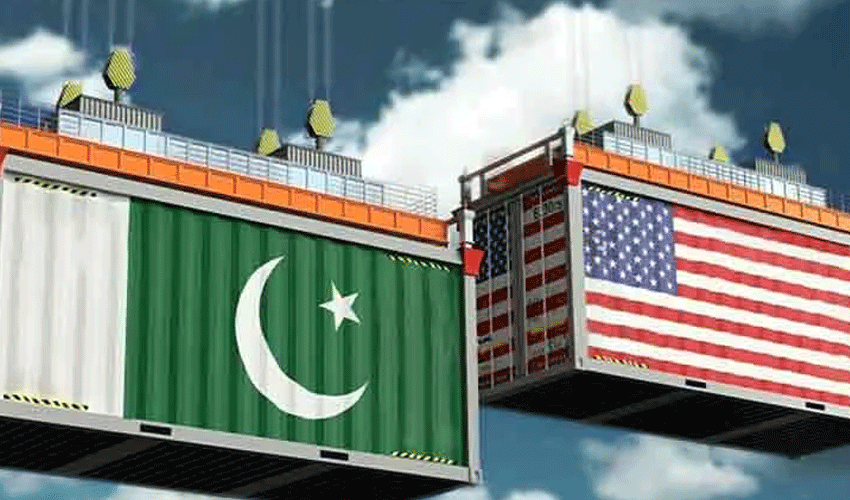
The United States has significantly reduced tariffs on Pakistani exports – from 29% to 19% – in a major development expected to give a much-needed boost to the country’s trade sector.
The Ministry of Commerce says this is the lowest tariff rate given to any South Asian country, sparking hopes of increased access to the American market. It also denied reports that Pakistan would suffer a loss of $1 billion due to the tariff.
The clarification came amid speculation that Pakistan had suffered losses due to trade duties. However, the government strongly denied these claims in a written response to the National Assembly.
Tariff cut seen as win for Pakistani exporters
Federal Minister for Commerce Jam Kamal, in his response to the House, emphasized that the reduction in US tariffs would help improve the competitiveness of Pakistani goods, especially textiles, in global markets.
He said that increased affordability and lower duties are expected to drive up demand for Pakistani products in the US, thereby supporting the country’s export figures in the months ahead.
Textile sector to benefit the most
State Minister for Finance Bilal Azhar Kayani highlighted that textile exports are likely to see the most significant gains under the new tariff structure. He revealed that out of Pakistan’s $32 billion in total exports last year, $6 billion came from the United States alone.
“Most of our goods go to the US. These reduced tariffs open new doors for growth and recovery,” he added during the session.
Improved ties with US credited for deal
Kayani also took the opportunity to credit Prime Minister Shehbaz Sharif’s government and the military leadership for improving Pakistan-US trade ties despite political headwinds. He noted that Field Marshal General Asim Munir’s meeting with US President Donald Trump and Deputy Prime Minister Ishaq Dar’s engagement with American officials helped pave the way for this trade breakthrough.
“The opposition didn’t expect this deal and predicted default, but we’ve improved relations and strengthened economic diplomacy,” Kayani stated.