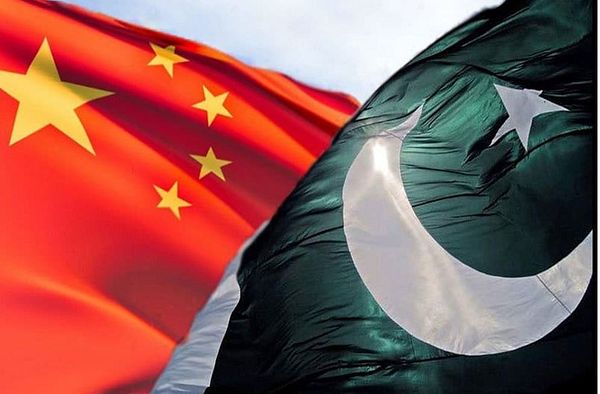
Pakistan and China are entering a new phase of strategic and economic cooperation under China-Pakistan Economic Corridor (CPEC) 2.0, Deputy Prime Minister and Foreign Minister Ishaq Dar said on Wednesday, reaffirming that the all-weather partnership with Beijing remains central to Pakistan’s foreign policy and long-term development strategy.
Dar outlines priorities for CPEC 2.0
Speaking at a reception hosted by the Chinese Embassy to commemorate the 105th anniversary of the Communist Party of China (CPC), Dar said the second phase of CPEC will shift from large-scale infrastructure development to high-quality economic growth.
He identified industrialisation, agriculture, information technology, mining and minerals, and human resource development as the priority sectors that will shape the next stage of bilateral cooperation. Dar said these areas align closely with Pakistan’s 5Es Development Framework, which focuses on exports, e-Pakistan, environment and climate change, energy and infrastructure, and equity and empowerment.
China’s development model praised
Congratulating the CPC leadership on its anniversary, Dar praised China’s economic transformation and poverty alleviation achievements, saying Beijing’s development had benefited not only the Chinese people but also contributed to global development through the concept of a shared future for mankind.
He described Pakistan-China relations as a model of mutual trust, mutual respect and mutually beneficial cooperation, adding that successive Pakistani governments have consistently placed the relationship among the country’s highest foreign policy priorities.
CPEC enters investment-focused stage
Dar said the launch of CPEC in 2015 marked a turning point in bilateral relations by helping Pakistan address critical electricity shortages, improve transport infrastructure and create employment opportunities, particularly in less-developed regions.
With CPEC Phase 2.0, the emphasis is shifting towards attracting industrial investment, expanding value-added manufacturing, promoting technology transfer and enhancing workforce skills. The new approach is expected to strengthen Pakistan’s export-oriented industries while encouraging greater private-sector collaboration between the two countries.
Strategic significance for Pakistan-China ties
The Deputy Prime Minister also highlighted the growing importance of party-to-party exchanges between the Communist Party of China and Pakistan’s political parties, saying such interactions have strengthened governance cooperation and people-to-people connectivity.
He reaffirmed that Pakistan and China would continue working together to promote regional peace, economic stability and sustainable development, describing their strategic partnership as beneficial not only for both countries but also for broader regional cooperation.
What it means for Pakistan
The transition to CPEC 2.0 signals Pakistan’s intention to move beyond infrastructure-led cooperation towards sectors capable of generating long-term economic growth. Increased collaboration in technology, mining, agriculture and industrial production could support export diversification, attract new investment and create skilled employment opportunities.
For China, the next phase reinforces its long-term commitment to Pakistan while expanding cooperation into high-value industries that complement Beijing’s broader regional connectivity objectives.
Officials from both countries are expected to accelerate work on CPEC Phase 2.0 projects, with greater emphasis on industrial zones, technology cooperation, agriculture modernisation and mineral development as Pakistan and China deepen their strategic economic partnership.