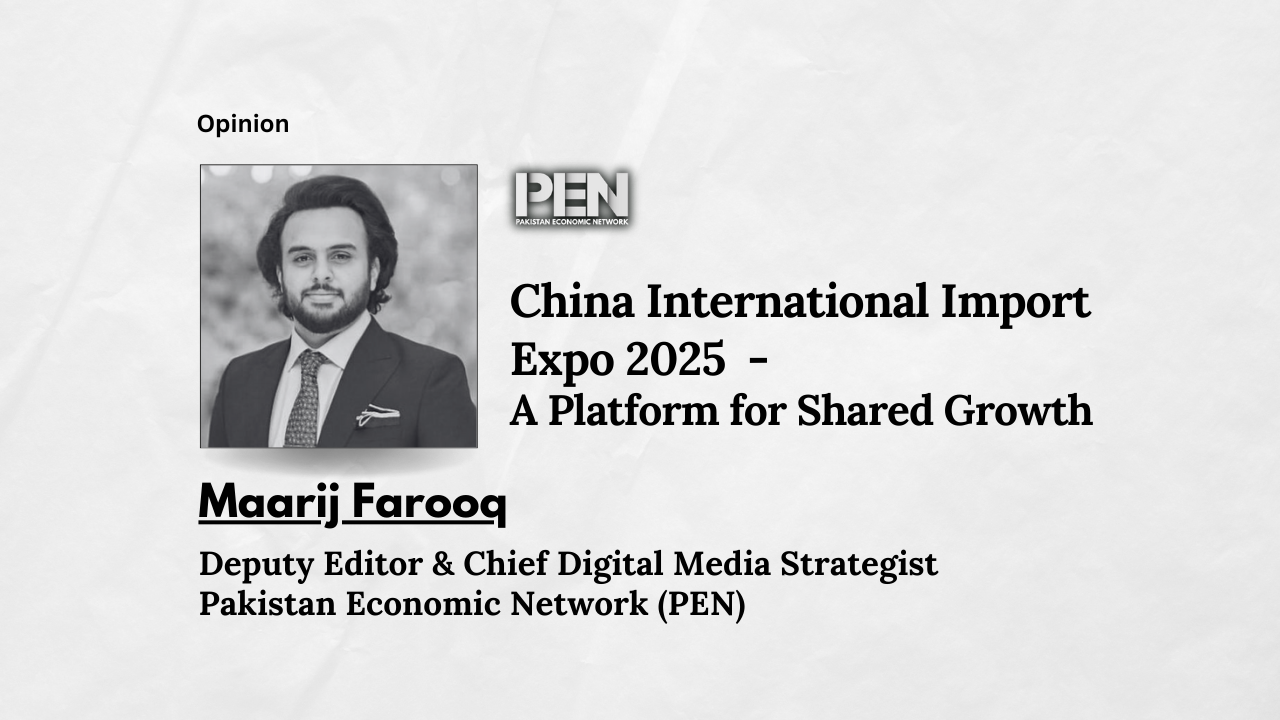
By: Maarij Farooq
In a world facing economic uncertainty, the eighth edition of the China International Import Expo (CIIE) held in Shanghai from November 5 to 10, 2025, stood as a symbol of global cooperation and opportunity. As the world’s first national-level trade fair focused on imports, it showcased China’s readiness to open its market, deepen integration, and foster partnerships that benefit all.
The CIIE reflected China’s consistent commitment to openness and inclusivity. Premier Li Qiang reaffirmed that China will continue to promote high-standard opening up, expand market access, and accelerate liberalization in key sectors. With participation from 155 countries, more than 4,000 overseas exhibitors, and an exhibition area exceeding 430,000 square meters, the event became a hub for global economic dialogue.
At a time when protectionism and economic divisions threaten growth, China’s leadership has chosen a different path. By offering an open market and inclusive platform, it signals that cooperation, not isolation, is the future of prosperity. The CIIE served as a clear message to the world that China remains dedicated to advancing shared growth and mutual benefit.
The CIIE creates enormous opportunities for developing economies. It offers three major avenues of benefit: market access, value-chain integration, and innovation partnerships.
China has remained the world’s second-largest import market for over 16 years. The CIIE provided a unique opportunity for exporters from developing nations to enter the Chinese market. More than 160 enterprises from 37 least-developed countries showcased their products, signaling that China’s inclusive trade policies enable smaller economies to gain a foothold in global commerce.
For Pakistan, this represents a valuable opportunity. From agriculture and food products to textiles and handicrafts, Pakistani exporters can leverage the CIIE platform to meet the growing demands of the sophisticated Chinese consumer market.
The expo also promoted collaboration beyond trade in goods. New thematic zones such as the silver economy, sports economy, and cross-border e-commerce opened avenues for nations to integrate into China’s evolving industrial and service value chains.
Pakistan could benefit through partnerships in food processing, logistics, tourism, and digital services. By aligning production capabilities with China’s rising consumption sectors, Pakistani businesses can establish a more sustainable economic connection.
China is increasingly focusing on innovation, technology, and services. The CIIE promotes the inflow of advanced technologies, management practices, and investment opportunities. For countries like Pakistan, this is a chance to attract Chinese investment in health care, information technology, and green energy.
Hosting a major import expo demonstrates China’s long-term vision. By encouraging imports, China is reshaping its growth model toward high-quality, innovation-driven, and consumption-led development.
China benefits from greater access to global innovation and higher-value goods, while other nations benefit from tapping into the vast Chinese market. This win-win approach ensures that China’s rise remains an opportunity for shared prosperity rather than competition.
China’s open trade philosophy stands in contrast to growing global fragmentation. Through the CIIE, it reinforces confidence in multilateralism, showing that genuine development must include mutual respect, cooperation, and inclusivity.
For Pakistan, aligning with the CIIE vision can yield long-term advantages. China remains Pakistan’s most significant trade and investment partner, and the expo provides new avenues to strengthen this partnership.
China’s demand for quality food products and organic produce continues to rise. Pakistan can export honey, rice, seafood, and dried fruits by meeting Chinese quality standards and investing in branding.
As China focuses on new economic areas like sports and digital media, Pakistan’s growing online content and sports industries can find collaboration opportunities with Chinese partners.
China’s service-sector expansion allows Pakistani businesses to collaborate in tourism, hospitality, and cultural exchanges. Promoting Pakistan as a travel destination for Chinese tourists can further strengthen people-to-people ties.
With China encouraging joint ventures, Pakistani manufacturers can integrate into regional supply chains, producing components for Chinese firms and benefiting from technology transfer.
To make full use of opportunities presented by the CIIE, Pakistan and other partners must upgrade quality standards, enhance logistics, and improve digital connectivity. Intellectual property protection, certification, and branding will be essential to compete effectively in the Chinese market.
The CIIE also highlights the importance of innovation. As the world transitions to new industries and digital economies, countries that align with China’s vision of open trade and technological cooperation will find themselves on a path to sustainable progress.
The 8th China International Import Expo was not just an event but a statement of intent. It reaffirmed China’s role as a global partner dedicated to openness, cooperation, and shared growth. For developing nations, including Pakistan, it offered a rare opportunity to engage directly with the world’s most dynamic consumer market.
By fostering fair trade, encouraging innovation, and promoting inclusivity, the CIIE has strengthened the foundation for a global community that grows together. In an age of division and uncertainty, China’s initiative stands as a reminder that the future belongs to collaboration, understanding, and mutual progress, the essence of a community with a shared future for mankind.