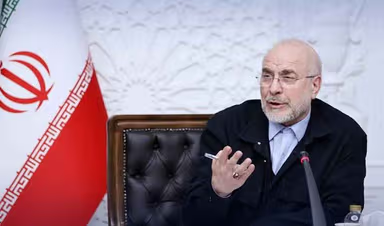
Ghalibaf’s announcement comes amid escalating threats from Iranian officials and hardliners against American technology assets in the region, raising concerns about the security of critical digital infrastructure.
Iranian Parliament Speaker Mohammad Bagher Ghalibaf announced the proposed initiative in a post on X on Sunday, declaring that a “Persian Gulf Data Authority” was on its way.
Addressing regional governments, investment funds and companies, Ghalibaf urged them to withhold resources from artificial intelligence and data companies that he accused of assisting military aggression or contributing to the killing of children.
“To governments, funds, and firms in the region: you are kindly advised to give no resources to any AI or data company aiding invasions or killing children. No finance, equity, land and energy,” he wrote.
Ghalibaf also warned that those supporting the companies concerned could face enforcement measures. “Assist them and face our enforcement,” he said.
Iranian officials threaten regional data centres, undersea cables
The announcement followed warnings from senior Iranian officials and hardliners about the possibility of targeting digital infrastructure across the Persian Gulf if hostilities with Washington and Tel Aviv resume.
Last week, Mohsen Rezaei, secretary of Iran’s Supreme National Security Council, warned that undersea communications cables, data centres and artificial intelligence facilities could come within range of Iranian attacks in a renewed conflict.
“If war breaks out, many cables, data centers and artificial intelligence facilities, valued at $2 trillion, will be within range,” Rezaei said, according to Iranian state media.
He added that American technology assets in the United Arab Emirates and areas surrounding the Strait of Hormuz had not yet been included among Iran’s targets but could be struck if the conflict escalated again.
The warnings have raised concerns about the vulnerability of the Gulf’s digital infrastructure, including facilities that support cloud computing, AI services and international communications.
Restrictions on undersea internet cables
Iranian media have also discussed measures to increase Tehran’s control over digital infrastructure passing through the Strait of Hormuz.
In May, Tasnim proposed introducing licensing requirements and annual renewal fees for foreign operators of undersea internet cables passing through the strategic waterway.
The outlet also called for major technology companies, including Meta, Amazon and Microsoft, to operate under Iranian law.
Another proposal would give Iranian companies exclusive control over the maintenance and repair of undersea cables, potentially increasing Tehran’s influence over critical communications links connecting countries across the region.
18 American technology companies threatened
Iran’s Islamic Revolutionary Guard Corps (IRGC) had already threatened major American technology companies operating in the Middle East during the conflict earlier this year.
On March 31, the IRGC published a list of 18 companies whose regional operations it warned could be targeted. The list included Microsoft, Google, Meta, Apple, Oracle and Nvidia, as well as G42, an artificial intelligence company based in the United Arab Emirates.
The Guards accused American technology and AI companies of assisting US military operations against Iran and warned employees to leave their workplaces.
The threats followed Iranian drone attacks in early March that damaged Amazon Web Services data centres in the United Arab Emirates and Bahrain.
The incidents highlighted the potential exposure of commercial technology infrastructure to regional military conflict, particularly as cloud computing and AI systems become increasingly important to government, business and communications networks.
Technology companies face growing regional risks
Ghalibaf’s proposed authority and the latest warnings from Iranian officials indicate that technology companies and their regional investors could face greater pressure over their alleged links to military operations.
The demands specifically target financial investment, ownership stakes, land and energy supplies provided to AI and data companies that Tehran accuses of supporting attacks against Iran.
However, no operational framework, enforcement mechanism or implementation timeline has been announced for the proposed Persian Gulf Data Authority.
The extent to which regional governments and investors would respond to Ghalibaf’s demands also remains unclear.
With Iranian officials warning that undersea cables, data centres and AI facilities could be targeted in a renewed conflict, the security of the Persian Gulf’s digital infrastructure has become an increasingly prominent concern alongside the region’s strategic energy and shipping routes.