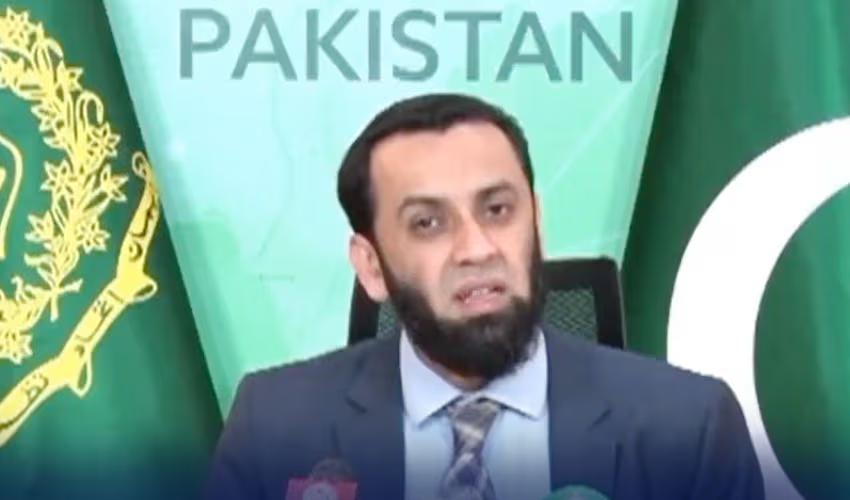
Federal Information Minister Attaullah Tarar has said India’s unilateral move to place the Indus Waters Treaty in abeyance was illegal, warning that any attempt to use water as a weapon against Pakistan would be treated as an act of war.
Addressing a ceremony in Islamabad, Tarar said Pakistan had presented its legal, political and diplomatic position on the issue before the international community.
“We belong to the Indus Valley Civilization,” he said, stressing the importance of water to Pakistan and its people.
Tarar cites arbitration ruling
Tarar said the Indus Waters Treaty could not be unilaterally suspended and referred to decisions by the Court of Arbitration in support of Pakistan’s position.
The Permanent Court of Arbitration ruled on August 31, 2026 that the treaty remains in force and binding, rejecting India’s attempt to place it in “abeyance”. The court also issued interim measures concerning the Ratle hydroelectric project.
An earlier August 2025 award had also addressed the interpretation of the treaty and found that its arbitration awards are final and binding on the parties.
‘Water is Pakistan’s fundamental right’
Tarar said Pakistan was a peace-loving country but would not allow its water rights to be compromised.
“We are peace-loving, but we will not allow India to use water as a weapon,” he said.
The minister described water as a fundamental right of Pakistan’s 240 million people and said the country had taken its case to the international community through legal, political and diplomatic channels.
He also referred to Prime Minister Shehbaz Sharif’s recent remarks at the United Nations that any attempt to impede, stop or divert Pakistan’s share of the Indus waters would be considered an act of war.
Pakistan’s sacrifices against terrorism
Tarar also highlighted Pakistan’s sacrifices in the fight against terrorism, saying the country had lost countless lives while confronting the threat.
He linked the water dispute to the broader tensions between Pakistan and India and reiterated Islamabad’s position that India’s move concerning the treaty was unilateral and illegal.
Pakistan has consistently maintained that the treaty cannot be suspended unilaterally. The Foreign Office said in September that the August 31 arbitration ruling reaffirmed that the treaty remains fully in force and that its dispute-settlement mechanisms continue to operate.