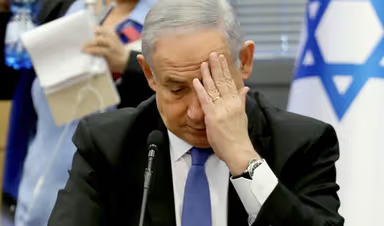
Israeli Prime Minister Benjamin Netanyahu is preparing to run again in an election expected by October, even as he faces mounting political and public pressure over his leadership during multiple regional conflicts.
The veteran leader, often described as Israel’s “arch-survivor,” is confronting growing voter anger over security failures, war outcomes, and Israel’s evolving relationship with its closest ally, the United States.
An interim US–Iran agreement has further complicated Netanyahu’s political outlook.
According to the report, US President Donald Trump’s push to wind down conflicts involving Iran and Lebanon before Israel achieved its stated goals has left Netanyahu’s regional strategy under scrutiny.
His earlier assertion that Israel was “changing the face of the Middle East” is now facing renewed criticism from opponents.
Netanyahu is already under pressure at home due to allegations of corruption, political controversies, and criticism over security failures linked to the October 7, 2023 Hamas attack.
Many Israeli voters and critics have also expressed dissatisfaction with the broader outcomes of military operations in Gaza, Lebanon, and tensions with Iran.
While Israel’s military carried out significant strikes and eliminated key militant figures, critics argue that long-term strategic goals have not been achieved.
Opposition accuses Netanyahu of failed strategy
Opposition leader Yair Lapid has strongly criticized Netanyahu’s wartime leadership, arguing that Israel has not secured lasting victories.
He claimed that the government failed to deliver a clear strategy and lost momentum at a critical moment in the conflict.
Netanyahu, however, has rejected these accusations, insisting that Israel’s military actions were necessary to prevent larger threats, particularly from Iran.
Ongoing conflict and international tensions
Netanyahu’s leadership has also been shaped by escalating regional conflict involving Gaza, Lebanon, and Iran-backed groups.
While some Israeli military operations have been celebrated domestically, including strikes on senior militant leaders, Hamas remains active in Gaza and Hezbollah continues to operate in Lebanon.
At the same time, Netanyahu is facing legal challenges, including an International Criminal Court arrest warrant over alleged war crimes, which he has dismissed as unfounded.
The Israeli leader’s relationship with the United States remains a key factor ahead of the election.
Although he has historically maintained strong ties with Washington, recent political tensions and differing approaches to the conflict have created friction.
Reports also suggest shifting public opinion in the US, where support for Israel has become more divided among voters across political lines.