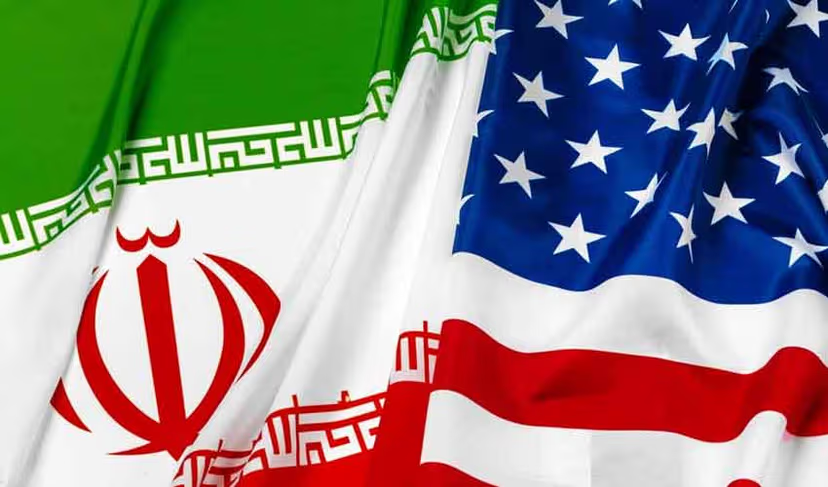
The United States and Iran have agreed to a landmark peace deal to end their nearly four-month-long conflict, marking a major diplomatic breakthrough after 107 days of war.
Prime Minister Shehbaz Sharif announced on Sunday night that both countries had reached an agreement following intensive negotiations facilitated by Pakistan and other mediators.
“Following intensive talks, we are pleased to announce that the Peace Deal between the United States of America and Islamic Republic of Iran has been REACHED,” Sharif wrote on X.
According to the prime minister, both sides have agreed to the immediate and permanent termination of military operations on all fronts, including in Lebanon. He added that the official signing ceremony would take place in Switzerland on June 19.
Trump confirms agreement
Shortly after Sharif’s announcement, US President Donald Trump confirmed that the agreement had been finalized.
“The Deal with the Islamic Republic of Iran is now complete,” Trump wrote on his Truth Social platform.
The US president also announced the immediate removal of the American naval blockade and authorized the reopening of the Strait of Hormuz.
“I hereby fully authorize the toll free opening of the Strait of Hormuz, and, simultaneously herewith, authorize the immediate removal of the United States Naval blockade. Ships of the World, start your engines. Let the oil flow!” Trump stated.
Iranian state television also reported that a deal had been reached, citing Sharif’s announcement, although no senior Iranian official had immediately issued an independent confirmation.
Key provisions of draft agreement
While the complete details of the accord have not yet been released, multiple reports indicate that the draft memorandum includes several major commitments by both sides.
The agreement is expected to extend the existing ceasefire for 60 days, reopen the Strait of Hormuz to international shipping, and launch a new round of negotiations focused on Iran’s nuclear program.
Sources familiar with the discussions said the United States would lift its blockade of Iranian ports and discuss sanctions relief, while Iran would refrain from producing or acquiring nuclear weapons during the negotiation period.
The draft framework reportedly also includes discussions on the release of approximately $25 billion in frozen Iranian assets, with sanctions relief linked to Tehran’s compliance with future commitments.
Strait of Hormuz reopening may ease global economic pressure
The reopening of the Strait of Hormuz is considered one of the most significant aspects of the agreement.
The strategic waterway, which handled roughly 20% of global oil and liquefied natural gas shipments before the conflict, has been largely inaccessible since the war began in late February.
The disruption contributed to supply shortages, rising energy costs, and renewed inflationary pressures across major economies.
Analysts say restoring shipping through the strait could help stabilize global energy markets, although full operations may take time due to security concerns, infrastructure repairs, and potential mine-clearing operations.
Nuclear talks to continue
Despite the breakthrough, several critical issues remain unresolved, particularly concerning Iran’s nuclear activities.
Under the framework, Washington and Tehran will hold intensive technical negotiations over the next 60 days to address uranium enrichment, the disposal or downblending of highly enriched uranium, and long-term monitoring mechanisms for Iran’s nuclear program.
US officials believe the prospect of sanctions relief and access to frozen funds provides Tehran with strong incentives to reach a comprehensive agreement.
However, critics in both the United States and Israel have expressed concerns that the war could effectively end without a permanent resolution of the nuclear dispute.
Beirut strike tested fragile diplomacy
The agreement comes after a tense final phase in negotiations.
On Sunday, Israel carried out strikes in Beirut’s southern suburbs, saying the targets were linked to the Iran-backed Hezbollah movement.
The attack drew sharp criticism from Iran, which held the United States responsible and warned of a strong response. Iranian military officials declared that their “finger is on the trigger,” raising fears that the negotiations could collapse.
Trump also publicly criticized the strike, saying it should not have occurred at a time when both sides were close to reaching a peace agreement.
Israel has maintained that it was not a party to the US-Iran negotiations and has differed with Washington over efforts to limit military operations in Lebanon.
Pakistan key mediator
The agreement represents a major diplomatic achievement for Pakistan, which has played a central role in facilitating dialogue between Washington and Tehran throughout the conflict.
Sharif said Pakistan and other mediators would continue to facilitate meetings and technical discussions aimed at transforming the current memorandum of understanding into a comprehensive and lasting peace agreement.
If successfully implemented, the accord could become one of the most significant diplomatic settlements in the Middle East in recent years, ending months of conflict while opening the door to broader negotiations on regional security and Iran’s nuclear future.