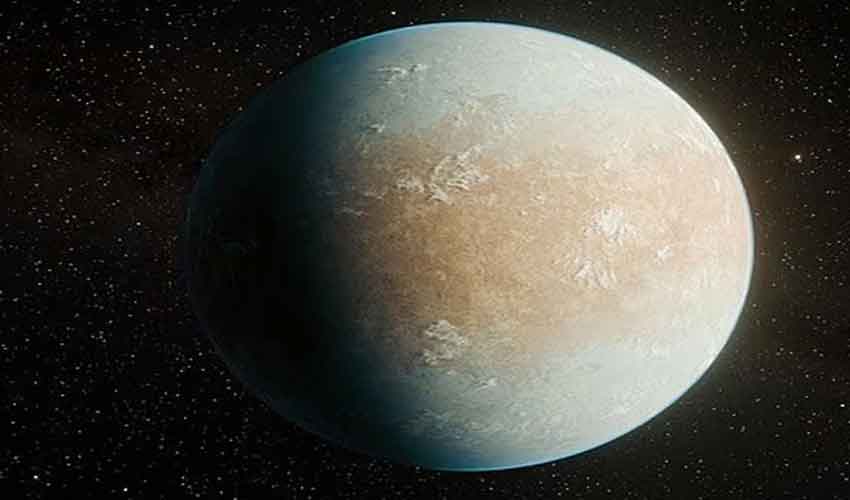
NASA has discovered a new planet nearly 146 light-years from Earth that shows remarkable similarities to our planet.
Named HD137010 b, the planet is believed to lie near the outer edge of its star’s “habitable zone,” suggesting the possible presence of liquid water on its surface and conditions that could support life.
NASA reports that its host star, HD 137010, is cooler and dimmer than our Sun. As a result, the planet’s surface temperature is estimated not to exceed -68°C (-90°F), which is comparable to Mars’ average surface temperature of around -65°C (-85°F).
Scientists identified this rocky exoplanet using data collected by NASA’s Kepler Space Telescope. The discovery was made during a single transit event – when the planet passed in front of its star – observed during Kepler’s K2 mission.