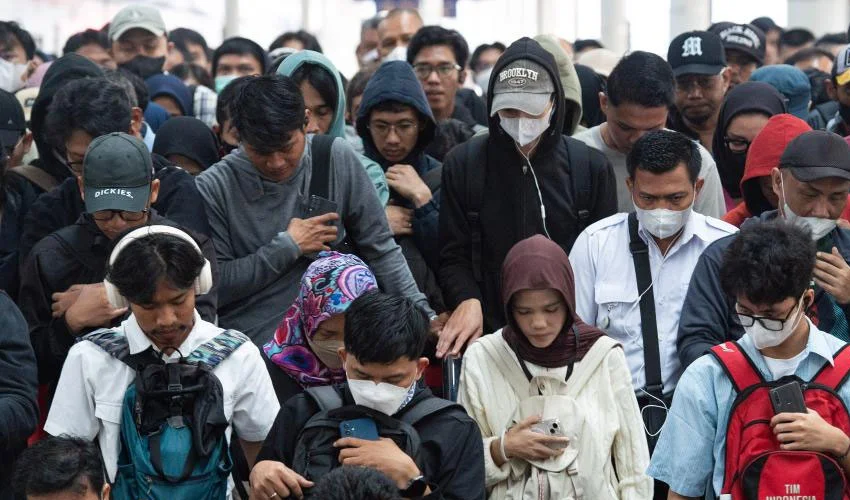
Indonesia’s capital Jakarta has overtaken Tokyo to become the world’s largest city, hosting 41.9 million residents, according to a new United Nations report.
Bangladesh’s Dhaka has surged to second place with 36.6 million people and is projected to become the largest city globally by 2050.
The UN’s World Urbanization Prospects 2025 report highlights a growing trend of urban concentration in Asia. Nine of the top ten megacities are now in Asia, including New Delhi, Shanghai, Guangzhou, Manila, Kolkata, and Seoul. Cairo in Egypt is the only non-Asian city in the top ten.
The number of megacities—urban areas with over 10 million inhabitants—has jumped to 33, up from just eight in 1975, reflecting rapid global urban growth.
Jakarta’s challenges amid rapid growth
Jakarta’s rise comes with significant risks. As a low-lying coastal city on Java island, it faces severe flooding and rising sea levels, with estimates suggesting that up to one-quarter of the city could be underwater by 2050.
The Indonesian government is relocating its administrative capital to Nusantara in East Kalimantan, Borneo. Yet, the UN projects that Jakarta’s population will grow by 10 million more residents by 2050.
The city is also grappling with inequality and affordability issues, prompting protests earlier this year from low-income workers, including ride-share and delivery riders.
Dhaka’s rapid rise
Bangladesh’s capital Dhaka has climbed from ninth to second place, driven by migration from rural areas as people seek jobs or flee environmental challenges such as flooding, worsened by climate change. The city’s population growth is expected to continue, making it the world’s largest city by mid-century.
Other global urban trends
Tokyo, with 33.4 million residents, has dropped to third place. Cities like Sao Paulo and Lagos are leading urban growth in the Americas and Africa, respectively, while Tehran faces water shortages affecting its 9 million residents.
The UN report also introduced new measures to standardize definitions of urbanization, focusing on the size of individual cities rather than combined metropolitan areas.