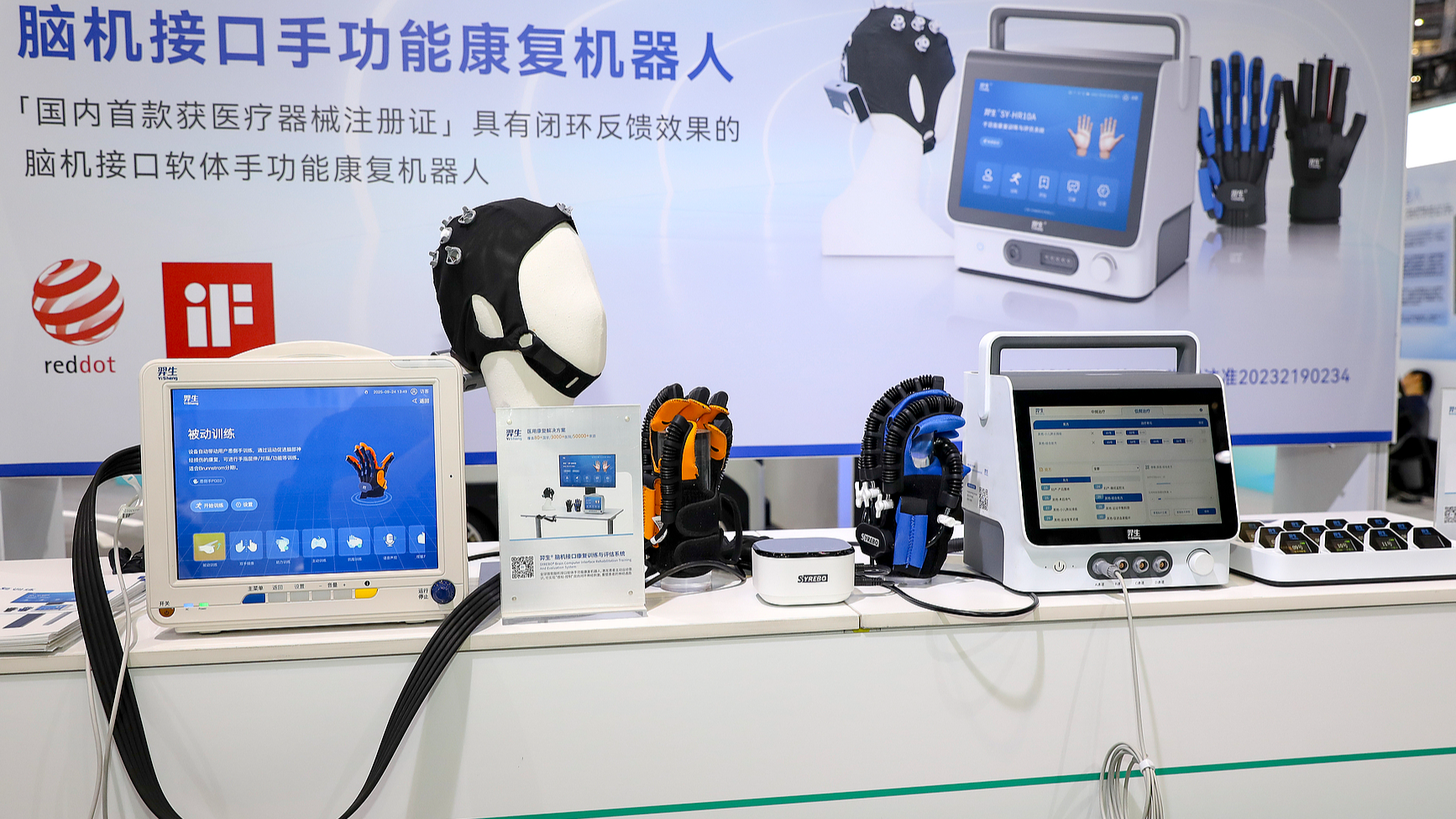
China’s medical technology ecosystem is turning science fiction into clinical fact, with innovations from surgical robots to brain-computer interfaces (BCIs) transforming lives. A landmark clinical trial underscores this progress – the country’s first successful prospective clinical trial of an invasive BCI.
The participant, a man who had lost all four limbs, was implanted with the device. Within just two to three weeks of training, he could perform daily digital tasks, such as typing and gaming, with a proficiency comparable to that of using a laptop touchpad.
This breakthrough makes China the world’s second country to reach this advanced stage with an invasive BCI, further cementing its status as a global leader in medical innovation.
“This trial sends a clear message to the global community. Chinese teams possess end-to-end capabilities, from core R&D all the way to clinical application,” said Zhao Zhengtuo, research fellow at the Center for Excellence in Brain Science and Intelligence Technology, Chinese Academy of Sciences.
Policy boost
To build on this momentum, the Ministry of Industry and Information Technology (MIIT), the National Development and Reform Commission (NDRC), along with five other central agencies jointly released a guideline in August 2025 promoting innovative development in the BCI industry.
The document outlines phased goals for 2027 and 2030, focusing on breakthroughs in upstream hardware, midstream BCI systems and downstream application scenarios.
Industry analysts project that China’s BCI market will exceed 6 billion yuan ($835 million) by 2028 as clinical indications broaden.
“BCI technology is poised to restore partial physiological function for patients with blindness or aphasia, and to provide therapeutic options for Parkinson’s disease, epilepsy, Alzheimer’s, depression and autism,” said Jiang Xiaobing, chief of neurosurgery at Union Hospital, Tongji Medical College, Huazhong University of Science and Technology. “Each breakthrough brings new hope to these patients.”
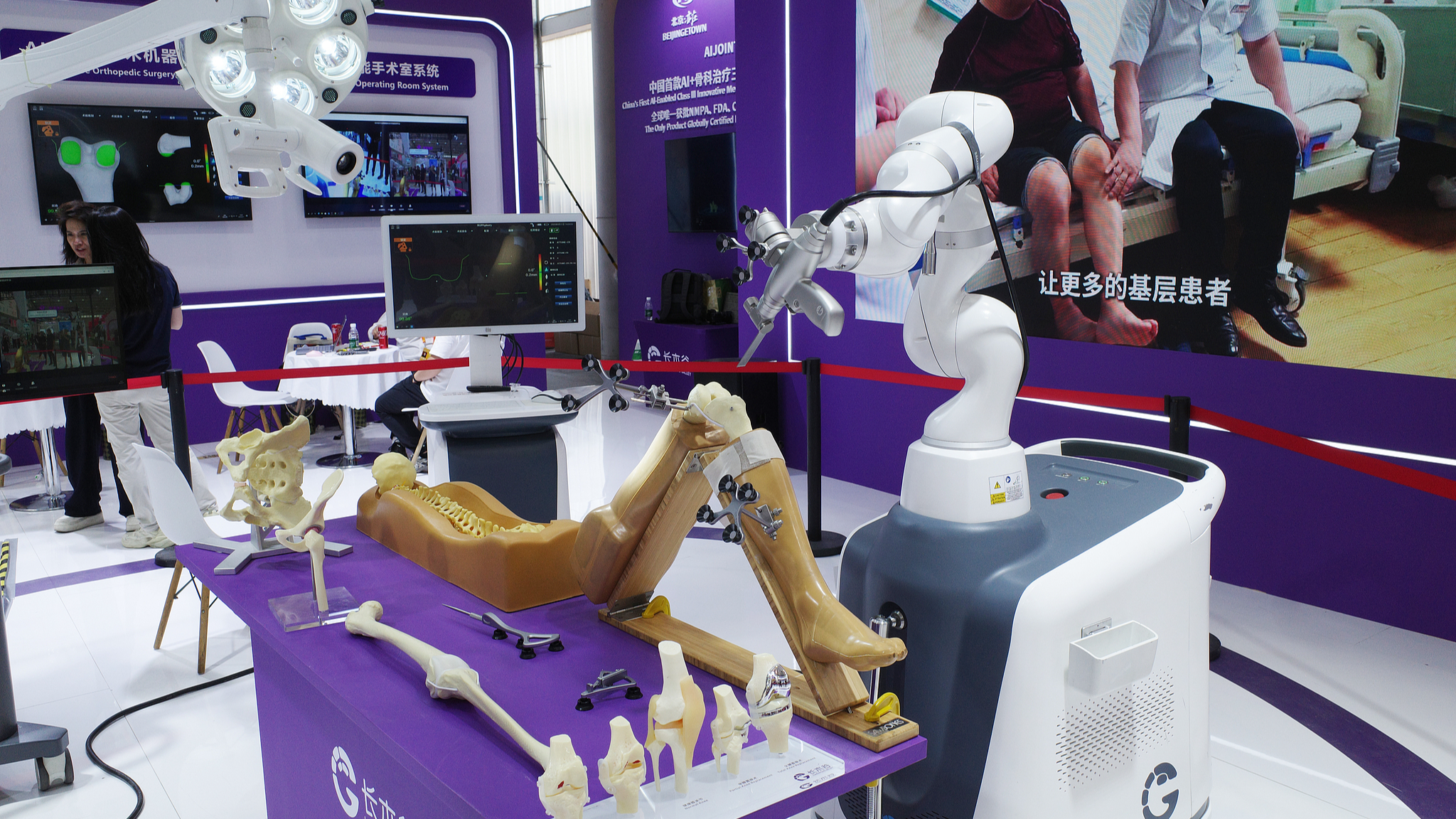
A surgical robot is displayed at the 2025 China International Fair for Trade in Services, Beijing, September 11, 2025. /VCG
Broader medical-device surge
The BCI milestone is part of a larger surge in innovation in China’s medical-equipment sector.
According to the 2025 green paper on the status and trends of China’s medical devices, the sector has grown at an average annual rate of more than 12 percent over the past decade, reaching a market size of 1.35 trillion yuan ($187.9 billion) in 2024.
China is now the world’s second-largest medical-device market, home to the greatest number of manufacturers and the most comprehensive product range globally.
Chinese medical equipment reached over 9,000 medical institutions in more than 190 countries and regions last year, according to the China International Conference on Medical Equipment Cooperation held in July.
The country’s laparoscopic surgical robots have been exported to 23 nations, while its CT scanners and ventilators have been delivered to over 9,000 hospitals worldwide.
Over the past five years, China’s medical equipment import and export trade has recorded a compound annual growth rate of 9.4 percent, reflecting stronger global competitiveness, brand influence and international cooperation, said Hou Yan, chairperson of the China Association of Medical Equipment.
Meanwhile, the National Medical Products Administration (NMPA) approved 45 innovative medical devices in the first half of 2025 – an 87 percent year-on-year increase – signaling that domestic innovation is entering a sprint phase.