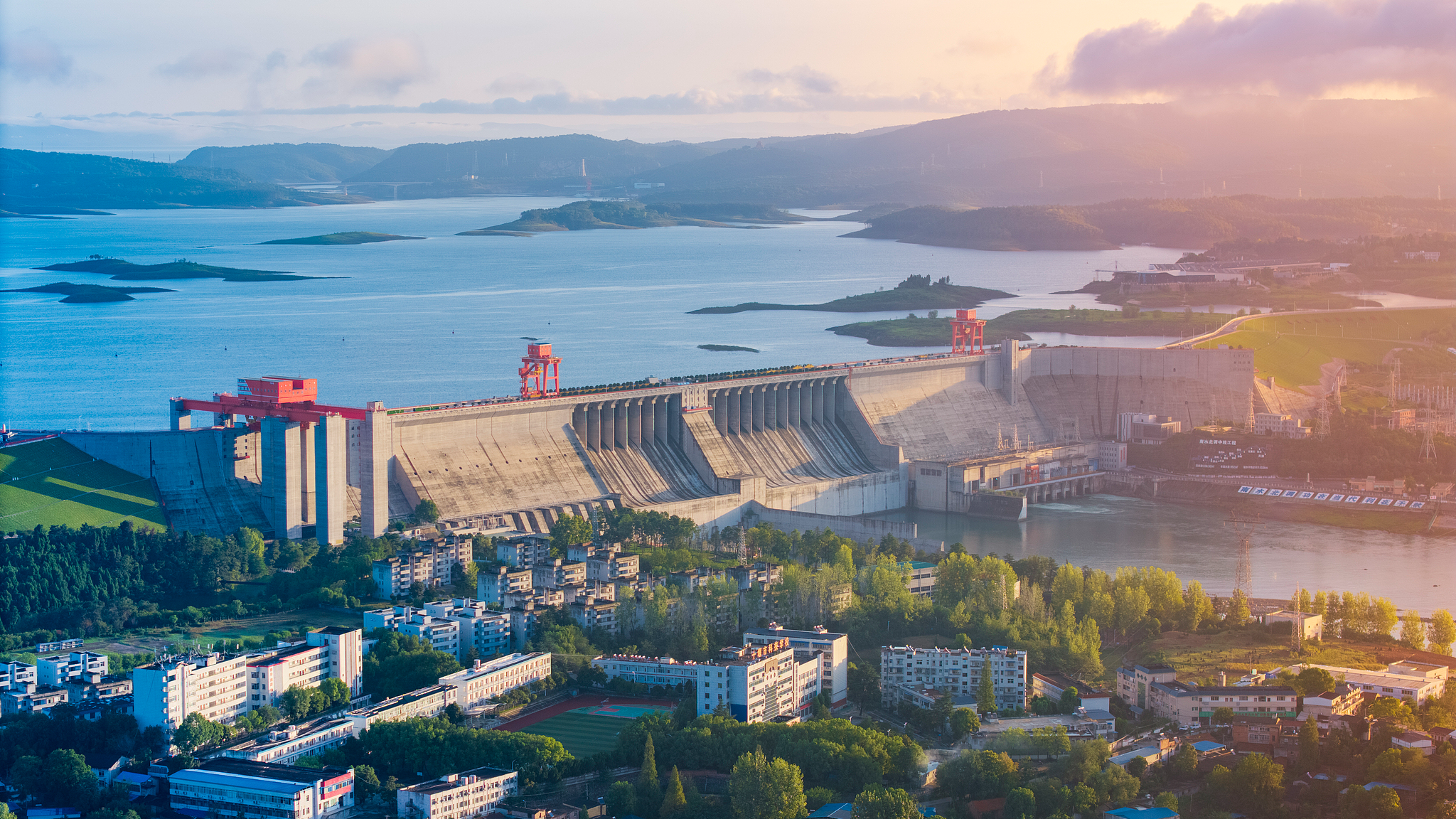
China has built the world’s largest, most comprehensive and most populous water infrastructure system, said officials from China’s Ministry of Water Resources on Monday at a press conference about the achievements of the country’s water conservancy development during the 14th Five-Year Plan period (2021-2025).
Minister of Water Resources Li Guoying said that as of the end of 2024, China has built 95,000 reservoirs, 200 large- and medium-scale water diversion projects, 6,924 large- and medium-sized irrigation areas and 318,000 kilometers of embankments.
With those water conservancy projects, the national water network coverage rate is expected to reach 80.3 percent by the end of 2025, Li said, adding that the irrigated area of farmland will reach 1.09 billion mu (about 73 million hectares) and the rural tap water penetration rate will reach 96 percent.
Li noted that these advancements play a vital role in supporting national strategies, stabilizing grain production, ensuring harvests and improving the quality of life for both urban and rural populations.
Li also emphasized the significant investments in water conservancy, which surpassed the 1-trillion-yuan mark for the first time in 2022 and have broken historical records for three consecutive years.
Noting the investment in water conservancy construction reached 1.35 trillion yuan ($190 billion) in 2024, Li said the total investment from 2021 to 2025 is projected to exceed 5.4 trillion yuan, which is 1.6 times that of the 13th Five-Year Plan period.
Li added that as many as 172 major water conservancy projects have commenced since 2021, optimizing water infrastructure’s layout, structure, functionality and systemic integration of water infrastructure.
Zhang Xiangwei, head of the ministry’s department of planning and programming, emphasized the country’s progress in intelligent dam construction.
China has launched pilot projects for 12 intelligent dams and accelerated the development of a modern reservoir management system, Zhang said.
Since 2021, China has completed a national platform for reservoir operation and management, equipping over 62,000 reservoirs with rainfall and hydrological monitoring and installing safety equipment at over 55,000 dam sites, significantly enhancing safety risk monitoring and forecasting capabilities.