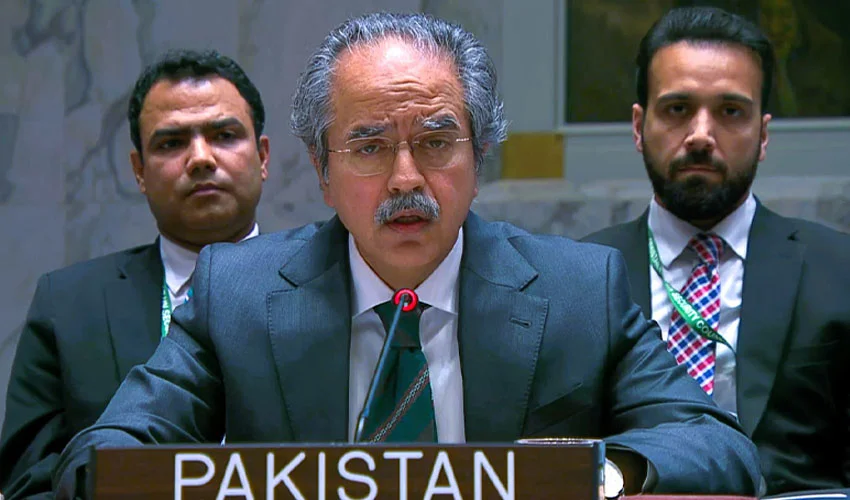
Pakistan’s Permanent Representative to the UN Asim Iftikhar slated what he called “double standards” in the global fight against terrorism, questioning why the UN Security Council’s terrorism list includes only Muslims, while non-Muslim extremist groups escape accountability.
Speaking at a Security Council debate on “Threats to international peace and security posed by terrorist acts”, the Pakistani envoy said this imbalance is “absolutely unacceptable” and undermines credibility in the fight against terrorism.
“It is beyond comprehension that not a single non-Muslim terrorist is on the Council’s list. Double standards and political agendas act as oxygen for terrorism,” Iftikhar said.
Terrorism in the digital age
The ambassador warned that terrorism is evolving with greater intensity in the digital world, as extremist groups exploit online platforms to radicalize youth and raise funds.
He also cautioned against growing cooperation between Tehreek-e-Taliban Pakistan (TTP), the Baloch Liberation Army (BLA), and the Majeed Brigade, which he said are jointly targeting Pakistan’s strategic projects, infrastructure, and civilians.
The TTP, he noted, remains the largest terrorist group on the UN list and operates from Afghan soil.
ISIS-K, with an estimated 2,000 fighters in Afghanistan, was described as the most dangerous global offshoot of ISIS.
Criticism of India and state terrorism
Turning to regional tensions, Iftikhar accused India of financing and supporting terrorist groups, engaging in cross-border terrorism, and even carrying out targeted killings abroad.
He recalled India’s May 2025 strikes, which killed 54 Pakistani civilians, including women and children, saying such actions represent state terrorism disguised as counter-terrorism.
“State terrorism cannot be allowed to wear the cloak of counter-terrorism – its first victim is global peace,” the ambassador told the Council.
Call for a balanced global approach
The envoy urged the UN to adopt a comprehensive, law-based counter-terrorism strategy that addresses:
Root causes of terrorism, including state repression.
Distinguishing between legitimate struggles against foreign occupation and terrorism.
Confronting Islamophobia, human rights abuses, and demographic changes in Occupied Jammu & Kashmir and Palestine.
Iftikhar concluded by stressing that only a just, balanced, and united global response can defeat terrorism in all its forms.