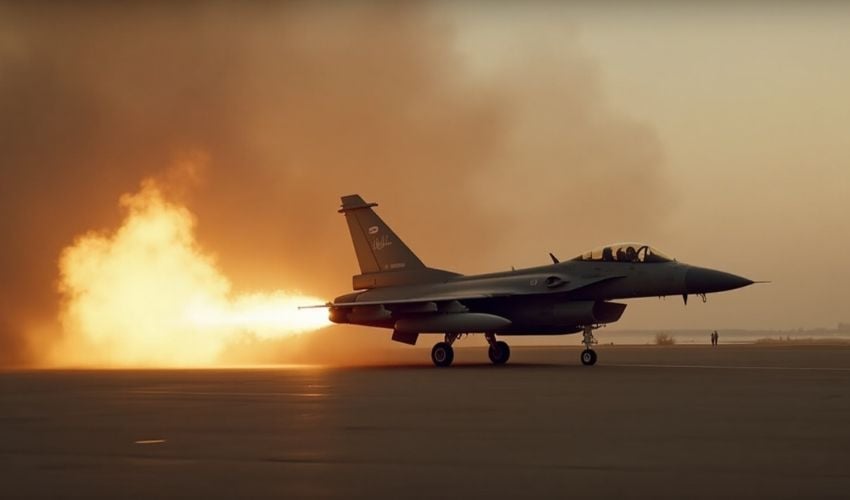
ISLAMABAD (PEN) : Foreign media reports that shares of Dassault Aviation, the manufacturer of Rafale fighter jets, have seen a continued decline in value. The company’s stock fell by another 4.70%, bringing the total drop to over 8% in just one week.
Uncertainty surrounding Dassault Aviation’s future outlook remains high, as market confidence appears shaken.
Earlier, the shares of Dassault Aviation – the French company behind the Rafale fighter jet- fell sharply by 6% on Wednesday.
The development came after Pakistan’s air force shot down 5 Indian aircraft, including three Rafale jets, in the wake of rising military tensions along the Line of Control (LoC) and eastern border.
It is pertinent to note that during a recent press briefing on Operation Sindoor, Indian Air Force (IAF) Air Marshal A.K. Bharti refrained from confirming reports of Rafale jet losses by the Pakistan Air Force (PAF).
India’s Director General Military Operations (DGMO) Lieutenant General Rajiv Ghai, when questioned about the downing of Rafale aircraft, stated, “Losses are a part of combat,” but declined to provide specifics, citing operational security concerns.
He claimed that all Indian Air Force (IAF) pilots involved had returned safely.
Pakistan told international media that evidence showed it had shot down five Indian fighter jets, including three French-made Rafales, during the operation.
The silence has further fueled speculation, especially as the Rafale aircraft were showcased as a key strategic edge in the Indian Air Force arsenal.
Pakistan’s military maintains it successfully shot down five Indian jets during retaliatory action, though India has so far not officially addressed these claims.
Pakistan Army spokesperson Lieutenant General Ahmed Sharif, senior Pakistan Air Force (PAF) officer Air Vice Marshal Aurangzeb declared that PAF had achieved a decisive 6-0 victory over the Indian Air Force during the recent conflict.
Expressing gratitude to Allah, Air Vice Marshal Aurangzeb praised the performance of the PAF in responding effectively to Indian aggression. “PAF maintained full preparedness both in peace and wartime. We followed the instructions of the Air Chief and exercised our right to self-defense by targeting those who attacked Pakistan,” he stated.
He detailed that all incoming Indian drones and missiles were tracked as part of Pakistan’s air defense operations. The PAF successfully jammed enemy drones, disrupted their data transmission, and applied both soft and hard kill techniques. The “hard kill” approach was only used in areas where civilians were present to minimize collateral damage.