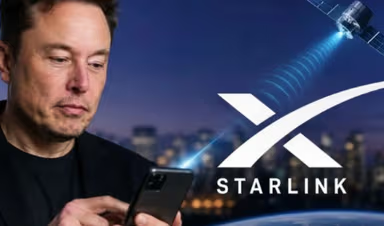
SpaceX’s planned expansion into mobile connectivity through Starlink Mobile could pose a significant challenge to US telecom giant Verizon, according to a report by technology publication PhoneArena.
The report, citing analysis published by Seeking Alpha, said Verizon could be particularly exposed to competition from SpaceX because of its substantial presence in the wireless market and its reach in rural areas.
SpaceX is pursuing plans to expand beyond satellite-based connectivity and potentially develop terrestrial mobile infrastructure, raising concerns among established carriers, including Verizon, AT&T and T-Mobile.
However, the scale and timing of any direct competition will depend on SpaceX’s spectrum holdings, infrastructure investment and ability to deploy a commercially viable network.
Verizon faces financial and growth challenges
The report highlighted Verizon’s financial position as a potential weakness ahead of increased competition.
According to Seeking Alpha, Verizon’s organic revenue growth remains negative when revenue from its acquisition of Frontier Communications is excluded.
The company has also taken on substantial debt. The report put Verizon’s debt at $165.2 billion and said the company continues to pay billions of dollars annually in dividends.
It argued that Verizon’s acquisition of Frontier, valued at approximately $20 billion, and its infrastructure investment decisions could limit its flexibility as the telecommunications market evolves.
The report said these financial pressures could make it harder for Verizon to respond to a new competitor requiring extensive network investment.
SpaceX explores terrestrial mobile infrastructure
SpaceX has acquired 14 MHz of spectrum in the 800 MHz band as part of its efforts to expand its mobile network ambitions.
However, BNP Paribas Equity Research senior analyst Sam McHugh has noted that SpaceX does not yet have enough spectrum for a full network deployment, according to the report.
SpaceX has also outlined plans for terrestrial infrastructure using towers, rooftops and other structures in a filing with the US Federal Communications Commission (FCC). The proposal suggests a potential expansion beyond a model based primarily on satellite connectivity and smaller terrestrial installations.
The report said SpaceX could begin building out the terrestrial component later in the decade, although the timing and scope remain uncertain.
Partnership or direct competition?
One possibility is that SpaceX is using its network plans to strengthen its negotiating position with AT&T, T-Mobile and Verizon over potential mobile virtual network operator (MVNO) agreements.
Under an MVNO arrangement, a provider sells mobile services using another carrier’s network rather than relying entirely on its own infrastructure.
However, the report argued that such a partnership could also help SpaceX establish its presence in the mobile market and eventually compete more directly with existing operators.
It also raised the possibility that pressure on telecom companies’ stock valuations could affect future acquisition discussions. Verizon has previously rebuffed speculation about a potential sale to SpaceX, while analysts have reportedly identified T-Mobile as another possible target.
These scenarios remain speculative and do not establish that SpaceX plans to acquire either company.
Why Verizon could be particularly exposed
According to the report, BNP Paribas considers Verizon especially vulnerable because of its significant wireless market share and strong presence in rural markets.
At the same time, the report noted that Verizon has improved its consumer perception rankings under chief executive Dan Schulman. A cited consumer survey also suggested Verizon customers were less likely than customers of rival carriers to switch to a SpaceX service.
The findings indicate that the potential threat is not solely about customer loyalty. Verizon’s ability to sustain investment, manage its debt and maintain growth could also influence how effectively it responds to new competition.