Apple has detailed a new camera feature for the iPhone 18 Pro and iPhone 18 Pro Max designed to help verify the authenticity and origin of photographs in an era of increasingly realistic AI-generated and edited images.
Called Apple Reference Image, the opt-in feature creates a cryptographically protected version of a photograph at the moment it is captured. Apple says the system is designed to establish that an image originated from an iPhone camera sensor and has not been altered or generated by AI.
Pixel data signed at capture
When Reference Image is enabled, the camera sensor switches to a dedicated operating mode and cryptographically signs the pixel data immediately after capture.
Apple says this approach differs from image-authentication systems that add provenance information after a photograph has already passed through a software processing pipeline.
The resulting file is described by Apple as a “secure digital negative” containing the original pixel data, sensor metadata and cryptographic timestamps. It is stored on the iPhone and is not designed to be edited like a conventional photograph.
The iPhone’s Secure Enclave Processor also signs information such as exposure settings, digital zoom and lens data. Apple says these details remain separate from the sensor data and cannot be used to alter the underlying pixels.
Private Cloud Compute develops the image
A Reference Image still needs to be processed into a conventional photograph before it can be viewed or shared normally.
When a user chooses to develop the image, the original digital negative is sent to Apple’s Private Cloud Compute system.
According to Apple, the system checks the signatures from the camera sensor and Secure Enclave, verifies that the relevant components belong to the same iPhone and confirms that the software processing the image has been approved.
It then processes the photograph and generates a JPEG with a composite cryptographic signature.
Apple said the signature combines RSA-3072 with ML-DSA-87, a post-quantum cryptographic algorithm intended to help preserve the ability to verify images as cryptographic threats evolve.
Privacy and fraud safeguards
Apple said Reference Image is designed to avoid revealing the identity of the photographer. The files do not contain a public credential identifying who captured the photograph, while the system is also designed to prevent multiple images from being publicly linked to the same camera sensor.
The company has also built in a mechanism to revoke images if fraud or a security problem is detected.
Private Cloud Compute assigns each Reference Image a confidence score based on whether it has the expected characteristics of Apple’s camera hardware. Apple said it can invalidate an individual image or revoke images associated with an entire sensor without needing to view the photograph’s contents.
The system also uses cryptographic time records to establish a range for when an image was captured rather than relying solely on a timestamp generated by the iPhone’s operating system.
Feature limited to iPhone 18 Pro main camera
Apple Reference Image is optional and does not replace the standard camera system on the iPhone 18 Pro lineup.
The feature is available only through the main camera sensor on the iPhone 18 Pro and iPhone 18 Pro Max.
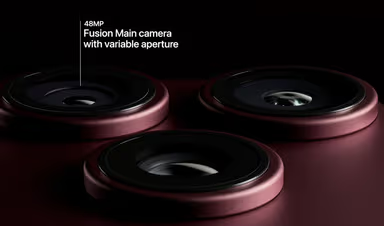
The phones also feature a 48-megapixel Fusion main camera with variable aperture, a 48-megapixel ultra-wide camera and a 48-megapixel telephoto camera with support for 12-megapixel 8x optical zoom.
Apple says Reference Image is intended to provide a technical record of a photograph’s origin as AI-generated and heavily edited images become increasingly difficult to distinguish from authentic camera photographs.