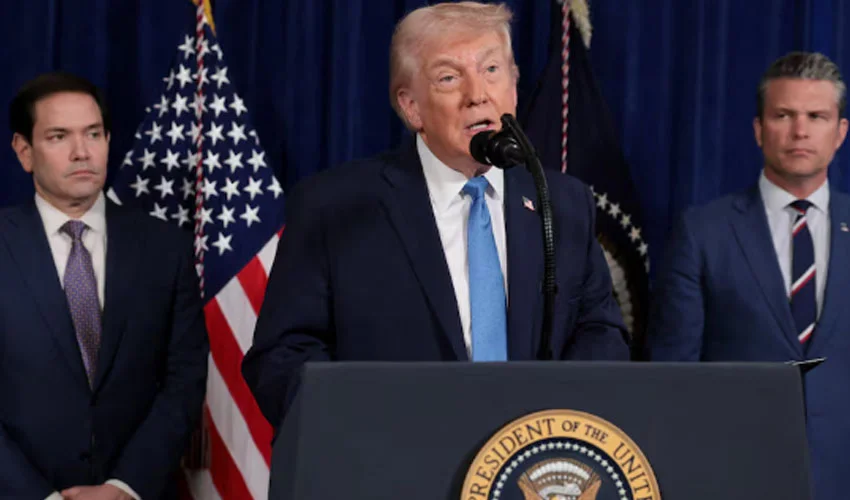
The U.S. Senate voted Thursday to advance a resolution restricting President Donald Trump from taking further military action in Venezuela without congressional approval.
The move comes as Trump said U.S. oversight of the country could continue for years and highlighted upcoming meetings with oil executives and opposition leader Maria Corina Machado.
The Senate voted 52 to 47 on a procedural measure to move forward with a war powers resolution aimed at limiting Trump’s authority to act militarily in Venezuela. A handful of Republicans joined all Democrats in supporting the motion, signaling rare congressional pushback against the White House.
Trump criticized the vote, saying on social media that Republicans should be “ashamed” for attempting to curb the president’s powers to defend the United States.
Trump signals long-term oversight
In an interview with the New York Times, Trump said U.S. involvement in Venezuela, particularly over its oil resources, could last for years. “Only time will tell… I would say much longer,” he said when asked how long oversight might continue.
Trump also said Washington was cooperating with Venezuela’s interim government, led by Delcy Rodriguez, and discussed plans to rebuild the country’s oil infrastructure profitably.
In a related development, Venezuela’s top lawmaker, Jorge Rodríguez, announced the release of a significant number of political prisoners, including foreign nationals. The move was described as a unilateral gesture of peace, though the total number of detainees freed was not disclosed.
Local rights group Foro Penal estimates around 863 political prisoners remain in Venezuelan jails, including activists, journalists, and opposition figures. Human rights groups and opposition leader Maria Corina Machado, who is scheduled to meet Trump next week in Washington, welcomed the gesture cautiously.
Colombia tensions ease
Trump also addressed relations with Colombia, which he had previously criticized. In a social media post, he described a recent phone call with Colombian President Gustavo Petro as “cordial” and indicated plans to meet soon. This suggests a temporary easing of tensions with Venezuela’s neighbor.
Venezuela, which holds the world’s largest proven oil reserves, has faced severe economic decline in recent decades. Millions of citizens have fled abroad amid poverty and political repression. The U.S. capture of Nicolás Maduro in a raid last weekend intensified scrutiny over the country’s governance, oil assets, and human rights record.
Trump recently announced plans to sell up to 50 million barrels of Venezuelan oil previously blocked under U.S. sanctions, highlighting the economic stakes of ongoing U.S. oversight.