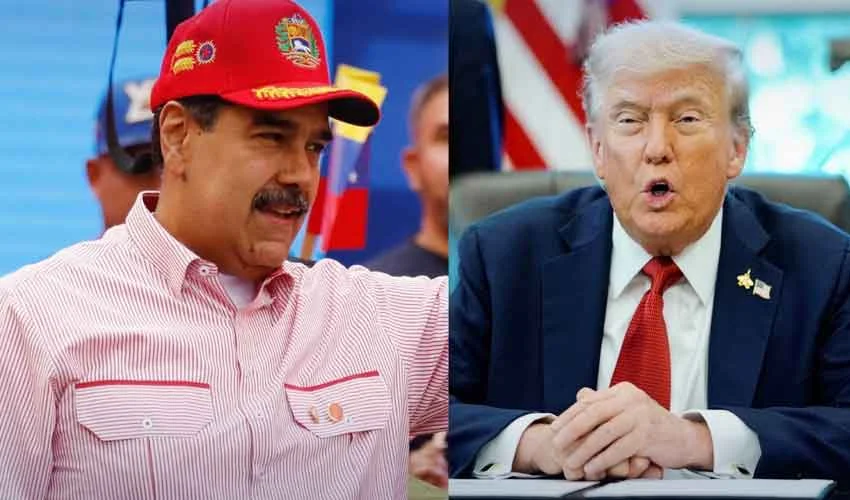
Venezuelan President Nicolas Maduro is rapidly losing options for stepping down under US-guaranteed safe passage after a brief but consequential phone call with US President Donald Trump last month, according to four people briefed on the conversation.
The call marked the most direct contact between the two leaders amid months of rising tensions, military deployments and US strikes on alleged drug-smuggling vessels.
Maduro’s last-minute requests for immunity and political control
The Nov 21 call came as Washington escalated pressure on Venezuela, including designating the Cartel de los Soles, which US officials say includes Maduro, as a foreign terrorist organization. Maduro has repeatedly denied all criminal accusations, saying the United States is seeking regime change to seize Venezuela’s natural resources.
During the call, Maduro told Trump he was willing to leave Venezuela if the US granted full legal amnesty for him and his family, three sources said. He also asked for all US sanctions to be lifted and for Washington to halt a prominent International Criminal Court case against him.
Maduro further requested that more than 100 Venezuelan officials — many sanctioned by the US for alleged corruption, human rights abuses or drug trafficking — also receive relief from sanctions, according to the sources.
Two sources added that Maduro wanted Vice President Delcy Rodríguez to lead an interim government ahead of new national elections.
Trump rejects demands, sets one-week deadline
Trump turned down most of Maduro’s requests during the call, which lasted less than 15 minutes. However, he reportedly offered Maduro one week to leave Venezuela with his family for a destination of his choosing.
That US-guaranteed safe passage expired last Friday, triggering Trump’s announcement on Saturday that Venezuela’s airspace should be considered “closed in its entirety,” the sources said.
While The Miami Herald previously reported parts of the call, the US deadline for Maduro’s departure has not been disclosed until now.
Trump confirmed on Sunday that he had spoken with Maduro but declined to share details. The White House offered no further comment, and Venezuela’s information ministry did not respond to inquiries.
Disputed presidency, internal US deliberations
Washington has long said it does not recognize Maduro — in power since 2013 — as Venezuela’s legitimate president. The US and several Western governments dismissed his claimed re-election victory last year as fraudulent, saying independent observers found that the opposition had overwhelmingly won.
Addressing supporters on Monday, Maduro pledged “absolute loyalty” to the Venezuelan people.
It remains uncertain whether a new proposal for safe passage is still possible. A senior US official said Trump met top advisers on Monday to discuss the Venezuela pressure campaign, among other issues. One Washington-based source familiar with internal discussions said a negotiated exit for Maduro has not been ruled out but emphasized that major disagreements and unresolved details remain.
The US has raised its reward for information leading to Maduro’s arrest to $50 million, while $25 million rewards are posted for other senior officials such as Interior Minister Diosdado Cabello, all of whom deny US allegations of drug trafficking and related crimes.
Sources say Maduro’s administration has requested another call with Trump.
Escalating US military posture, counter-narcotics ops
A senior US official confirmed that Trump’s Oval Office meeting on Monday focused partly on Venezuela as concerns grow in Caracas about potential military action.
Trump’s declaration that Venezuela’s airspace is “closed in its entirety” caused confusion and anxiety across the capital.
The Trump administration has been reviewing multiple options, including responses to what it portrays as Maduro’s role in facilitating drug shipments to the United States — allegations the Venezuelan government denies.
US forces have carried out at least 21 strikes on alleged drug-smuggling boats in the Caribbean and Pacific since September, killing at least 83 people. Despite being framed as counter-narcotics missions, the scale of military deployment exceeds typical requirements, fueling speculation about broader intentions.
Reports of imminent action have intensified amid a significant US military buildup in the region and worsening diplomatic relations.