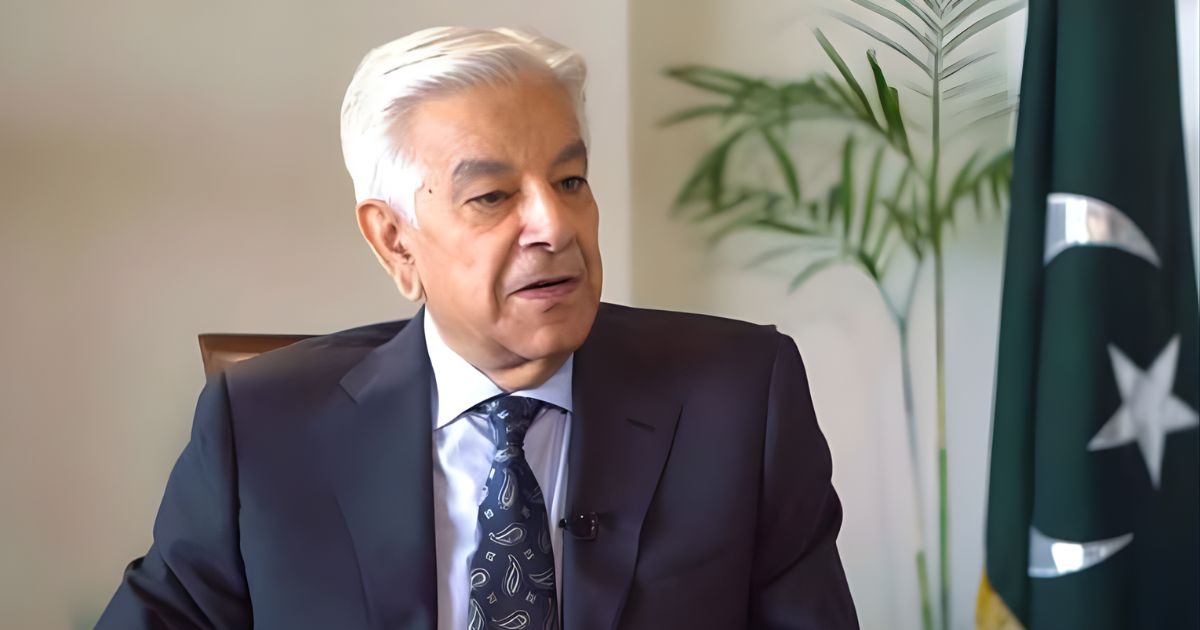
Minister of Defence Khawaja Asif will lead a high-level Pakistani delegation to hold discussions with Afghan Taliban authorities in Doha, Qatar, on Saturday (today), the Foreign Office (FO) said, after the neighbouring countries extended a ceasefire to their fierce fighting.
“The talks will focus on immediate measures to end cross-border terrorism against Pakistan emanating from Afghanistan and restore peace and stability along the Pak-Afghan border,” the FO said.
Once allies, Islamabad and Kabul have been engaged in cross-border fighting, which came to a halt with temporary truce lately.
Terrorist attacks in Pakistan have been a major irritant in its relationship with the Afghan Taliban, which returned to power in Kabul after the departure of US-led forces in 2021.
The latest conflict between the two countries was triggered after Islamabad repeatedly demanded that Kabul rein in terrorists who had stepped up attacks in Pakistan, saying they operated from havens in Afghanistan. The Taliban denies giving haven to militants to attack Pakistan.
The fighting between the two neighbouring nations this month is their worst in decades. It has drawn the attention of Saudi Arabia and Qatar, who have mediated and sought to stop the fighting. US President Donald Trump has also said he can help resolve the conflict.
The conflict began after despite Pakistan’s repeated diplomatic efforts and requests to the Afghan government to rein in terrorists operating from their soil failed and the Taliban authorities did not take concrete measures against the militants.
The FO in its fresh statement said Pakistan did not seek escalation but urged the Afghan Taliban authorities to honour their commitments to the international community and address Pakistan’s legitimate security concerns by taking verifiable action against terrorist entities, including the Tehreek-e-Taliban Pakistan (TTP), also known as Fitnatul Khawarij, and Balochistan Liberation Army (BLA), alias Fitnatul Hindustan.
Pakistan appreciated the mediation efforts of Qatar as well and hoped the discussions would contribute to peace and stability in the region.
Meanwhile, an Afghan government spokesperson has also confirmed that Pakistan and Afghanistan will hold peace talks in Doha on Saturday.
“As promised, negotiations with the Pakistani side will take place today in Doha,” Zabihullah Mujahid said in a statement.
A high-level delegation of the Islamic Emirate, led by the Minister of Defence Mullah Muhammad Yaqoob, has left for Doha, he said.
The development comes a day after, Defence Minister Asif stated that there would be no more delegation visit, demarches and appeals to Afghanistan from Pakistan.
In a post on X, he said there had been no positive response from Kabul in five years, despite Pakistan’s strenuous and sincere efforts and sacrifices.
Presenting a detailed review of Pakistan’s efforts for bringing peace and preventing infiltration from Afghanistan since the Taliban came into power in 2021, he said multiple visits were paid to Kabul by the Pakistan’s foreign minister, defence minister, ISI officials, special advisors, national security advisors and secretary.
Asif added that several demarches were served on Kabul, besides holding hundreds of border flag meetings with Afghan officials to convey Islamabad’s concerns. He further highlighted that since 2021, Pakistan has sacrificed around 4,000 lives of civilians and the personnel of military and the law enforcement agencies in over 10,000 incidents of terrorism.
The minister said Afghanistan had become an Indian proxy. “This war of terror has been imposed on Pakistan by India, Afghanistan and TTP together,” he said.
The defence minister said all Afghans sitting on Pakistani soil would have to go back to their homeland. “Now they have their own government in Kabul and it has been five years,” he said.
He said Afghanistan would have to live with Pakistan as a good neighbour. He said Pakistan’s land and resources belonged to 250 million Pakistanis and it was time to end the forced hospitality of five decades. He added that self-reliant nations did not thrive on foreign land and resources.