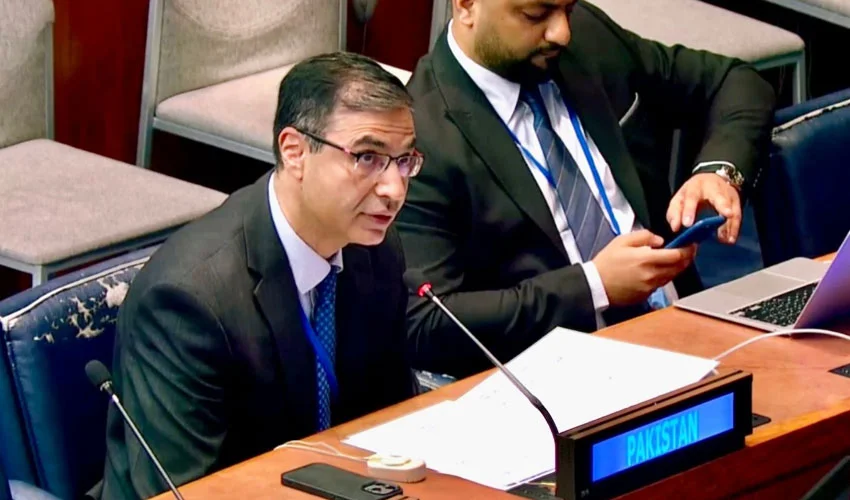
At the United Nations, Pakistan launched a sharp counterattack against India’s repeated claims over Jammu and Kashmir. Diplomat Asif Khan condemned New Delhi’s “recycled lies,” accusing it of hiding grave human rights violations in the occupied region.
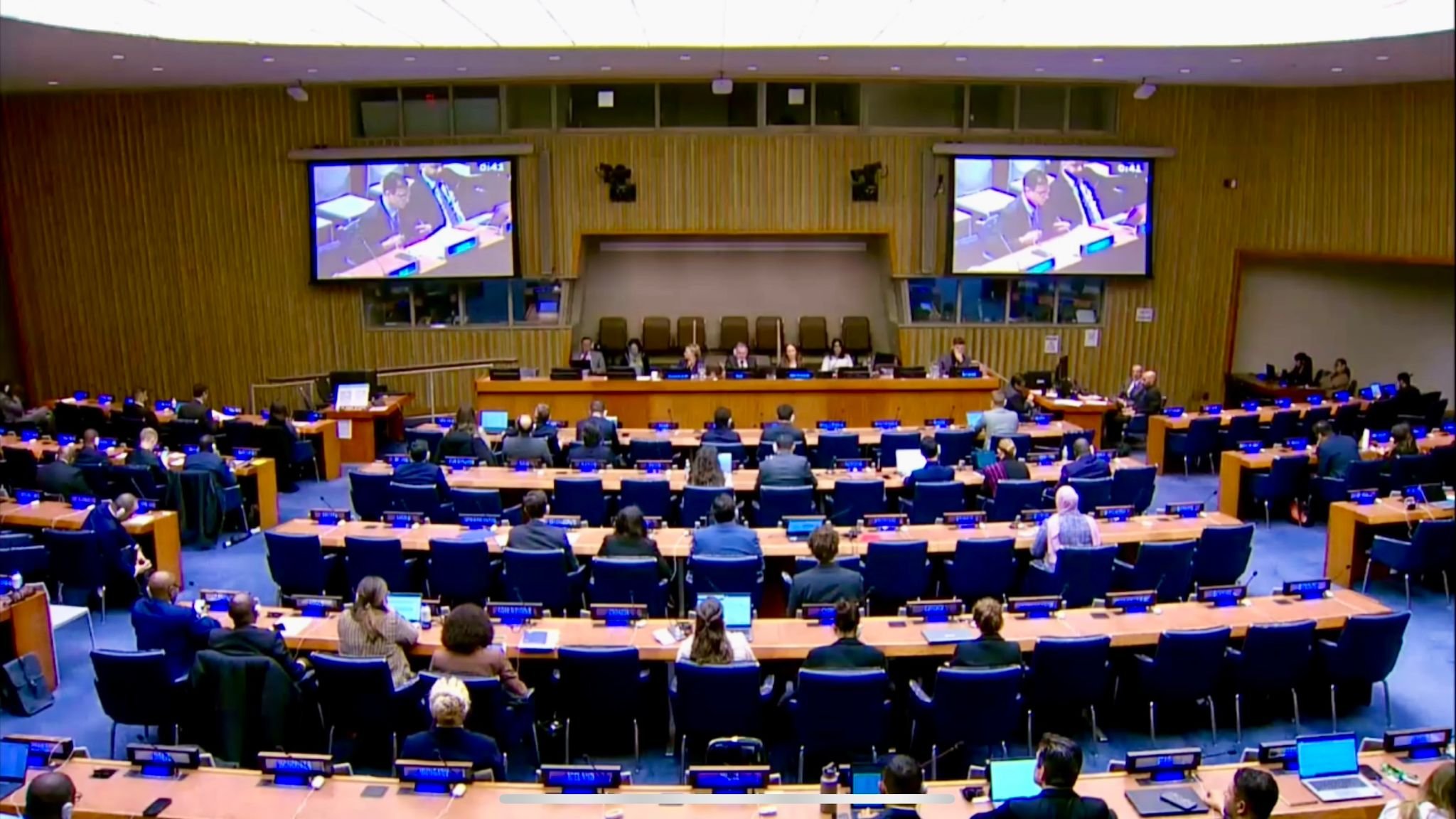
Speaking at the UN’s 4th Committee on Decolonisation, Asif Khan, a representative from Pakistan’s Permanent Mission, rejected India’s assertions regarding Kashmir’s status.
“I am compelled to take the floor to respond to the disinformation-laden remarks of the representative of India,” he said. “Each year, India comes to this august forum with a recycled script of distortions. Today is no different.”
Khan asserted that Jammu and Kashmir “has never been an integral part of India” and remains “an internationally recognized disputed territory.”
He emphasized that the UN has not only the right but also the responsibility to address the Kashmir dispute through a free and impartial plebiscite.
India’s “occupation” and human rights violations
Khan accused India of maintaining one of the world’s densest military occupations in Kashmir, deploying nearly 900,000 troops against unarmed civilians.
He detailed a list of human rights abuses, including extrajudicial killings, enforced disappearances, mass incarcerations, and sexual violence.
He also pointed to demographic changes being carried out in violation of the Fourth Geneva Convention since August 2019, saying India’s settler-colonial policies aim to alter the region’s Muslim-majority identity.
Pakistan labels India “sponsor of state terrorism”
Rejecting India’s allegations of terrorism, Khan said it was India itself that supports terrorist proxies targeting Pakistan.
He named groups such as the Tehreek-e-Taliban Pakistan (TTP), Balochistan Liberation Army (BLA), and the Majeed Brigade — all allegedly financed and directed by India — responsible for attacks that have killed thousands of civilians.
“India’s claim of being the world’s largest democracy is hollow,” Khan said. “It has become the largest producer of disinformation and intolerance.”
He accused India’s ruling BJP-RSS ideology of institutionalizing Islamophobia and persecuting minorities as part of state policy — concerns widely documented by international human rights organizations.
Warning against regional escalation
Khan warned that India’s “reckless behavior” threatens South Asian stability, citing unprovoked attacks earlier this year that targeted Pakistani civilians, including women and children.
He clarified that Pakistan exercised its right to self-defense under Article 51 of the UN Charter and only targeted military objectives. “India suffered significant losses, including multiple aircraft downed,” he added.
Concluding his remarks, Asif Khan reaffirmed Pakistan’s unwavering support for the Kashmiri people’s right to self-determination.
“The people of Kashmir have waited over seven decades to exercise their UN-mandated right,” he said. “Pakistan will continue to expose India’s hypocrisy, oppose its state terrorism, and support the just struggle of the Kashmiri people.”