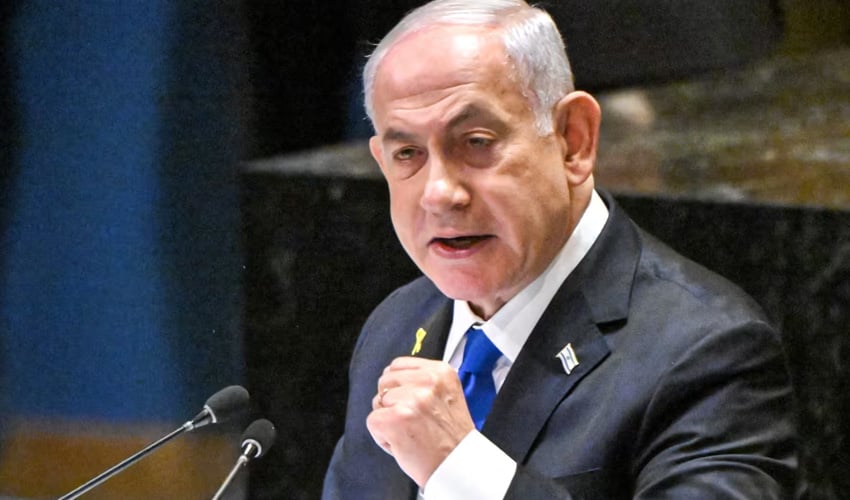
Israeli Prime Minister Benjamin Netanyahu has said he hopes to announce the release of hostages held in Gaza “in the coming days,” raising cautious optimism amid ongoing airstrikes that killed at least 70 Palestinians on Saturday.
In a televised statement, Netanyahu said Hamas “will be disarmed and Gaza will be demilitarised — either the easy way or the hard way, but it will be achieved.”
His remarks followed Hamas’s announcement that it had agreed to release hostages under a U.S.-brokered peace plan, though the group avoided any commitment to disarmament and sought further negotiations.
Trump pushes for swift agreement
U.S. President Donald Trump, architect of the 20-point peace plan, has publicly pressed Hamas to act “quickly” to complete a deal.
“Hamas must move quickly, or else all bets will be off… Let’s get this done, FAST,” Trump wrote on Truth Social, warning that he would “not tolerate delay.”
He later claimed that Israel had “agreed to the initial withdrawal line,” apparently referencing troop positions outlined in the U.S. proposal, which envisions:
An immediate end to hostilities
The release of 20 living Israeli hostages and the remains of others
The exchange of hundreds of detained Gazans
The Israel Defense Forces (IDF) confirmed that it had been ordered “to advance readiness for the implementation of the first phase of the Trump plan,” while stressing that troop safety remained its “top priority.”
Indirect ceasefire talks between Israel and Hamas are set to begin in Egypt on Monday, marking the most serious negotiation push in months.
Hamas, under mounting pressure from regional allies and the U.S., issued what observers called a “yes, but” response — agreeing to free all remaining Israeli hostages, both living and dead, and proposing a technocratic administration for Gaza.
However, the group sidestepped Israel’s central demand for complete disarmament, one of the most contentious issues blocking a deal.
Analysts say that despite Trump’s personal involvement, major obstacles persist. Hamas continues to insist on a full Israeli withdrawal and a guarantee that Israel will not resume the war after hostages are released — terms that Israeli officials have so far rejected.
Netanyahu faces pressure at home
Netanyahu, meanwhile, is under both international and domestic scrutiny. Critics accuse him of stalling previous negotiations to prolong the war for political survival.
His coalition, dominated by ultranationalist ministers, has threatened to quit if the conflict ends without Hamas’s total defeat — a move that could collapse the government.
Despite this, public sentiment in Israel appears to favor a deal. Recent polls show a majority of Israelis supporting an agreement to secure the hostages’ release and end the war, as the country remains deeply divided and weary of the prolonged conflict.
For hostage families, the wait is agonizing.
Vicky Cohen, whose son Nimrod is believed to be among 20 living captives in Gaza, told the BBC she woke up “with a sense of expectation” but also fear.
“It is a fragile situation, and we don’t want to be disappointed again. Yet I feel hope that soon I will see Nimrod and hug him again,” she said.
Gaza endures relentless bombing
While diplomatic efforts gather pace, Israeli airstrikes continue to devastate Gaza. At least 70 Palestinians were killed on Saturday, even as Trump publicly urged Israel to “stop bombing” the enclave.
The Israeli army warned civilians that northern Gaza, including Gaza City, remains a “combat zone” and urged residents to evacuate south via Rashid Street.
Southern Gaza is already overwhelmed, housing hundreds of thousands of displaced people in dire conditions.
“We were waiting for this good news. We hope for more to come and to return to Gaza City,” a displaced Palestinian in Nuseirat told Al Jazeera.