The United States has decided to supply Ukraine with intelligence that could help it hit Russian oil refineries and power facilities, the Wall Street Journal reported on Wednesday.
The step signals a major shift in Washington’s support, as it considers Kyiv’s requests for longer-range weapons.
Officials told the WSJ that the intelligence will assist Kyiv in targeting energy infrastructure deep inside Russia, including refineries, pipelines, and power plants. The aim is to weaken the Kremlin’s war chest by cutting off vital oil and gas revenues.
While Washington has shared intelligence with Kyiv throughout the war, this marks the first time it will enable strikes directly on Russia’s energy sector.
NATO allies pressed for similar support
US officials are also urging NATO allies to provide similar intelligence to bolster Ukraine’s ability to conduct long-range strikes.
At the same time, President Donald Trump is pressing European nations to stop importing Russian oil in exchange for tougher sanctions on Moscow. According to the report, Trump has even explored tariffs on imports from India to curb its discounted crude purchases from Russia.
Trump’s rhetorical shift in Favor of Kyiv
The decision to expand intelligence support reportedly came shortly before Trump posted on Truth Social last week, suggesting that Ukraine could retake all its occupied land with European backing.
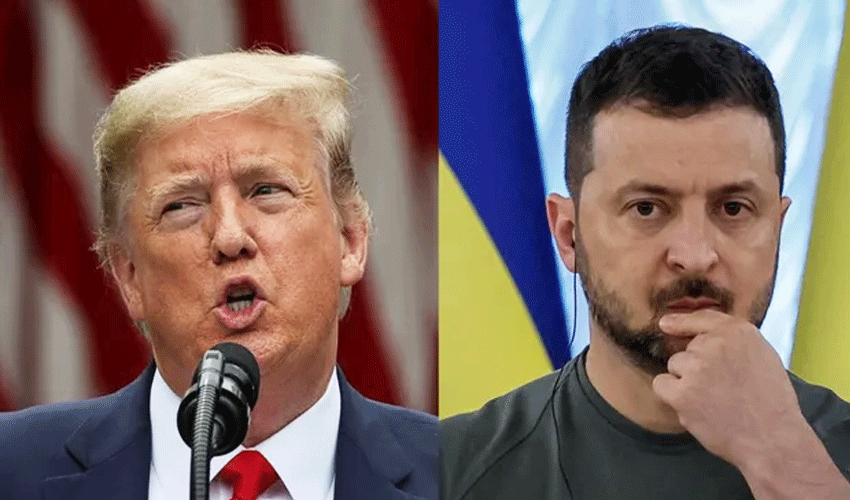
“After seeing the economic trouble the war is causing Russia, I think Ukraine, with the support of the European Union, is in a position to fight and WIN all of Ukraine back in its original form,” Trump wrote following his meeting with President Volodymyr Zelenskiy.
Ukraine eyes long-range missiles
Beyond intelligence, the US is considering Ukraine’s request for Tomahawk cruise missiles, which have a range of 2,500 km — enough to strike Moscow from Ukrainian territory.
Kyiv has also begun producing its own long-range missile, dubbed the Flamingo, though quantities remain unclear.
In response to growing Western pressure, Kremlin spokesman Dmitry Peskov stressed last week that countries like Turkey have the right to continue trade with Moscow if it benefits them.
Meanwhile, G7 finance ministers pledged to tighten measures against buyers of Russian oil and those helping Moscow bypass sanctions.