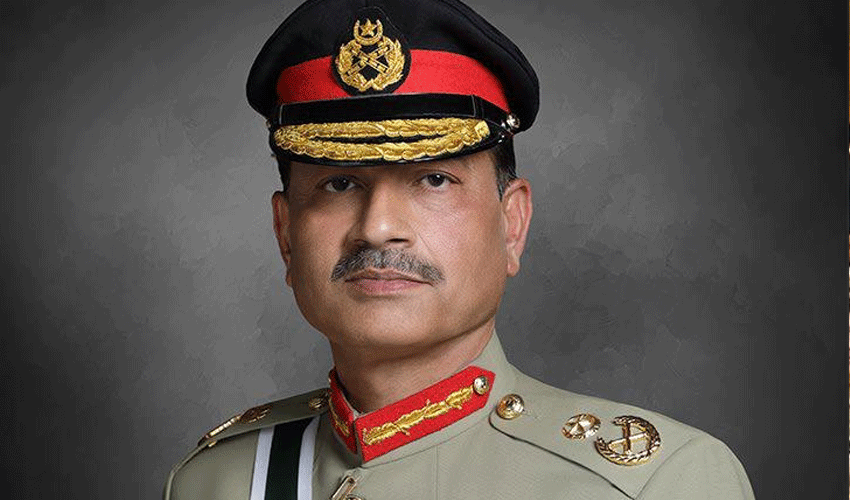
Chief of Army Stafff (COAS) Field Marshal Syed Asim Munir is making global headlines for steering the country through a new era of diplomacy.
According to The Economist, Munir’s private lunch with US President Donald Trump at the White House on June 18 marked a significant diplomatic breakthrough between Pakistan and the United States.
The meeting was followed by a noticeable policy shift. The U.S. announced a new trade agreement with Pakistan—imposing only a 19% tariff—while slapping a 25% tariff on India and calling it a “dead economy.”
Rebooting Pak-US ties
The British publication noted that the U.S. is now reconsidering its military and economic engagement with Pakistan. After years of cool relations post-Afghanistan withdrawal and the Bin Laden raid, Washington is now looking to resume arms trade and counter-terrorism cooperation.
Planned provisions include armored vehicles and night vision devices. U.S. officials have acknowledged Pakistan’s actions against local Daesh factions and are quietly restoring some aid programs.
In an intriguing development, close Trump allies have expressed interest in investing in Pakistan’s emerging crypto and mineral sectors—signaling revived investor confidence.
India’s declining favour in US policy
The Economist reports that America’s renewed closeness to Pakistan coincides with growing scrutiny of India’s regional behavior. President Trump’s harsh economic measures—labeling India a “dead economy” and imposing punitive tariffs—highlight Washington’s dissatisfaction with New Delhi’s policies.
U.S. officials are reportedly reviewing evidence shared by Islamabad regarding Indian support for regional insurgencies. While American policymakers remain skeptical, it marks a departure from their earlier indifference.
A Calculated risk-taker
Field Marshal Munir has gained popularity at home, particularly following the brief military clash with India. Unlike his predecessors, Munir reportedly took a bold approach, resisting international pressure and retaliating decisively—actions that have bolstered his public image.
Despite speculations of him eyeing the presidency, Lt Gen Ahmed Sharif Chaudhry, the army’s spokesperson, dismissed such rumors as “nonsense.” Chaudhry emphasized Munir’s deep understanding of both Islamic tradition and Western diplomacy.
Balancing China, Gulf, and the West
The Economist also commended Munir’s ability to maintain balanced relationships with China and the Gulf states while reopening doors in Washington.
He has shown particular admiration for Saudi Crown Prince Mohammed bin Salman’s modernization efforts, reflecting Munir’s own economic ambitions for Pakistan.
Interestingly, Munir is also being viewed in Washington as a potential conduit for backchannel engagement with Iran—further expanding Pakistan’s diplomatic role in the region.
What lies ahead?
With a two-thirds parliamentary majority, Pakistan’s civilian government may be poised for major constitutional reforms.
But as The Economist puts it, “The future of Pakistan’s foreign policy—and perhaps its politics—rests on one question: What exactly does Field Marshal Munir want?”
His firm stance on India remains unchanged. Asked how Pakistan would respond to future Indian military actions, the military spokesperson warned, “We’ll start from the east… They need to understand they can be hit everywhere.”