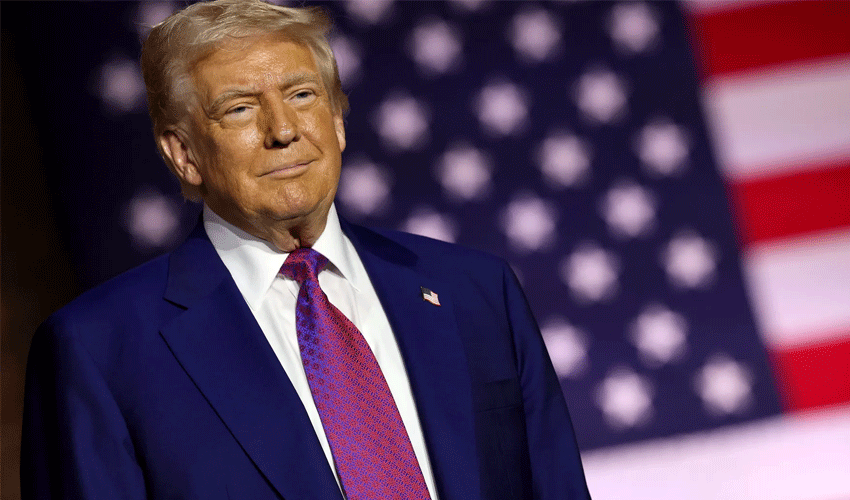
US President Donald Trump announced on Wednesday that his administration has finalized a trade agreement with Pakistan, which includes plans for joint development of the country’s “massive” oil reserves.
“We are in the process of choosing the Oil Company that will lead this Partnership. Who knows, maybe they’ll be selling Oil to India some day!,” Trump said in a post on his social media platform, Truth Social.
While specific details of the Pakistan deal were not immediately released, Trump said the White House is actively engaged in trade discussions with several countries, including South Korea. He confirmed a meeting with South Korean officials was scheduled for later in the day.
“I have spoken to the Leaders of many Countries, all of whom want to make the United States ‘extremely happy.’ I will be meeting with the South Korean Trade Delegation this afternoon. South Korea is right now at a 25% Tariff, but they have an offer to buy down those Tariffs. I will be interested in hearing what that offer is,” Trump said.
“Other Countries are making offers for a Tariff reduction. All of this will help reduce our Trade Deficit in a very major way. A full report will be released at the appropriate time,” he added.
The US president has set an August 1 deadline for dozens of countries to finalize trade deals with the US or face tariffs significantly higher than the existing 10% baseline. A separate deadline of August 12 was set for China.
Regarding China, Trump expressed optimism, stating, “We’re doing fine with China. I think it’s going to work out very well. I think we’re going to have a very fair deal with China.”
In a separate move, Trump announced the imposition of 25% tariffs on imports from India, criticizing what he called “the highest tariffs in the world” and “the most strenuous and obnoxious non-monetary trade barriers” imposed by New Delhi.
So far, the Trump administration has struck trade deals with the UK, Indonesia, Vietnam, the Philippines, Japan, and the European Union. However, the White House acknowledged that several of these agreements are still under negotiation and not yet finalized.