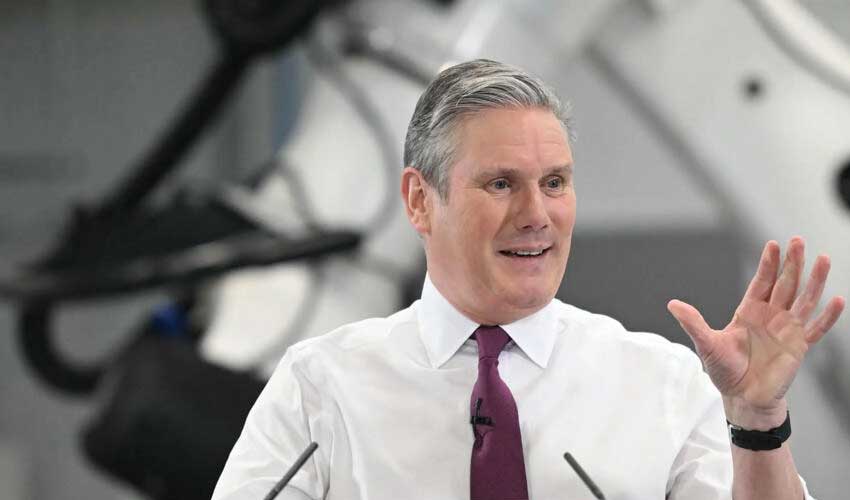
British Prime Minister Keir Starmer is weighing formal recognition of a Palestinian state, two senior officials confirmed on Monday, amid intensifying domestic pressure and growing public outrage over the worsening humanitarian crisis in Gaza.
The development marks a significant shift in British foreign policy and comes as more than 250 Members of Parliament — including several from the ruling Labour Party — have called on the government to recognise Palestine. The demand comes ahead of a key United Nations conference this week focused on reviving the two-state solution.
According to government insiders who spoke on condition of anonymity, Starmer’s cabinet is increasingly considering the move in response to mounting reports of famine and civilian deaths in Gaza, where Israeli restrictions have severely hampered the delivery of humanitarian aid. Images of starving children and growing international frustration have reportedly swayed opinions within the government.
Despite historically supporting the right of Palestinians to self-determination, Mr Starmer has thus far resisted immediate recognition of Palestine, calling it a “performative” act that risks complicating ceasefire negotiations between Israel and Hamas. In a previous statement, he maintained that recognition must come as part of “a wider plan which ultimately results in a two-state solution and lasting security for Palestinians and Israelis.”
However, political momentum appears to be building. Several cabinet members are understood to be advocating for recognition, and an emergency cabinet meeting has been convened this week to address the war in Gaza. Ministers have been recalled from recess for the session, signalling the seriousness of the issue within government ranks.
The prime minister also raised the matter during a meeting with US President Donald Trump at his Turnberry resort in Scotland on Monday. While Mr Trump had dismissed French President Emmanuel Macron’s recent recognition of Palestine as lacking “weight,” he refrained from criticising any similar move by Britain.
“I’m not going to take a position; I don’t mind him taking a position,” Mr Trump said when asked about the UK’s potential recognition. “I’m looking to getting people fed right now. That’s the No. 1 position, because you have a lot of starving people.”
During the meeting, Mr Starmer reportedly urged Mr Trump to use his influence over Israel to ease the blockade and allow greater access to humanitarian assistance. The former US president indicated willingness to support efforts to establish food distribution centres across Gaza in coordination with the UK and other European states — a veiled critique of the existing US-Israeli aid distribution system, which has faced logistical challenges and been associated with violent incidents at aid collection points.
According to Downing Street, the British leader also presented Mr Trump with a joint European peace plan for Gaza, developed in coordination with French President Macron and German Chancellor Friedrich Merz. The plan reportedly outlines a framework for long-term stability in the region, though details remain confidential.
Starmer’s approach reflects the tension between his legalist background and the political realities of leading a country grappling with international crises. A former human rights lawyer, the Labour leader has pledged to uphold international law — a stance that led his government to withdraw opposition to arrest warrants issued by the International Criminal Court against Israeli Prime Minister Benjamin Netanyahu and former Defence Minister Yoav Gallant.
Nonetheless, critics argue that early recognition of Palestine would be premature and symbolic at best. They contend it could undercut Britain’s influence in future negotiations and expose the government to legal ambiguities around state recognition and diplomatic responsibilities.
Supporters of recognition, however, maintain that Britain — given its historical role in the region, including the Balfour Declaration — bears a moral responsibility to act. They believe that recognising Palestine would send a strong message of solidarity and underscore the urgency of addressing the humanitarian catastrophe unfolding in Gaza.