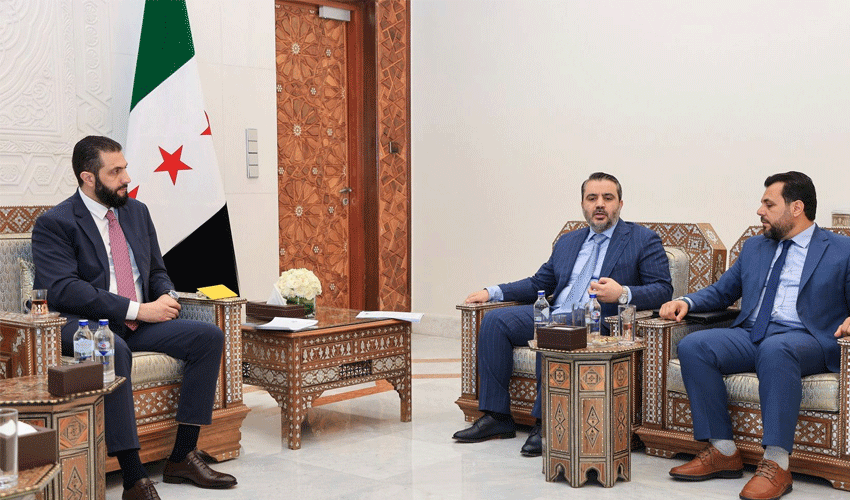
Syria has announced its first parliamentary elections since the ouster of former President Bashar al-Assad, marking a major political development in the country’s postwar transition.
The vote is scheduled to take place from September 15 to 20, according to Mohammed Taha al-Ahmad, head of the Higher Committee for People’s Assembly Elections. Speaking to the state news agency SANA on Sunday, al-Ahmad said preparations were under way to ensure the vote is conducted in a “transparent and secure” manner.
These will be the first elections under the interim leadership of President Ahmed al-Sharaa, who assumed office following a swift rebel offensive that ousted Assad in December.
Of the 210 seats in Syria’s People’s Assembly, one-third will be appointed directly by President al-Sharaa. The remaining 140 will be filled through direct elections conducted in electoral colleges across all provinces, said Hassan al-Daghim, another member of the elections committee, in an interview with Erem News.
Temporary Constitution, Lingering Uncertainty
The elections come under the framework of a provisional constitution signed by al-Sharaa in March, which calls for the establishment of a transitional legislative body known as the People’s Committee. This interim body is expected to serve until a permanent constitution is adopted and general elections are held — a process observers say could take several years.
However, the timing of the elections has raised questions among analysts, given the fragile political and security climate across much of the country.
Sectarian Strains and Israeli Strikes
Tensions flared earlier this month in the southern province of Suwayda, where deadly sectarian violence erupted between Druze fighters and armed Bedouin clans. The clashes, which began with a series of kidnappings and retaliatory attacks, have reportedly left hundreds dead and displaced many more.
Although Syrian government forces intervened ostensibly to quell the unrest, several reports suggest they sided with the Bedouin factions. Eyewitness accounts and local media claimed that government troops were involved in the killing of Druze civilians and the burning and looting of their homes.
The violence drew international attention after Israel launched a series of air strikes targeting Syrian military positions and the Defence Ministry headquarters in Damascus. A spokesperson for the Israeli military stated the strikes were carried out “to defend the Druze minority” and to deter further escalation in the border regions.
A Divided Transition
The post-Assad transition has been marred by political uncertainty, sectarian mistrust, and institutional collapse. While some segments of the population view the fall of Assad as a fresh start, others — particularly in areas affected by violence — remain sceptical of the new authorities in Damascus.
Syria’s opposition groups have so far given a mixed response to the upcoming elections. While some have called for participation to influence the shape of the future government, others have criticised the process as premature and lacking inclusivity.
Human rights organisations have also expressed concern over the government’s control of media and the absence of independent electoral monitors.