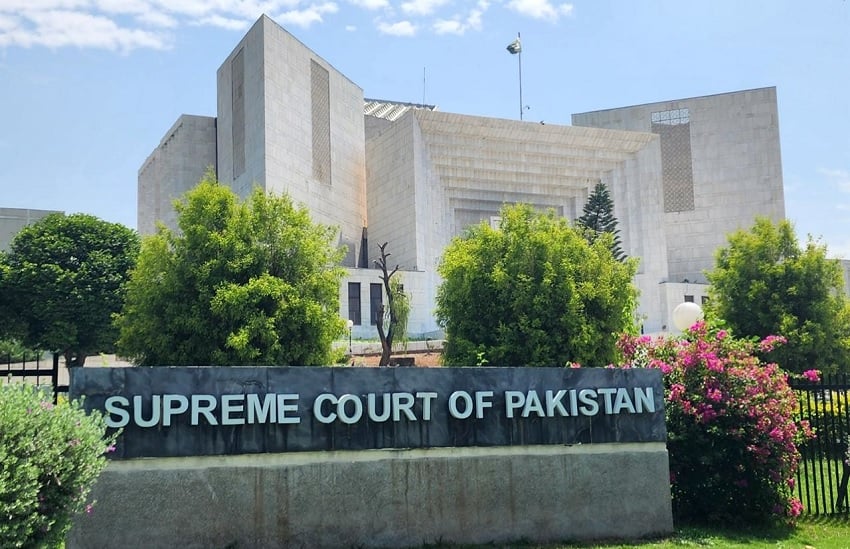
The Supreme Court has declared the Federal Board of Revenue’s (FBR) practice of issuing recovery notices without allowing reasonable time as illegal.
The top court on Tuesday issued a detailed 18-page verdict authored by Justice Ayesha A. Malik, which underscored that tax recovery must adhere to due process and should not compromise the constitutional rights of citizens and businesses.
A three-member bench, headed by Justice Muneeb Akhtar and comprising Justice Ayesha Malik and another judge, dismissed the intra-court appeals filed by the FBR. The appeals had sought validation of tax recovery notices amounting to billions of rupees against private firms.
The court upheld the verdicts of a single judge of the High Court, thereby nullifying the contested recovery actions.
The apex court noted that the issuance of recovery notices on the same day as the appeal decision by the Commissioner of Inland Revenue was in breach of fair trial standards and legal procedures. “Issuance of recovery notices by the FBR without affording reasonable time is contrary to law,” the judgment stated.
Referring to Section 140 of the Income Tax Ordinance, the court observed that instructing banks to immediately withdraw funds from accounts without prior notice defied the intention of the legislature. “The recovery process must allow a reasonable period for compliance. ‘By the date’ does not equate to ‘on the same day’,” the court clarified.
The Supreme Court further annulled a Rs2.92 billion recovery notice against one company and quashed a separate Rs1.88 billion withholding tax recovery against another firm, both of which had been issued by tax authorities on the very day their appeals were decided.
Justice Malik, in her strongly worded opinion, criticised the conduct of the Commissioner Inland Revenue, terming it a “dictatorial use of power.” She noted that such actions violated fundamental rights including the right to dignity, fair trial, and access to justice. The hasty withdrawal of funds, she said, damaged the reputations and operations of businesses, and amounted to abuse of administrative authority.
The judgment emphasised the necessity for the state to maintain a fair balance between revenue collection and respect for civil rights. “FBR’s failure to establish a lawful basis for its recovery actions demonstrates disregard for procedural justice,” the court remarked.
This decision comes on the heels of another landmark ruling in which the Supreme Court declared the FBR’s filing of FIRs, arrests, and trials against taxpayers without legal grounds as unconstitutional. The apex court had also fined the tax authority Rs10,000 for wasting the court’s time.