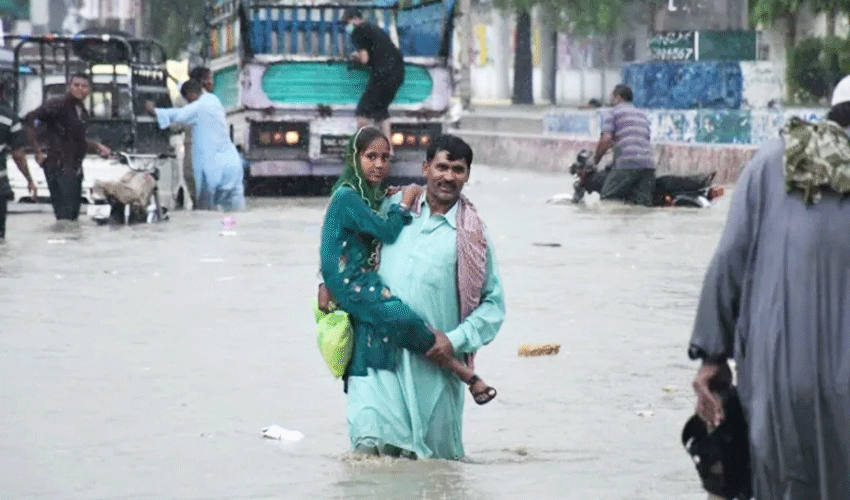
At least 90 people have lost their lives and 158 others have been injured across Pakistan since June 26 as a result of intense monsoon rains and flash floods, officials confirmed on Saturday.
The ongoing spell, which experts say is being intensified by rapid environmental changes and unchecked urbanisation, is expected to continue well into August.
According to Irfan Virk, Deputy Director at the Pakistan Meteorological Department, the unusually heavy rainfall is being driven by a combination of rising temperatures, urban heat islands, and changes in local weather dynamics.
“When your urban areas expand, the amount of concrete increases while tree cover diminishes,” Virk said. “This leads to higher temperatures. When high humidity and cold air interact in such conditions, the result is more intense rainfall.”
The Meteorological Department has forecast continued rainfall across large parts of the country until at least July 17. Regions expected to receive rain include Khyber Pakhtunkhwa, Kashmir, upper and central Punjab, and northeastern Balochistan. Monsoon activity is also expected to persist into August, with cloudy conditions prevailing in many parts of the country.
NDMA issues flood alert for South Punjab
The National Disaster Management Authority (NDMA) has issued a flood alert for several districts in South Punjab, warning of flash floods and advising residents to remain cautious.
A spokesperson for the NDMA said areas such as Bela, Multan, Muzaffargarh, Zahirpir, Mithankot, Rajanpur, Liaquatpur, Khanpur, and Alipur are experiencing significant rainfall and flash flood threats. Torrential rains have also been reported in Ahmedpur Sharqia, Jalalpur Peerwala, Dera Ghazi Khan, and Bahawalpur divisions.
The highest recorded rainfall so far has been 40mm at Nisab station in Muzaffargarh. Windstorms and rain are also expected to continue in Bahawalpur division, Multan, and parts of Cholistan.
The NDMA has urged citizens to stay away from riverbanks and low-lying areas, and to seek shelter in safe locations to avoid risks from strong winds and lightning.
Environmental impact
Experts have linked the intensifying rains to the growing impact of climate change. The urban heat island effect—caused by expanding cities, diminishing green cover, and extensive concrete structures—has been cited as a major factor behind the erratic weather patterns.
“Villages and smaller towns with more natural vegetation are less affected,” said Virk. “But in major cities, where greenery has been replaced by concrete, the local climate has changed significantly, leading to more heat and, consequently, heavier rainfall during monsoons.”