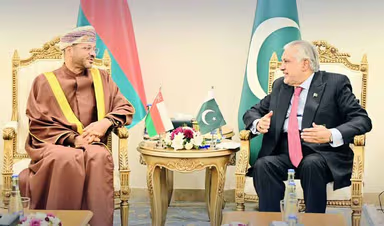
Pakistan and Oman have called for coordinated efforts to restore regional peace and stability as escalating tensions disrupt energy supplies and drive up prices.
The two countries discussed key global and regional issues during high-level talks at the Foreign Office in Islamabad, alongside plans to expand bilateral trade and cooperation.
Omani Foreign Minister Sayyid Badr bin Hamad bin Hamoud Al-Busaidi was welcomed by Deputy Prime Minister and Foreign Minister Ishaq Dar ahead of the eighth session of the Pakistan-Oman Joint Ministerial Commission.
Dar and Al-Busaidi held a one-on-one meeting before co-chairing the Joint Ministerial Commission session. According to the Foreign Office spokesperson, their discussions covered matters of mutual interest, bilateral relations and opportunities to promote cooperation across various sectors.
Dar said the regional situation was discussed in detail, emphasising that Pakistan and Oman needed to work together to promote peace and stability. He noted that the prevailing tensions were affecting the entire world, including Pakistan.
The deputy prime minister said the ministerial commission meeting was taking place after a gap of seven years. Both sides agreed that future meetings should be held more regularly to avoid similarly long intervals.
Strait of Hormuz crisis affects energy supplies
Speaking after the meeting, Dar said the two sides held detailed discussions on international developments, particularly tensions involving the United States and Iran and the situation surrounding the Strait of Hormuz.
They also reviewed recent developments concerning the Bab-el-Mandeb Strait and the conflict involving the Houthis and Saudi Arabia. Dar stressed the need for concerted efforts to address these challenges and reduce their wider consequences.
He said the difficulties arising from the regional situation were already visible, with Pakistan’s energy supply system affected and prices rising sharply. The resulting additional costs, he added, were becoming difficult for ordinary people to bear.
Dar underlined that the impact extended far beyond the region, affecting countries around the world. He called for steps to normalise the situation and restore peace and stability, saying Pakistan and Oman could play a pivotal role in these efforts.
Gaza, Palestine, Kashmir
The talks also covered the situation in Palestine and Gaza, as well as occupied Kashmir and other important regional issues.
Dar expressed appreciation for the Omani leadership’s efforts to promote regional peace. He said continued engagement between the two countries was important for addressing shared challenges and supporting stability.
The discussions reflected the broad scope of Pakistan-Oman consultations, which extend beyond bilateral matters to include developments affecting the wider Middle East and neighbouring regions.
Historic, fraternal ties
Al-Busaidi thanked Pakistan for its hospitality and reaffirmed the close, fraternal relationship between the two countries. He said Pakistan-Oman relations were rooted in shared history, religion and common values. The Omani foreign minister also stressed that close contact and cooperation on international affairs should continue.
Al-Busaidi noted that the two countries already cooperate across multiple sectors and described the Joint Ministerial Commission as one important aspect of their longstanding ties.
He also commended Pakistan’s efforts to establish peace in the region, highlighting the importance of continued coordination between Islamabad and Muscat.
Stronger trade, economic cooperation
Dar said the discussions would cover a range of bilateral matters, including ways to promote trade and expand economic activity. He noted that substantial opportunities remained to strengthen commercial relations and cooperation between the two countries.
The deputy prime minister also announced that he would visit Oman in 2027. The planned visit is expected to provide another opportunity to advance bilateral engagement.
Dar further described Pakistan’s relationship with the Gulf Cooperation Council (GCC) as unique, underscoring the importance Islamabad attaches to its ties with Gulf countries.
Both sides reaffirmed their commitment to maintaining close relations, increasing cooperation across sectors and avoiding lengthy gaps between future Joint Ministerial Commission meetings.
Eighth Joint Ministerial Commission session
The meeting brought together the foreign ministers of Pakistan and Oman to review bilateral relations and discuss regional and international developments.
The eighth session of the Pakistan-Oman Joint Ministerial Commission followed the leaders’ bilateral meeting at the Foreign Office. Alongside discussions on regional security, energy challenges and peace efforts, the talks focused on trade, economic opportunities and sustained diplomatic engagement.
The two countries agreed that continued cooperation and coordinated efforts would be important in addressing regional challenges and strengthening their longstanding partnership.