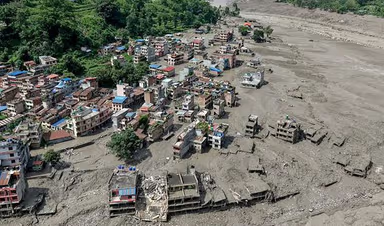
The death toll from Wednesday’s flash flood on the Nepal-China border has risen to 616, Nepal Police said on Saturday, as rescue teams continue searching for nearly 2,000 missing people.
Nepal’s disaster relief agency has reported 1,924 people missing, including at least 517 foreign nationals. Police said 2,301 people were injured and receiving treatment.
Officials said the figures remain subject to revision as authorities continue collecting and verifying information from affected areas.
The disaster is being described by officials as Nepal’s worst since the 2015 earthquake.
The flood struck after the reported collapse of a glacier above the valley, sending water, ice and rocks through populated areas. Homes, roads and a border crossing connecting Nepal with Tibet were destroyed.
Scientists are still investigating the precise cause of the glacier’s collapse.
Rain hampers rescue operations
Fresh rain fell across northern Nepal on Saturday, making access to some of the worst-hit areas more difficult.
With roads and bridges destroyed, helicopters have been carrying out repeated rescue flights between the affected valley and safer locations.
Thousands of people who were cut off from the rest of the country have been evacuated by air.
Rescuers also pulled more than 100 people from tunnels at a hydropower plant in Rasuwa district, one of the areas most severely affected by the disaster.
In neighbouring India, authorities said seven bodies had been recovered from rivers flowing down from Nepal and were believed to be victims of the flooding.
The World Health Organization said six health facilities had been damaged and eight health workers remained missing.
Two lakes formed by flood debris under watch
Authorities are also monitoring two new lakes created after debris from the flood blocked the Trishuli River near the Nepal-Tibet border.
The army has issued fresh flood warnings in the area as officials assess the risk posed by the debris dams.
One of the lakes began overflowing on Friday, temporarily disrupting search operations.
Rasuwa’s senior district official, Narendra Pariyar, said the river’s water level was visibly rising, but authorities did not yet know the lake’s exact size or depth.
He said deliberately breaching the lake appeared impractical because of the steep terrain.
China’s state broadcaster CCTV described the risk posed by the overflowing lake as manageable.
China reports deaths, missing in Tibet
On the Chinese side of the border, official figures put the death toll at seven, with 554 people reported missing in Tibet.
Nepal has said it does not require international assistance, although some aid is reaching affected communities.
The US Embassy in Kathmandu said Catholic Relief Services, working with Caritas Nepal, would provide more than 2.5 tonnes of food, as well as blankets, mosquito nets and foam sheets, to two school sites in Rasuwa.