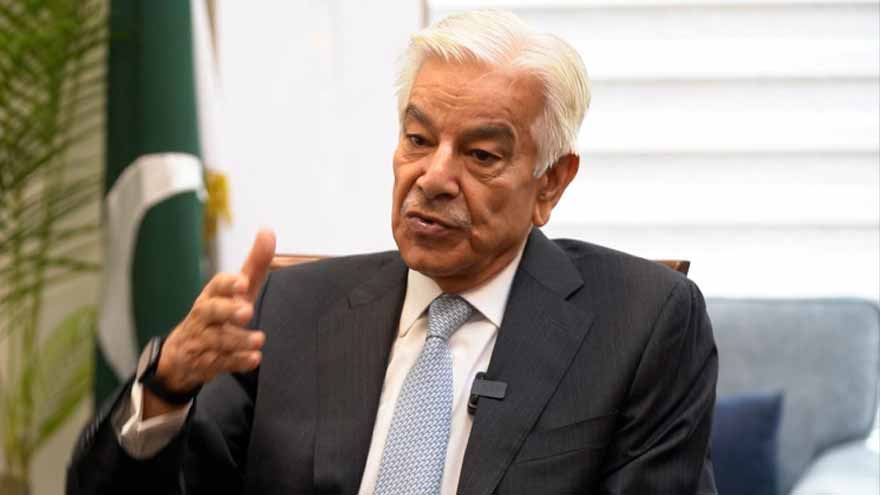
Defence Minister Khawaja Asif has stated that thousands of Pakistani soldiers and civilians have been martyred since 2022 in terrorism incidents linked to militant activity originating from Afghan soil.
Speaking in the National Assembly during a policy discussion, the defence minister stressed that Pakistan’s primary and consistent demand from the Afghan authorities is that Afghan territory must not be used for attacks against Pakistan.
He made the remarks while responding to comments by Maulana Fazlur Rehman, rejecting the claim that Pakistan had not engaged diplomatically with Afghanistan on security concerns.
Khawaja Asif said he had personally visited Afghanistan twice and held detailed discussions with the Afghan leadership on counterterrorism and border security.
“We were told that we did not contact the Afghans. I have been to Afghanistan twice,” he said.
He added that Pakistan engaged in multiple rounds of talks not only in Kabul but also through diplomatic meetings held in Turkey and Qatar.
According to him, the discussions involved broader regional stakeholders and addressed security cooperation and militant threats along the Pakistan-Afghanistan border.
Talks and diplomatic efforts
The defence minister said that Pakistani officials held continuous negotiations with Afghan representatives, during which most issues saw verbal agreement.
“They agreed with everything we said, but told us they could not sign a written agreement,” he claimed.
He also mentioned that senior Qatari officials participated in some rounds of talks, while Afghan representation reportedly included members linked to the Taliban leadership.
Pakistan’s core demand
Reiterating Pakistan’s position, Khawaja Asif said Islamabad seeks only one assurance from Kabul: that Afghan soil will not be used for terrorist activities against Pakistan.
“We only want Afghan soil not to be used against us,” he said.
He also highlighted Pakistan’s long history of hosting Afghan refugees and providing humanitarian support over several decades.
“We have been hospitable to Afghans for 40 to 50 years,” he added.