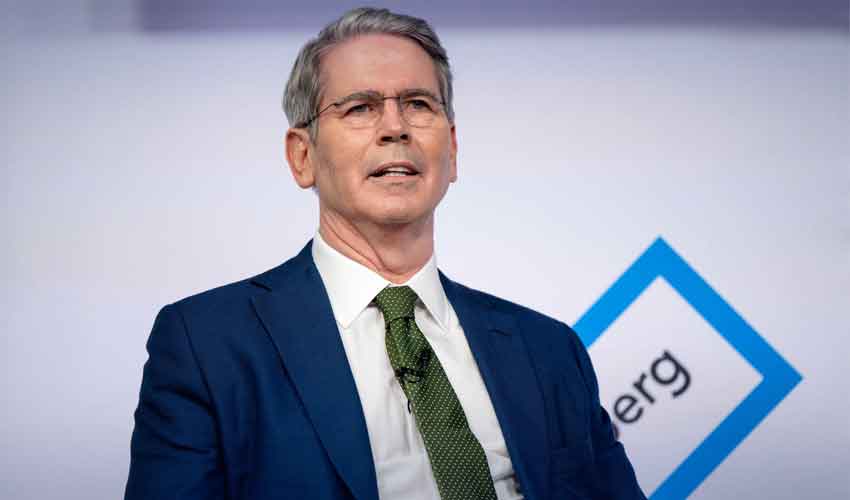
US Treasury Secretary Scott Bessent has said the United States and Iran may be close to an agreement to wind down the war, but any deal depends on President Donald Trump’s approval and several key conditions, including free navigation in the Strait of Hormuz.
Speaking at the White House, Bessent said the US and Iranian negotiating teams remain in continuous communication and consultations.
“We perhaps have the makings of a deal here,” he told reporters, adding that both sides have been swapping proposals.
However, Bessent stressed that no agreement would be finalized unless it meets President Trump’s red lines. “Everything depends on what the president wants to do, and President Trump is not going to make a bad deal,” he said.
Strait of Hormuz remains key condition
Bessent said Washington will not accept any arrangement unless the Strait of Hormuz remains open to international shipping.
“There should be free navigation in the Strait of Hormuz as before,” he said, describing the waterway as an international passage.
He added that “nothing will be on the table” until the US sees the Strait of Hormuz open and Iran agrees to key nuclear-related demands.
The Strait of Hormuz, located between the Persian Gulf and the Gulf of Oman, carries nearly one-fifth of the world’s oil supply, making it one of the most important energy chokepoints in the world.
Bessent said the talks involve a “multi-faceted agreement” and are not limited to one issue. According to him, Iran must surrender its highly enriched uranium stockpile and formally accept that it cannot possess a nuclear weapon.
When asked about the current status of the talks, Bessent did not share details, saying such decisions rest with President Trump.
The conditions reflect long-standing US red lines in nuclear diplomacy with Iran, though linking them directly to Hormuz access points to a broader strategic demand.
Sanctions relief not on table yet
Bessent also said lifting US sanctions on Iran is not currently under consideration.
“Nothing is going to be on the table until we see the Strait of Hormuz open, and the Iranians agree they have to turn over the highly enriched uranium,” he said.
Iran has historically resisted permanent limits on its enrichment program. Previous diplomatic frameworks, including the 2015 Joint Comprehensive Plan of Action, collapsed partly due to disputes over enrichment caps and sanctions relief.
Bessent speaks with Omani ambassador
Bessent said he spoke by phone with the Omani ambassador on Thursday morning. According to the US Treasury Department, regional issues and diplomatic matters were discussed during the call.
Bessent said the Omani ambassador assured him that there are no plans to impose a toll tax or tolling mechanism on the Strait of Hormuz.
He also said President Trump wanted to emphasize freedom of navigation in the strait when he made his recent warning involving Oman.
US warns against Hormuz toll system
The Treasury secretary said Washington “will not tolerate any effort to impose a tolling system in the Strait of Hormuz.”
“Oman, in particular, should know the US Treasury will aggressively target any actors involved — directly or indirectly — in facilitating tolls for the strait and any willing partners will be penalized,” Bessent warned.
He also cautioned corporate and state entities against paying any tolls linked to the waterway. “All nations should reject outright any efforts by Iran to disrupt the free flow of commerce,” he added.
Trump’s approval remains decisive
Bessent repeatedly emphasized that President Trump has set clear red lines for the negotiations. He said Trump will not accept a weak or inappropriate agreement and will only approve a deal that protects US interests, ensures freedom of navigation, and addresses Iran’s nuclear program.
For now, Washington and Tehran continue to exchange proposals, but the final decision remains with the White House.