Pakistan is likely to face intense weather conditions over the next three months, with heatwaves expected in southern Punjab, Sindh and Balochistan, while northern areas may face the risk of glacial lake outburst floods.
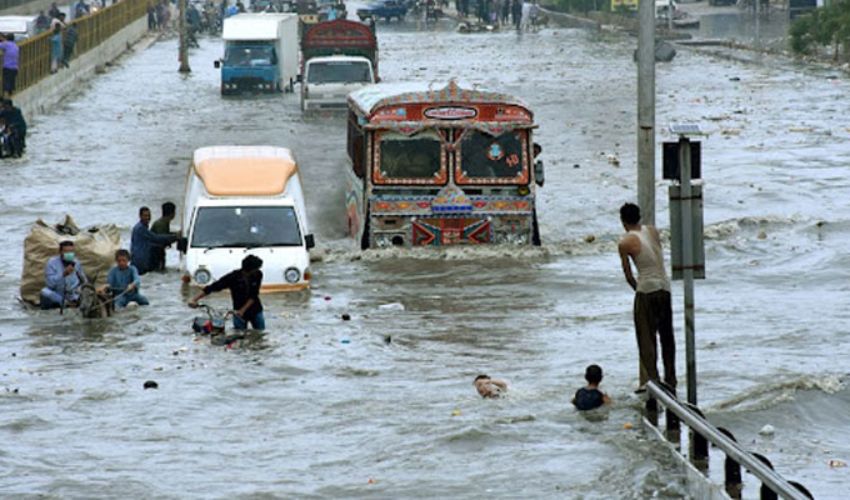
Authorities have also warned that major cities, including Lahore, Karachi, Faisalabad and Rawalpindi, could see urban flooding due to above-normal rainfall.
The Met Department has released its outlook report for May, June and July, warning that weather patterns in Pakistan could become highly dangerous during this period.
The report points to serious effects of global environmental disturbances, with extreme heat, changing rainfall patterns and glacier melting all posing risks in different parts of the country.
According to the forecast, southern parts of Pakistan will remain under intense heat, while upper regions may receive more than usual rainfall.
Heatwave threat in southern Punjab, Sindh, Balochistan
The Met Department has warned of heatwave conditions in southern Punjab, Sindh and Balochistan. Director Irfan Virk said heatwaves are expected in May and may continue into June.
He said areas including Rahim Yar Khan, Multan, Rajanpur and most parts of Sindh could experience heatwave conditions.
Officials have also warned that rising temperatures could increase the risk of glacial lakes bursting in northern Pakistan. Virk said that when a heatwave occurs, glaciers become more vulnerable.
The Met Department said increased glacier melting in the north could raise the threat of glacial lake outburst floods, especially during periods of intense heat and heavy rainfall in upper areas.
Urban flooding feared in major cities
The outlook report also predicts more than usual rainfall in several urban centres.
According to the Met Department, areas including Lahore, Karachi, Faisalabad, Sialkot and Rawalpindi may receive above-normal rainfall during May, June and July.
This could lead to urban flooding in major cities, especially where drainage systems come under pressure during intense rain spells.
Kharif crops may be affected
The report warned that lack of rainfall in southern areas could affect Kharif crop production. Agricultural output may come under pressure because of severe weather conditions, high temperatures and uneven rainfall.
Officials said the changing weather pattern poses risks not only to public health but also to farming, livestock and water management.
Severe heatwave from May 7 to 11
The Punjab Provincial Disaster Management Authority has warned that a severe heatwave is likely to affect the province from May 7 to May 11.
According to PDMA Punjab, temperatures in Upper Punjab may range between 39 and 43 degrees Celsius. In south Punjab, temperatures are expected to rise between 43 and 47 degrees Celsius.
Punjab Relief Commissioner Nabeel Javed has directed commissioners and deputy commissioners to remain alert during the heatwave. The PDMA DG said the weather is expected to remain hotter than usual even at night.
Authorities also warned of dusty winds and storms due to intense heat.
Punjab PDMA said temperatures are likely to rise in Lahore, Rawalpindi, Attock, Jhelum, Chakwal, Sargodha, Mianwali, Faisalabad, Jhang, Toba Tek Singh, Khushab, Gujrat, Gujranwala, Hafizabad, Mandi Bahauddin, Sialkot, Narowal and Kasur.
Temperatures are also expected to increase in Dera Ghazi Khan, Layyah, Bhakkar, Rajanpur, Kot Addu, Bahawalpur, Bahawalnagar, Rahim Yar Khan and Khanewal.
Officials said the intensity of heat may continue during the day and night, increasing the risk of heat-related illness.
Citizens advised to avoid sun, stay hydrated
Relief Commissioner Nabeel Javed advised children, women and senior citizens to take special precautions against the heatwave. Citizens have been urged to avoid unnecessary activities in the sun and increase water intake.
Authorities said people should stay hydrated and avoid exposure during peak heat hours.
The PDMA DG directed farmers to take preventive measures to protect crops and animals during the heatwave. Officials warned that high temperatures could affect crops, livestock and water availability.
Farmers have been advised to remain cautious during harvesting and take special care of animals.
Rescue 1122 has been directed to remain alert to help people affected by heatstroke and dehydration. PDMA Punjab said relief camps, clean drinking water, ORS and first aid facilities will be provided in urban areas.
Mobile health teams will also be mobilized to respond to cases of heatstroke and dehydration.
Heat may accelerate snow melting
The PDMA Punjab also warned that increased heat intensity may speed up snow melting in northern areas. Officials said faster melting could add to the risk of glacial lake outburst floods and water-related emergencies.
The warning comes as authorities prepare for simultaneous risks of heatwaves, floods and glacier-related hazards.
PDMA Khyber Pakhtunkhwa has warned that heat intensity may increase in the province’s plains from May 8 to 10. According to the PDMA report, temperatures in DI Khan, Tank, Bannu, Karak and Lakki Marwat may rise up to 47 degrees Celsius.
Heat is also likely to intensify in Peshawar, Nowshera, Charsadda, Mardan, Swabi, Haripur and Kohat.
PDMA said the intensity of heat will continue in southern and central areas of Khyber Pakhtunkhwa from May 8 to 10. The authority has issued an alert to all district administrations regarding preventive measures.
Concerned institutions have been directed to establish heatstroke centres, cooling points and mobile cooling units.
PDMA Khyber Pakhtunkhwa has directed Rescue 1122 and fire brigade teams to remain ready to deal with emergencies. Hospitals have also been instructed to keep medical staff and emergency facilities active.
Health and medical services, paramedics and rescue departments have been told to remain alert and keep heatstroke centres functional.
Dust, strong winds and water pressure risks expected
PDMA warned that intense heat may also lead to dusty winds and strong winds. Citizens have been advised to take precautionary measures during hot and dry weather conditions.
The authority also warned that heatstroke cases and pressure on water bodies may increase due to persistent heat and dry conditions.
PDMA advised the public to avoid unnecessary exposure to sunlight and increase water consumption. The elderly and children have been specifically advised not to go out directly in the sun between 10am and 5pm.
Relevant institutions have been instructed to keep the public informed through heatwave awareness campaigns.
PDMA said all relevant agencies should remain alert to deal with any emergency situation. The authority said its Emergency Operation Center is fully functional.
Citizens have been asked to report any untoward incident on PDMA’s helpline 1700.