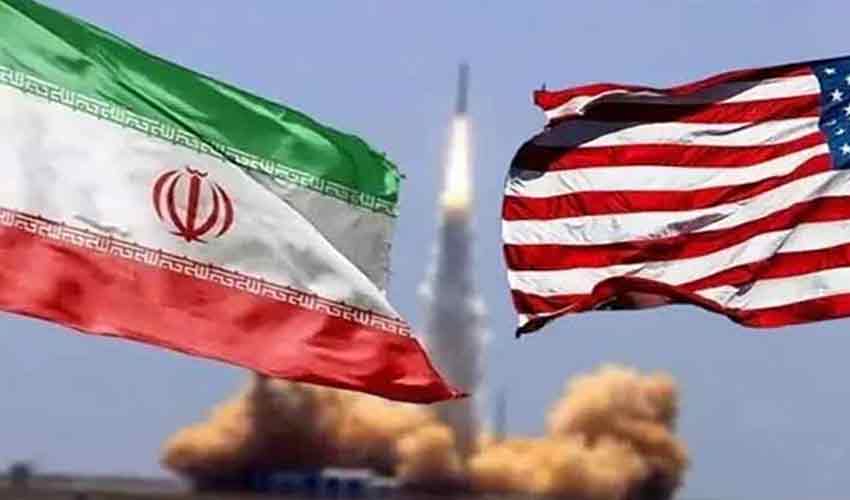
Iran has reportedly sent the United States a new diplomatic proposal through Pakistani mediators aimed at reopening the Strait of Hormuz and ending the war, while postponing nuclear talks for a later phase, Axios reported Sunday.
The proposal comes as US-Iran diplomacy remains stalled and global attention focuses on whether the strategic waterway can be reopened amid pressure from Washington’s naval blockade.
According to Axios, citing a US official and two sources with knowledge of the matter, Iran’s latest proposal focuses first on reopening the Strait of Hormuz and ending hostilities. The plan would delay negotiations over Iran’s nuclear program until after an agreement is reached on maritime access and a ceasefire.
The proposal was conveyed to Washington through Pakistani intermediaries, with Islamabad playing a key role in communication between Tehran and Washington.
Why the proposal matters
The diplomatic push comes at a critical moment, with negotiations between Iran and the US in a stalemate. Axios reported that Iran’s leadership remains divided over what nuclear concessions should be offered to Washington. By separating the Hormuz crisis from the nuclear file, Tehran appears to be seeking a faster deal on de-escalation.
However, such a move could also weaken President Donald Trump’s leverage in future nuclear talks.
Lifting the blockade and ending the war would remove two major pressure points Washington is using to push Iran to remove its stockpile of enriched uranium and suspend uranium enrichment — both central objectives of Trump’s war strategy.
The US wants Iran to suspend uranium enrichment for at least a decade and remove its enriched uranium from the country.
According to sources cited by Axios, Iranian Foreign Minister Abbas Araghchi told Pakistani, Egyptian, Turkish and Qatari mediators over the weekend that there was no consensus inside Iran’s leadership on how to respond to those US demands.
That internal division has become one of the key reasons for the deadlock in negotiations.
Longer ceasefire or permanent end to war
The new plan reportedly calls for the current ceasefire to be extended for a long period, or for both sides to agree on a permanent end to the war.
Under the proposal, nuclear negotiations would begin only later, after the Strait of Hormuz is reopened and the US blockade is lifted.
The White House has received the proposal, Axios reported, but it remains unclear whether Washington is willing to explore it.
President Donald Trump is expected to hold a Situation Room meeting on Iran on Monday with his top national security and foreign policy team, according to three US officials cited by Axios.
One source said Trump’s team would discuss the negotiation stalemate and possible next steps.
Trump signaled in a Fox News interview on Sunday that he wants to continue the naval blockade, which has been choking off Iran’s oil exports, in hopes of forcing Tehran to make concessions in the coming weeks.
“When you have vast amounts of oil pouring through your system … if for any reason this line is closed because you can’t put it into containers or ships … what happens is that line explodes from within,” Trump said.
He added that Iranian officials “only have about three days before that happens.”
Talks in Pakistan end without progress
The crisis in negotiations deepened over the weekend after Iranian Foreign Minister Abbas Araghchi visited Pakistan for talks that ended without progress.
The White House had announced that Trump envoys Steve Witkoff and Jared Kushner would meet Araghchi in Islamabad. However, the Iranians remained noncommittal.
Trump later told Axios that Iran’s position led him to cancel the planned trip by his envoys. “I see no point of sending them on an 18-hour flight in the current situation. It’s too long. We can do it just as well by telephone,” Trump said.
“The Iranians can call us if they want. We are not gonna travel just to sit there,” he added.
On Sunday, Araghchi held talks with Omani officials in Muscat focused on the Strait of Hormuz. After those discussions, he returned to Islamabad for a second round of talks.
Pakistan’s mediation role grows
Pakistan has emerged as the main intermediary in the latest diplomatic exchange between Iran and the United States.
The proposal delivered through Pakistani mediators seeks to break the deadlock by prioritizing de-escalation, maritime access and a ceasefire before reopening the nuclear file.
The plan also involved wider regional mediation efforts, with Pakistani, Egyptian, Turkish and Qatari mediators receiving messages from the Iranian side during the weekend talks.
White House spokesperson Olivia Wales declined to discuss the details of the proposal publicly, saying the matter involved sensitive diplomacy.
“These are sensitive diplomatic discussions and the US will not negotiate through the press,” Wales told Axios.
She said Trump had made clear that “the United States holds the cards” and would only make a deal that puts the American people first. Wales also said Washington would never allow Iran to obtain a nuclear weapon.
Global energy markets watch crisis
The Strait of Hormuz remais one of the world’s most important energy routes, and its closure has unsettled global oil and gas markets.
Iran’s proposal places the reopening of the waterway at the center of diplomatic efforts, framing maritime access as the first step toward ending the broader conflict.
For Washington, however, agreeing to lift the blockade before nuclear concessions could be seen as giving up leverage too early.
In Washington, Trump has suggested the conflict may be reaching a turning point as pressure builds on Tehran.