
As a science journalist and filmmaker, my deep dive into the environment began in 2021 when the UN Biodiversity Conference (COP15) convened in Kunming, southwest China’s Yunnan Province. It was a lucky starting point. Biodiversity teaches a fundamental truth that many overlook: nature is not a collection of parts, it is a single, breathing system. I hope you keep this in mind as you read, for it is the essential key to understanding the Ecological and Environmental Code currently under deliberation in Beijing.
For decades, China’s environmental protection efforts were a series of isolated battles. If a river was polluted, there was a law for water; if the air turned gray, there was a law for air. But ecosystems are indivisible. This new code – the second formal code in the nation’s history – marks the end of this fragmented era, signaling a shift toward more systemic life-community governance.

A view of the restored Lake Ulansuhai in China’s Inner Mongolia Autonomous Region. /CGTN
Integrated governance: From fragments to a system
The most immediate impact of the code is its deep legal consolidation. The draft brings together more than 30 standalone laws and over 1,000 regulations. This is far more than a mere copy-paste exercise; it is the legal extension of a massive shift in how China actually acts.
Last year, my team visited Lake Ulansuhai in China’s Inner Mongolia Autonomous Region, a vital body of water connected to the Yellow River. Despite closing nearby factories, the lake remained stagnant and dying. Confused engineers launched an intensive investigation, and eventually found the culprit hundreds of kilometers away: the desert. Shifting sands were invading the river network, clogging the small arteries that fed the lake and destroying its ability to clean itself.
Ultimately, engineers expanded the scope of restoration from a single lake to an entire watershed. This site became a model of integrated governance, because it proved that you cannot save the water without addressing the sand, forest or the soil within the area. The code’s core logic is to turn this scientific reality into a rigid, legal rule. By bridging pollution control and restoration within one framework, it ensures that different government departments finally work from the same playbook.
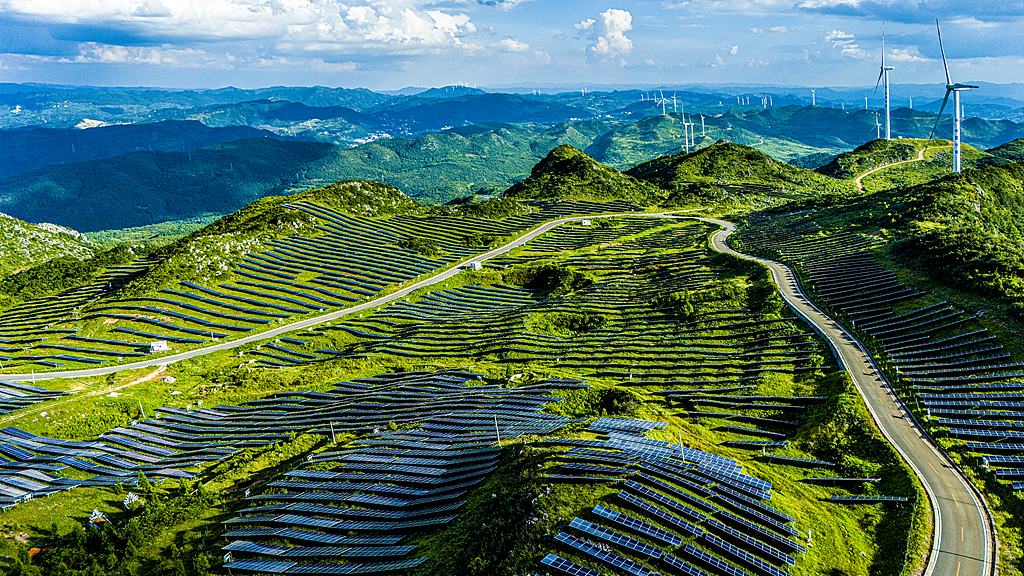
Solar panels cover the mountains and fields, Liupanshui, southwest China’s Guizhou Province, August 18, 2025. /VCG
The anchor for climate action
What has captured the attention of international observers is the code’s dedicated section on “Green and Low-Carbon Development.”
China doesn’t have one single climate change law yet, but this code serves as the definitive legal anchor for China’s green transition. It provides a firm statutory basis for carbon peaking, carbon neutrality and the development of green supply chains. It sends a clear signal: China’s climate commitments are no longer just policy pronouncements; they are being etched into the nation’s fundamental legal architecture. It defines a broad environmental vision that encompasses energy transition and the actual economic value of ecological assets.

The morning glow shines through the clouds and creates a Tyndall effect, Shaoxing, east China’s Zhejiang Province, August 26, 2025. /VCG
A new social pillar
Why did China designate ecological environment as only its second-ever code?
The answer lies in the weight of the term. In 2020, China enacted the Civil Code, the “encyclopedia of social life” that defines the rights of property and marriage. By elevating the environment to this same status, Beijing is signaling that ecology is no longer just a set of administrative rules – it is becoming a pillar of society itself.
This represents a profound shift in values. It suggests that clean air and a stable ecosystem are now seen as fundamental to social stability, carrying the same legal weight as the protection of private property. It marks the moment “Harmony between Man and Nature” transitions from a philosophical vision into a foundational social contract.
As a filmmaker, I see this code as the most ambitious long take in China’s ecological history. It is not merely repairing the past; it is drafting the blueprint for a civilization that views nature as its bedrock.