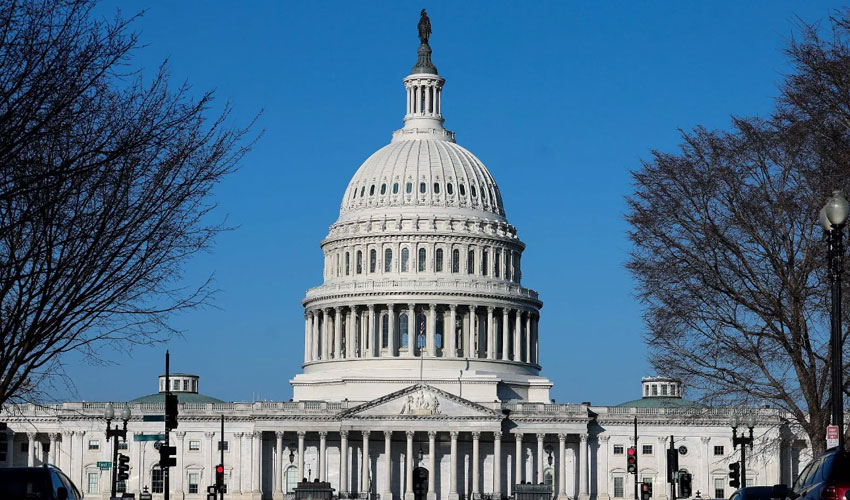
The United States Senate has failed to advance a resolution aimed at limiting the war powers of Donald Trump amid the ongoing conflict with Iran.
The measure, designed to require congressional approval for military action, was defeated in a procedural vote.
The resolution failed in a 47–52 procedural vote, marking another setback for lawmakers attempting to curb the president’s authority to conduct military operations abroad.
The proposal sought to reassert Congress’s constitutional power to declare war and limit the president’s ability to continue hostilities against Iran without legislative approval.
The vote largely split along party lines, with most Republicans supporting the president’s position.
Debate over constitutional authority
Supporters of the resolution argued that Donald Trump exceeded his constitutional authority by launching military operations alongside Israel.
Under Article II of the US Constitution, a president may only initiate military action without congressional approval in response to an immediate threat.
Speaking on the Senate floor, Senator Tim Kaine said the administration had failed to provide evidence that the United States faced an imminent attack from Iran.
He argued that the military actions cannot be described as a limited or isolated operation and warned that the situation could escalate into a broader conflict.
Republicans defend Trump’s military actions
Republican lawmakers rejected the resolution, insisting that the president acted within his authority as commander-in-chief.
Senator James Risch said the US Constitution grants the president both the right and duty to protect the country.
Risch cited concerns about Iran’s efforts to rebuild its nuclear programme and expand its missile capabilities following previous strikes.
He also dismissed earlier diplomatic negotiations between the United States and Iran as ineffective.
Background to conflict
The Trump administration launched its military offensive on February 28, citing multiple reasons for the operation.
Trump claimed Iran was attempting to rebuild its nuclear programme and develop long-range missiles capable of threatening the United States.
Meanwhile, Secretary of State Marco Rubio suggested that Israel was preparing to attack Iran, potentially triggering retaliation against US assets in the region.
However, Trump later contradicted that explanation, stating Iran was planning an imminent attack on Israel.
House of representatives set to vote
A similar war powers resolution is expected to be voted on in the US House of Representatives on Thursday.
However, it faces difficult prospects there as well, given the slim Republican majority in Congress.
Even if such a resolution passed both chambers, it would still require the president’s signature to become law.
Trump could veto the measure, and overturning that veto would require a two-thirds majority in both the House and Senate.
Ongoing military operations
Earlier on Wednesday, US Defense Secretary Pete Hegseth said the military operation was still in its early stages, with additional American assets being deployed to the region.
Trump has suggested the conflict could last four to five weeks, although some lawmakers believe it could escalate further.
The fighting has already caused damage across parts of the Middle East and resulted in casualties.
Despite the defeat, advocates say such resolutions are important for forcing Congress to debate the limits of presidential power.
Policy experts argue the votes allow lawmakers to publicly state their positions on military engagement and give voters a clearer understanding of where their representatives stand.
With US midterm elections approaching, the conflict and the debate around it could become a significant political issue.