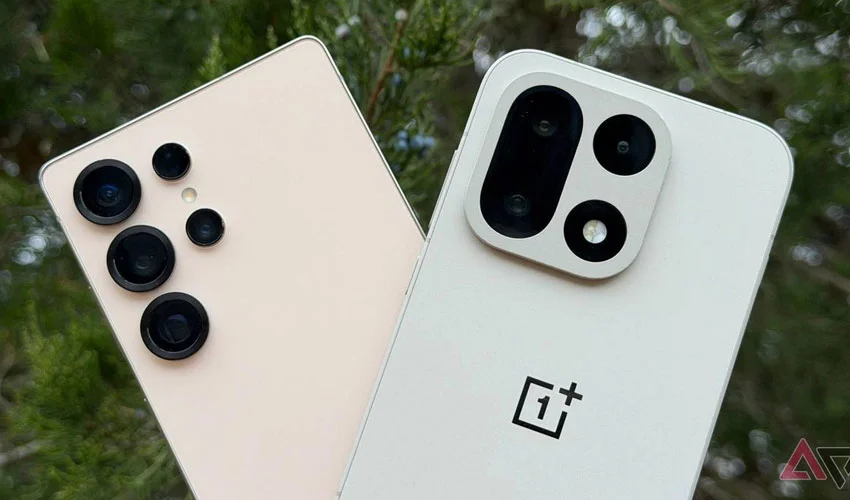
OnePlus has surprised the smartphone market by releasing the OnePlus 15 earlier than expected, instantly putting it in direct competition with Samsung’s Galaxy S25 Ultra.
The new device packs a powerful processor, a massive battery and a more affordable price tag, raising the question: which flagship is actually worth your money today? Here’s a detailed comparison of the two phones based on hands-on testing and official specifications.
OnePlus 15
The OnePlus 15 comes with IP68 and IP69 ratings, offering protection from dust, submersion and even high-temperature water jets up to 80°C. In comparison, the Galaxy S25 Ultra carries only an IP68 rating. OnePlus’ added durability makes a difference in daily use, especially in wet environments.
The OnePlus 15 features “AquaTouch” technology, allowing the screen to respond accurately even with water droplets on it. Users can text, scroll, and switch songs in the shower or near a pool — a task nearly impossible on Samsung or Apple phones due to phantom touches caused by water.
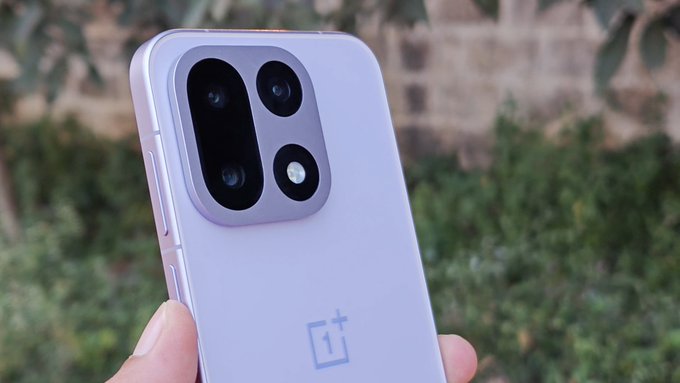
The Sand Storm edition includes an MAO-treated middle frame, which OnePlus says increases durability. This makes the phone more resilient than the Galaxy S25 Ultra during everyday wear and tear.
Massive battery
OnePlus has fitted the phone with a huge 7,300mAh battery, using a higher silicon content (15%) for improved energy density. The Galaxy S25 Ultra, meanwhile, uses a 5,000mAh battery — the same capacity Samsung has used for years.
In heavy use — social media, photography, navigation and music — the OnePlus 15 still ended the day with 40% battery left.
By contrast, the Galaxy S25 Ultra struggles to last through long, intensive days.
OnePlus supports 80W fast charging, which tops up the device much quicker than Samsung’s 45W charging.
The OnePlus 15 is powered by Qualcomm’s latest Snapdragon 8 Elite Gen 5 chipset and features a 165Hz 1.5K AMOLED display with a large vapor cooling system. Despite its high-end performance, it starts at $899, giving buyers a $400 savings over Samsung’s $1,299 S25 Ultra.
Galaxy S25 Ultra
Samsung continues its tradition of top-tier screens with the S25 Ultra. Its QHD AMOLED display comes with a new anti-reflective coating that improves color accuracy and visibility indoors and in direct sunlight.

Although the OnePlus 15 has a bright display with thinner bezels, Samsung’s screen is more visually pleasing.
For watching videos, gaming or reading, the Galaxy S25 Ultra stands out.
The S Pen advantage
Samsung remains the only flagship brand offering stylus support on a high-end phone. The S Pen, now repositioned from the Note series, is still excellent for quick note-taking, even though some Bluetooth features have been removed.
OnePlus offers four years of OS updates and five years of security patches. Samsung beats this with seven years of OS and security updates, making the S25 Ultra better for long-term use — as long as users are comfortable with the battery degrading over time.
Comparison: OnePlus 15 vs. Samsung Galaxy S25 Ultra
| Feature | OnePlus 15 | Samsung Galaxy S25 Ultra |
|---|---|---|
| Display | 6.78″ AMOLED, 165Hz, 1800 nits peak | 6.9″ QHD AMOLED, 120Hz, 2600 nits peak |
| Weight | 211g / 215g | 218g |
| Processor | Snapdragon 8 Elite Gen 5 | Snapdragon 8 Elite for Galaxy |
| Dimensions | 76.7 × 161.4 × 8.1mm | 77.6 × 162.8 × 8.2mm |
| Storage | 256GB, 512GB | 256GB, 512GB, 1TB |
| Battery | 7,300mAh, 80W wired, 50W wireless | 5,000mAh, 45W wired, 15W wireless |
| Camera | 50MP wide, 50MP ultrawide, 50MP telephoto (3.5x), 32MP front | 200MP wide, 50MP tele (5x), 10MP tele (3x), 50MP ultrawide, 12MP front |
| Price | $899 | $1,299 |
The OnePlus 15 emerges as the stronger value performer with a longer battery life, better wet-screen usability, more durability and a much lower price. However, Samsung’s Galaxy S25 Ultra remains unbeatable for display quality, stylus support and long-term software updates.
Buyers will ultimately choose based on what they prioritise: dependability and savings, or premium screen quality and long-term software longevity.