China has urged the United States to uphold its international obligations under the Comprehensive Nuclear-Test-Ban Treaty (CTBT) after U.S. President Donald Trump ordered the Pentagon to resume nuclear weapons testing “on an equal basis” with Russia and China.
The statement marks a sharp response from Beijing amid growing regional tensions over nuclear expansion.
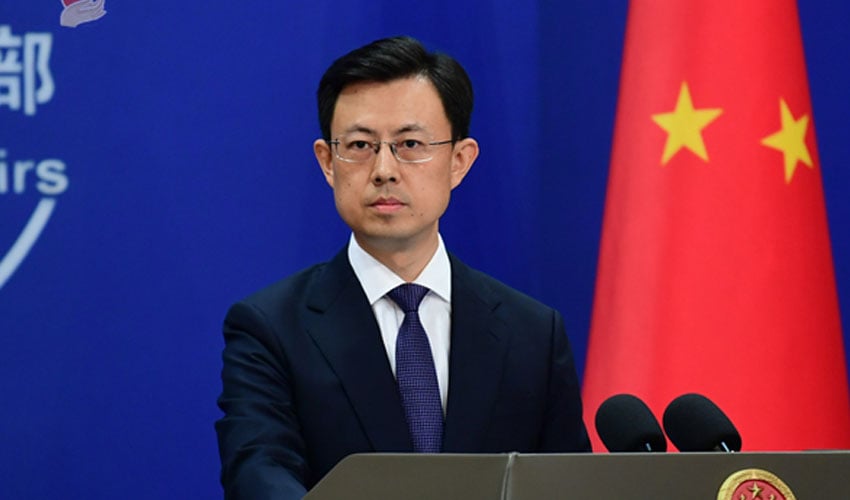
Chinese Foreign Ministry spokesperson Guo Jiakun said Beijing “hopes the U.S. will abide by the CTBT and maintain its commitment to suspend nuclear tests.” The comments, reported by China’s state-run Global Times, came shortly after Trump’s directive reignited concerns about a potential new arms race among nuclear powers.
Guo emphasized that resuming nuclear tests would undermine global stability and reverse decades of progress toward disarmament. “We urge the United States to take responsible actions that contribute to world peace and security,” he added.
China warns US and South Korea
In a separate statement on Thursday, China’s foreign ministry criticized both Washington and Seoul after Trump approved South Korea’s request to build nuclear-powered submarines at a U.S. shipyard.
“China hopes that both South Korea and the U.S. will practically implement their nuclear nonproliferation obligations, and take actions conducive to regional peace and stability, rather than doing the opposite,” Guo said during a regular press briefing.
The announcement followed summit talks between South Korean President Lee Jae Myung and Trump on the sidelines of the Asia-Pacific Economic Cooperation (APEC) events in Gyeongju.
Trump approves Seoul’s nuclear submarine project
According to reports, President Lee requested U.S. approval for nuclear-powered submarines, arguing that diesel-powered ones have limited underwater range and make it difficult for Seoul to track North Korean or Chinese submarines.
Trump later confirmed the approval on his Truth Social account, writing that the submarine would be built at the Philadelphia shipyards in Pennsylvania. The move marks a major shift in South Korea’s defense capabilities and is expected to heighten strategic competition in East Asia.
Beijing’s dual statements reflect growing anxiety over the U.S. and its allies’ military advancements in the Indo-Pacific region. Analysts say that China views both the resumption of U.S. nuclear tests and the South Korean submarine deal as steps that could destabilize the regional balance of power.
Guo reiterated that all parties should work to prevent a new arms race and maintain diplomatic channels to resolve security challenges.