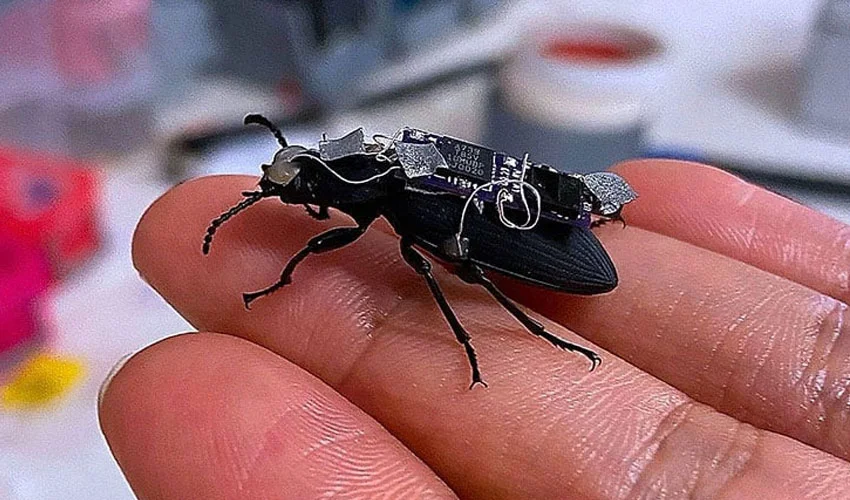
Scientists at the University of Queensland have created a new way to help save lives during disasters — by turning ordinary beetles into miniature search-and-rescue machines.
The research team successfully fitted beetles with tiny microchips and a lightweight “backpack,” enabling remote control of their movements.
The so-called “bag-wearing beetles” can be guided into tight, hard-to-reach spaces — such as collapsed buildings or underground mines — to locate people trapped after earthquakes, explosions, or landslides.
Lead researchers say the beetles, equipped with sensors, could potentially detect human movement, body heat, or sounds in areas where traditional search equipment or rescue dogs might struggle to operate.
“These beetles can go places humans and even robots can’t,” the study notes. “This could cut search times from days to just hours in critical rescue operations.”
The innovation, detailed in the latest study from the university’s engineering department, is being hailed as a low-cost, high-impact solution for disaster zones. Unlike drones or large robots, beetles require minimal power, can navigate debris with ease, and are less likely to be obstructed by rubble.
While the technology is still in its experimental phase, scientists are optimistic that it will soon be tested in simulated disaster environments before being deployed in real-world emergencies.