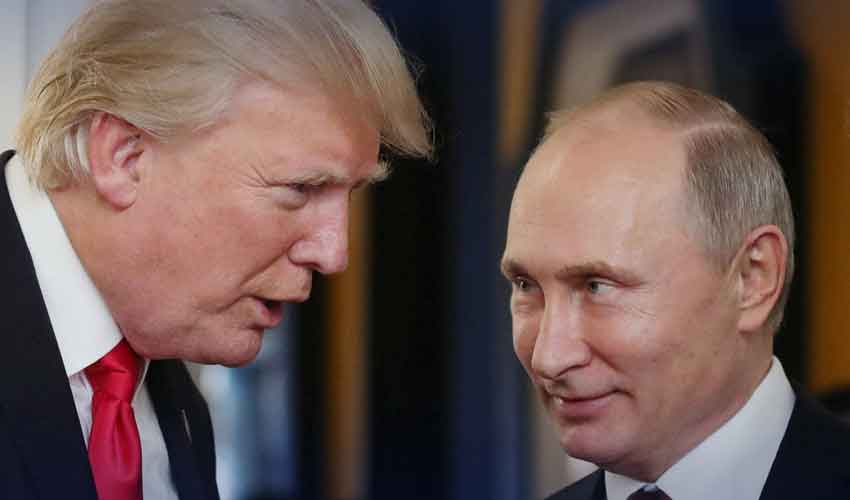
President Donald Trump said Thursday that a meeting between Vladimir Putin and Volodymyr Zelenskyy isn’t required before his upcoming summit with the Russian leader, setting the stage for a potential high-stakes encounter aimed at ending the Ukraine war.
In a clear shift from earlier White House messaging, Trump told reporters in the Oval Office that Russian President Vladimir Putin does not need to meet with Ukrainian President Volodymyr Zelenskyy before any Trump-Putin talks.
“No, he doesn’t,” Trump said when asked whether the Zelenskyy meeting was a condition.
This comes just hours after White House press secretary Karoline Leavitt indicated a preference for both leaders to meet, noting Trump wanted to speak with both Putin and Zelenskyy to work toward ending the war.
“President Trump would like to meet with both… because he wants this brutal war to end,” she said.
Kremlin confirms Trump-Putin summit “in coming days”
Earlier on Thursday, Putin’s foreign policy aide Yury Ushakov confirmed that the Kremlin had agreed in principle to a bilateral meeting with Trump, expected in the “coming days.”
“At the suggestion of the American side, an agreement in principle was made,” Ushakov said in an audio message.
Although the Kremlin dismissed any immediate possibility of a three-way summit involving Zelenskyy, it didn’t entirely rule out future dialogue under different conditions.
Putin reiterated that meeting with Zelenskyy was “possible,” but added that the required circumstances were “still far away.”
Trump’s diplomatic push clashes with war realities
Trump has long claimed he could end the war in Ukraine within 24 hours, but his latest remarks suggest growing complexities in fulfilling that promise.
His envoy, Steve Witkoff, recently held friendly talks in Moscow with Putin and top economic advisor Kirill Dmitriev, reportedly laying groundwork for the upcoming summit.
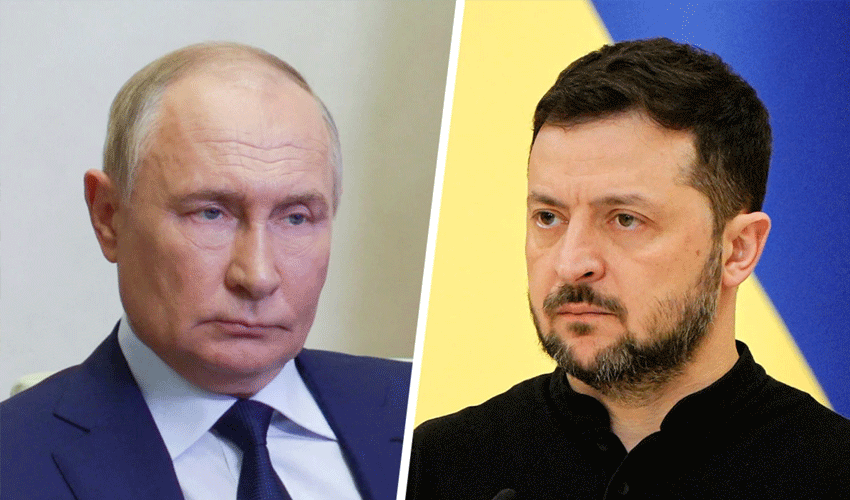
The summit may be held in the United Arab Emirates, with both sides reportedly expressing interest.
Still, Trump’s efforts face serious challenges, as the Kremlin continues to insist on Ukraine’s demilitarization and renunciation of NATO — demands that Kyiv and the West have repeatedly rejected.
Trump’s sanctions strategy adds pressure
Despite saying the Friday ceasefire deadline for Putin may be flexible, Trump has signaled escalating economic pressure.
“We’re going to see what he has to say. It’s going to be up to him,” Trump said Thursday, expressing disappointment.
His administration is expected to roll out secondary sanctions on Russia starting Friday.
These include:
A 100% secondary tariff on any country buying Russian goods (aimed largely at China)
A 25% tariff on India, already imposed in response to its Russian oil purchases
Zelenskyy calls for brave diplomacy
President Volodymyr Zelenskyy, reacting to Trump’s moves, emphasized that Ukraine is open to all leader-level discussions, including bilateral and trilateral formats.
“Ukraine is not afraid of meetings,” Zelenskyy wrote on X. “It is time we ended the war.”
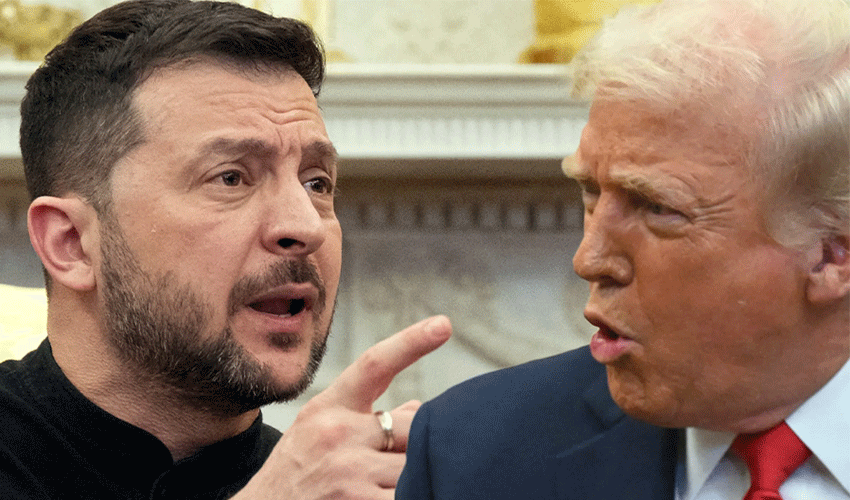
He stressed, however, that Ukraine must not be sidelined in any talks that determine its future — a criticism raised earlier this year when U.S. and Russian officials met without Ukrainian participation in Istanbul.
“Once again, decisions about Ukraine are being made without Ukraine,” Zelenskyy lamented at the time.
Outlook: Will Trump’s meeting shift the war’s course?
As Trump prepares for a high-profile summit with Putin, the stakes could not be higher — for Ukraine, for U.S. foreign policy, and for Trump’s campaign promise to resolve the conflict.
While the Kremlin remains entrenched in its goals and Ukraine continues to fight for sovereignty, Trump is seeking to position himself as the sole global leader capable of brokering peace.
Whether that meeting produces results — or merely reshuffles global alliances — remains to be seen.