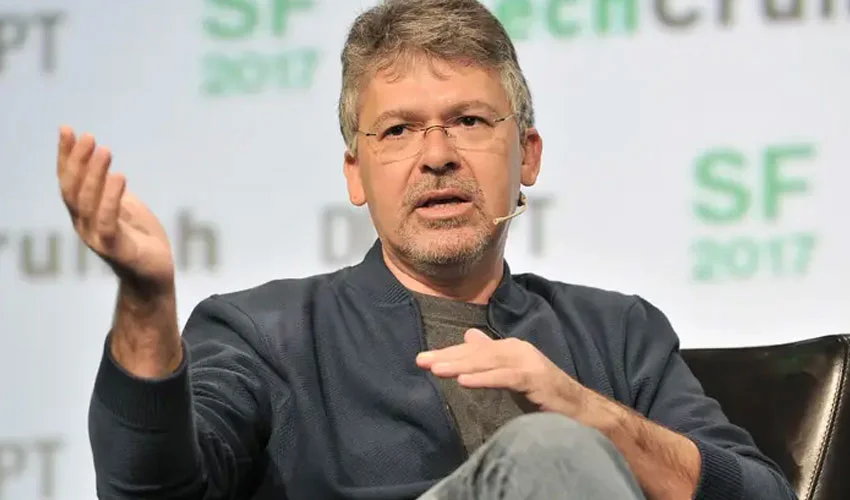
Apple on Monday announced a major leadership change in its artificial intelligence division, confirming that John Giannandrea is stepping down after seven years at the helm.
His replacement, Amar Subramanya, a seasoned engineer with long stints at Google and Microsoft, is being brought in as the company tries to regain momentum after a turbulent year for Apple Intelligence.
Giannandrea, who joined Apple in 2018 after leading Machine Intelligence and Search at Google, will remain as an adviser through spring before formally exiting the company.
Apple described the transition in carefully chosen language, but industry insiders are treating it as a significant shake-up triggered by a series of missteps in Apple’s AI ambitions.
Subramanya, who most recently led engineering for Google’s Gemini Assistant and spent 16 years at Google before joining Microsoft, is viewed as a strategic hire. His deep understanding of competitors’ AI pipelines is expected to be central to Apple’s next phase.
Apple intelligence’s troubled start
Apple Intelligence — Apple’s long-awaited response to the generative AI boom, stumbled immediately after its October 2024 debut. Early reviews were sharply critical, labeling the system “underwhelming” and, in some cases, “alarming.”
A notification summary tool designed to condense alerts produced a string of false and embarrassing headlines. Twice, the BBC publicly accused Apple Intelligence of fabricating serious claims: that Luigi Mangione, accused of killing UnitedHealthcare CEO Brian Thompson, had shot himself, and that darts phenom Luke Littler had won a major championship before the final match even took place.
These incidents became emblematic of the system’s reliability issues.
Siri overhaul delays deepened crisis
Apple had been banking on a major Siri overhaul to showcase its AI resurgence. Instead, it became a high-profile setback.
A Bloomberg report revealed that Apple’s software chief, Craig Federighi, tested the revamped Siri on his own device just weeks before launch — only to discover that many promised features were nonfunctional. The launch was postponed indefinitely, triggering class-action lawsuits from iPhone 16 customers who had been assured of an AI-powered assistant.
Behind the scenes, Giannandrea’s influence had already been reduced. Bloomberg reported that Tim Cook reassigned control of Siri to Vision Pro architect Mike Rockwell in March and removed Apple’s secretive robotics division from Giannandrea’s oversight.
Bloomberg’s investigation described deep organizational dysfunction, including weak communication between engineering and marketing teams and misaligned budgets. Some employees reportedly mocked the division by calling it “AI/MLess.”
The report also detailed a talent drain, with several researchers leaving for competitors such as OpenAI, Google, and Meta — a worrying trend for a company that once prided itself on long-term staff loyalty.
Stunning dependence on Google Gemini
In a move unthinkable a decade ago, Apple now appears to be leaning on Google’s Gemini to power the next iteration of Siri. For two companies locked in rivalry across operating systems, cloud services, browsers, maps, and app ecosystems, the dependence is viewed as both astonishing and humbling.
Subramanya is expected to play a pivotal role in managing that partnership — or reducing reliance on it.
For years, Apple has resisted the industry’s shift toward massive cloud-based AI models, instead focusing on on-device intelligence powered by Apple Silicon. The approach prioritises privacy: user data remains on the device, and when cloud processing is required, tasks are routed through Apple’s Private Cloud Compute, which claims to delete data immediately after processing.
But the strategy comes with limitations. On-device models are smaller, less capable, and harder to scale. Apple’s reluctance to collect user data has forced the company to rely primarily on licensed and synthetic datasets — far less robust than the real-world data driving AI systems at OpenAI, Google, and Meta.
Whether Apple’s philosophy can still hold its ground in 2026 remains an open question.