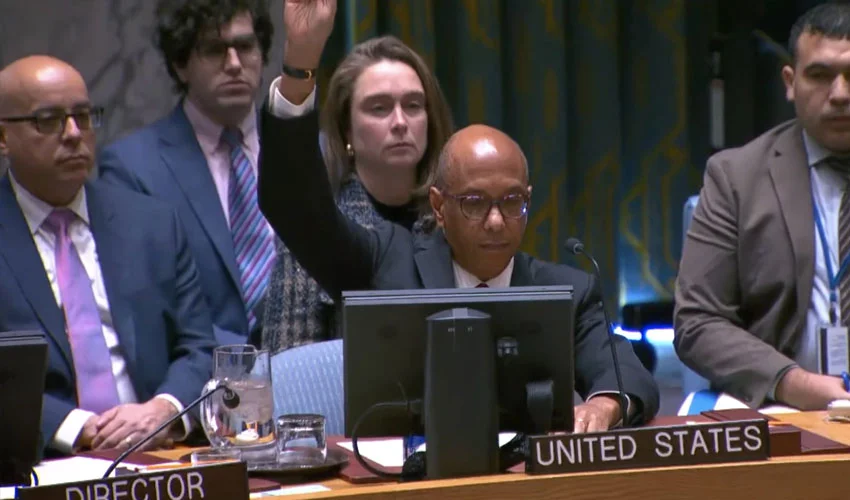
The UN Security Council has adopted a US-drafted resolution supporting President Donald Trump’s Gaza plan, approving a new international stabilisation force and endorsing a transitional governance setup for the enclave.
The resolution formally backs the first phase of Trump’s 20-point plan, agreed last month by Israel and Hamas. This phase includes a ceasefire and a hostage-release arrangement, which Washington hopes will pave the way for long-term stability.
The resolution is also seen as critical for legitimising the transitional “Board of Peace”, a proposed authority that would oversee Gaza’s reconstruction and economic recovery. Countries considering sending troops to Gaza had pushed for this UN approval.
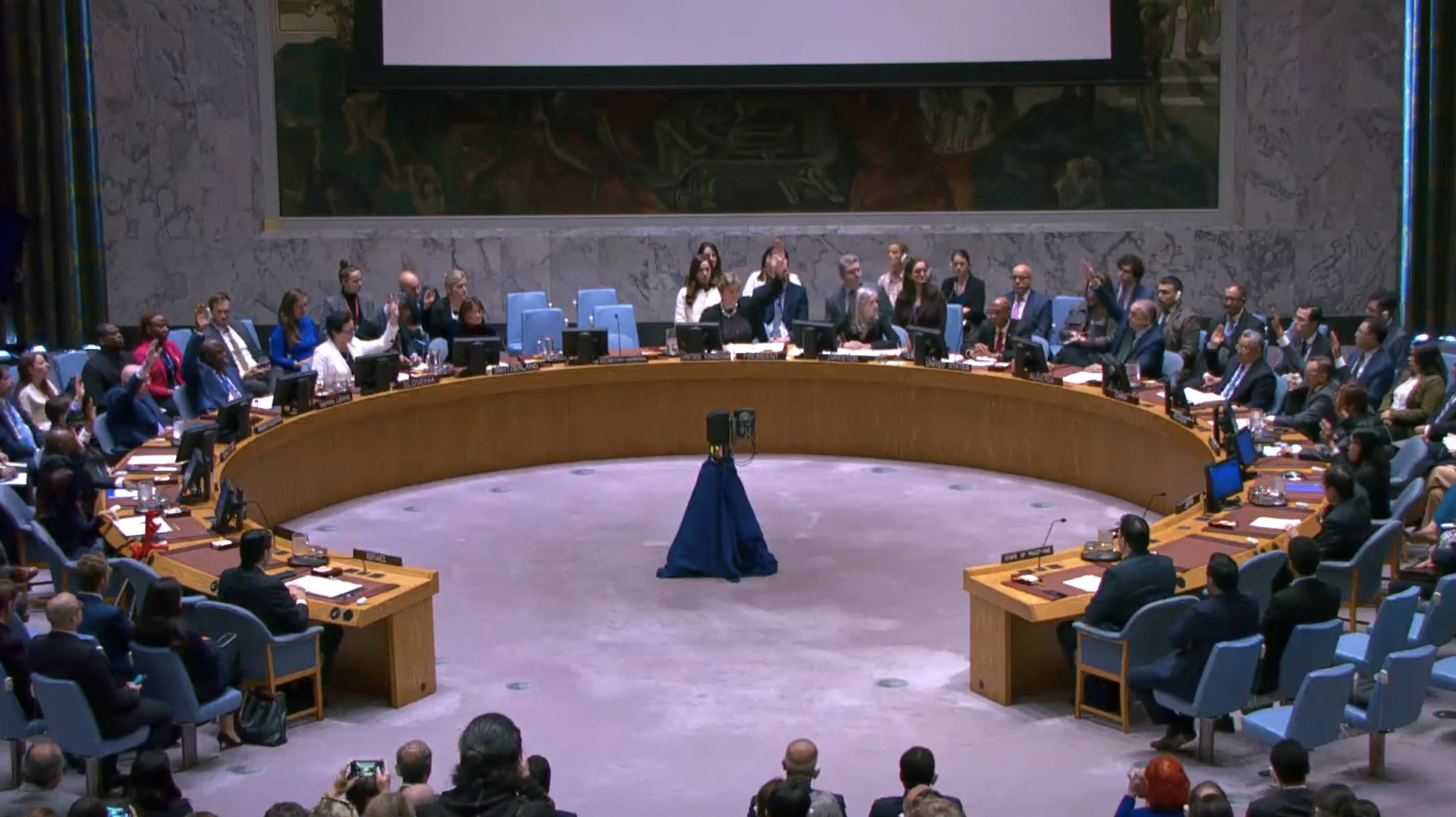
According to the text, member states may join the Board of Peace, which will work alongside the newly authorised International Stabilisation Force (ISF) to demilitarise Gaza by decommissioning weapons and dismantling military infrastructure.
Hamas rejects disarmament
Hamas sharply rejected the resolution, reiterating that it will not disarm and describing its armed struggle as legitimate resistance. In a statement, the group accused the UN of imposing “an international guardianship mechanism” on Gaza—something “our people and their factions reject.”
This position sets up a potential clash with the ISF, which is mandated to enforce demilitarisation and create secure conditions on the ground.
US defends plan as ‘pathway to peace’
US Ambassador Mike Waltz said the resolution, which includes the full 20-point plan as an annex, provides “a possible pathway for Palestinian self-determination” and a future where “rockets will give way to olive branches.”
He added that the resolution aims to dismantle Hamas’s control and guide Gaza toward a “prosperous and secure” future.
Trump celebrated the vote as “a moment of true historic proportion,” promising further announcements regarding the Board of Peace in the coming weeks.
Russia and China abstain
Russia and China abstained, allowing the resolution to pass but raising concerns about the UN’s minimal role in the plan.
Russian Ambassador Vasily Nebenzya said the Council was effectively giving “its blessing to a US initiative” without clarity on how the Board of Peace or the stabilisation force will operate.
Diplomats said the Palestinian Authority’s endorsement of the resolution last week played a decisive role in preventing Moscow from using its veto.
Israel Divided Over Reference to Palestinian Statehood
The plan has triggered significant debate inside Israel, particularly over references to a future Palestinian state.
The resolution notes that “conditions may finally be in place for a credible pathway to Palestinian self-determination and statehood,” pending reforms by the Palestinian Authority and progress on Gaza’s reconstruction.
Prime Minister Benjamin Netanyahu, under pressure from his right-wing coalition, insisted that Israel remains opposed to Palestinian statehood and vowed to demilitarise Gaza “the easy way or the hard way.”
Daniel Forti of the International Crisis Group told Al Jazeera that concerns over accountability, political oversight, and Palestinian participation are “absolutely valid.”
While he described the resolution as an opportunity to reinforce the ceasefire, he stressed that successful implementation requires serious political engagement and credible structures that Palestinians trust.
ISF: Non-UN stabilisation mission with US backing
Forti explained that the ISF will not operate like traditional UN “blue helmet” missions. It will not follow UN procedures or be overseen by UN bodies. Instead, it will function under the Board of Peace, though still carrying Security Council legitimacy.
Key details include:
ISF will coordinate with Israel, Egypt, and newly trained Palestinian police to secure borders and demilitarise Gaza.
Israeli forces will gradually withdraw, except for a security perimeter presence.
The force will deploy under a unified command while Israel phases out its military footprint.
US officials say troops will come from a “strong coalition,” including Muslim-majority nations like Indonesia and Azerbaijan.
ISF members will fund and manage the mission independently, without UN financing structures.
Humanitarian organisations have long warned that only a mission with authority to use force can maintain order in Gaza’s devastated landscape.